

What's The Difference Between Cast Iron And Carbon Steel Skillets (And Which Is Better)?
We may receive a commission on purchases made from links.
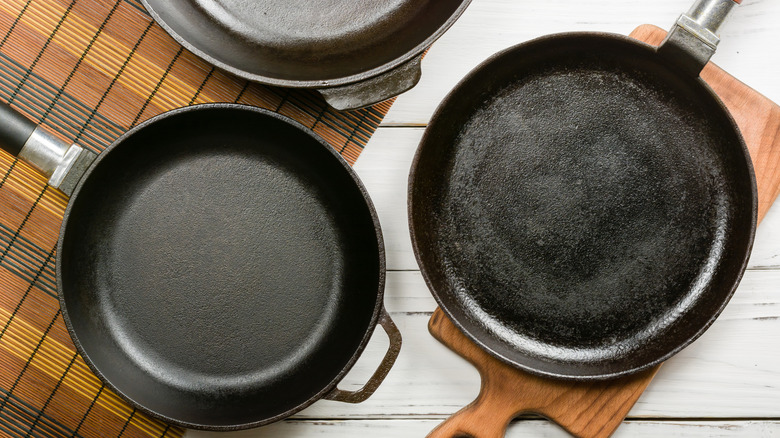
Perched side by side in a retailer's cookware section, cast iron and carbon steel skillets could easily pass for culinary cousins. Both are iron-based, both can be seasoned to create an evolving slick surface, and both can handle some serious heat. Plus, both can last for many years if they're taken care of properly. Those very similarities can, however, make choosing between the two quite confusing. So we reached out to an expert who points out the nuances distinguishing one from the other, with the goal of helping home chefs choose which one better fits their needs.
Cast Iron Chris, the entrepreneur behind his namesake cast iron seasoning compound, says the biggest structural difference starts with carbon content. "Cast iron cookware contains 2 to 4% carbon, and carbon steel cookware (despite its name) contains less than 1% carbon," he explains in our exclusive chat. That affects how the pans behave: Cast iron is more brittle, he notes, while carbon steel is more ductile and more likely to bend or warp than crack under extreme stress.
The more noticeable difference in everyday cooking is basically tied to those amounts of metal in the pan. Carbon steel skillets tend to be thinner and lighter, while cast iron's thicker construction gives it more thermal mass. Cast Iron Chris favors that heft and heat-storing ability. "... I prefer the thermal mass of cast iron over carbon steel," he says. Although both earn valid places in a kitchen, his verdict is clear: "If I could only pick one, it would be cast iron." Still, it's worth a closer look at how the differing factors play out in everyday scenarios.
Cast iron holds onto heat, for better and sometimes worse
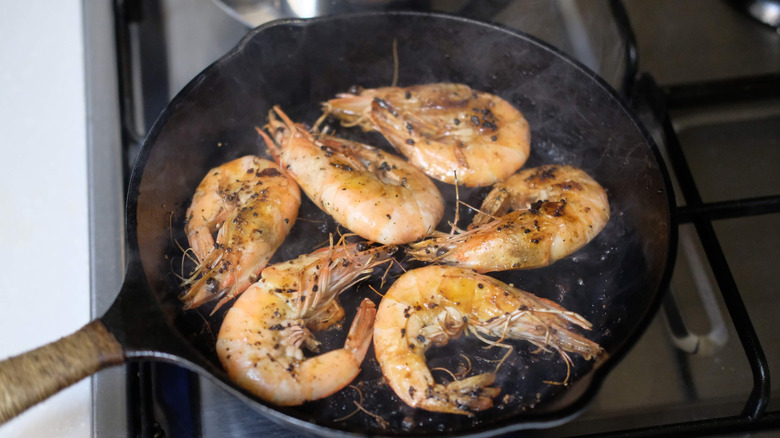
Cast iron's biggest advantage is its ability to get hot and stay hot. "Once you get all of that mass hot, it stores a tremendous amount of thermal energy," Cast Iron Chris says. That makes it especially useful for cooking when a steady temperature really matters, as it does with methods such as searing, frying, braising, and bread baking.
A steak is a good example, he explains exclusively to Tasting Table. Adding cold meat to a super-hot pan lowers its surface temperature, but a heavy cast iron skillet has enough stored heat to prevent that temperature drop and keep it browning. That facilitates the coveted Maillard reaction and results in what he calls "a beautiful crust." He also likes cast iron for live-fire cooking, where heat is less predictable than with a kitchen burner. Its thermal mass helps buffer sudden changes when flames or winds vary while cooking outdoors. "When used correctly," he says, "cast iron can be pushed to temperatures far beyond what you would normally encounter in a kitchen, upwards of 1000 Fahrenheit, which also makes it a good choice inside backyard pizza ovens."
However, there are tradeoffs with cast iron. "If you come to realize your cast iron skillet is too hot in the middle of a cook, it's hard to decrease the temperature quickly, and you could end up overcooking your food," Cast Iron Chris notes, though stresses this is easy to avoid for those used to cooking with cast iron. Additionally, the weight can make a large skillet cumbersome, and cast iron requires maintenance seasoning to prevent rust. If you do decide to go with cast iron, here are five tips for choosing the best cast iron skillet.
Carbon steel responds faster and is easier to maneuver
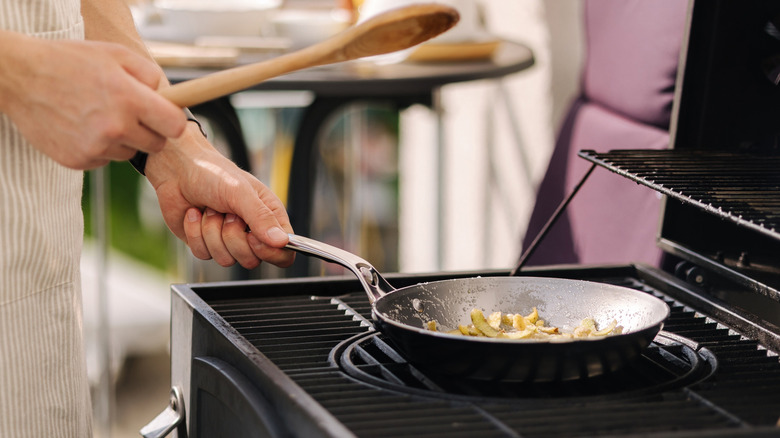
Carbon steel pans are very popular in chefs' kitchens, for varying reasons. Cast Iron Chris notes that carbon steel trades some of cast iron's heat-storing power in exchange for speed and agility. "One of carbon steel's biggest advantages is responsiveness," he explains in our exclusive chat. Given that a typical carbon steel skillet is thinner, it reacts more quickly to temperature changes, allowing you to raise or lower the heat more quickly than with a heavy cast iron skillet. He points out how that makes carbon steel useful for sautéing vegetables, stir-frying, or for making any stovetop dish that needs quick temperature adjustments and lots of movement. The pans also tend to have more sloped sides and lengthier handles for easier food tossing.
However, Cast Iron Chris reveals that the thinner construction can make it more vulnerable to warping from sudden or uneven temperature changes, including from live fire cooking. He recommends gradual preheating instead of subjecting the pan to a sudden blast of heat. You do need to season a carbon steel pan, too, but the smooth surface can negatively affect its longevity. "Highly acidic ingredients like tomatoes, wine, and vinegar can also strip or weaken the seasoning, especially when the seasoning is relatively new," he says.
Cast Iron Chris actually took carbon steel pans rather than cast iron on a recent two-week vacation because they were lighter. But if only one skillet earns a spot in the kitchen, he still chooses cast iron. "To me, cast iron is beautiful; it has character," he shares. "I love watching them hang on my wall."