

The Hands-Down Best Temperature For Fork-Tender Salmon
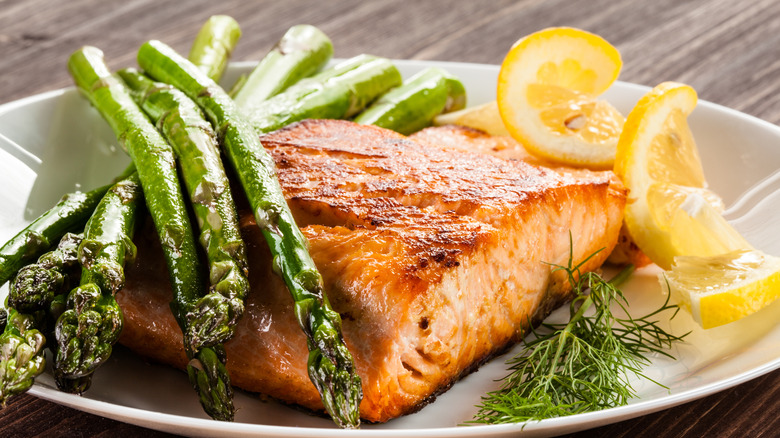
Want to make a fork-tender salmon filet, but you have no idea how hot the fish should be when it's done? We turned to expert Michael Erickson, executive chef at Spruce Farm & Fish in Boulder, Colorado, for tips on getting the perfect salmon texture. It all starts with finding the right temperature and getting your salmon there. "I typically pull salmon at around 128–130 degrees Fahrenheit, knowing that carryover cooking will bring it up a few more degrees," says Erickson. He explains, "That gives me a medium doneness where the fish is juicy and tender, but no longer has that raw texture in the center." There are plenty of ways to get your fish to that level of doneness, and Erickson prefers pan searing or grilling, since it causes a contrast between the exterior flesh of the salmon and its interior delicacy.
However, Erickson notes that cooking salmon recipes perfectly isn't always a matter of reaching that heat-related milestone. "For me, the goal isn't simply hitting a number — it's finding that point where the muscle fibers have begun to relax and separate easily without cooking out the moisture that makes salmon so enjoyable." There are, naturally, plenty of other signs that you've cooked your salmon perfectly if you pay close attention to your dish.
Other hints that your salmon has hit a perfect level of doneness
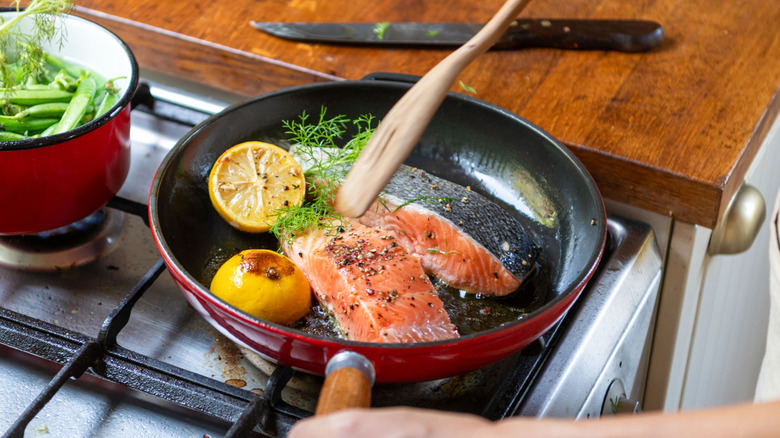
Michael Erickson suggests keeping your eyes peeled for some key hints to tell if your chosen variety of salmon is ready to be served. "There are two main visual cues I look for. First is the change in color. As salmon cooks, the flesh changes from a darker, translucent pink to a lighter, more opaque pink," he noted.
He also says to look out for one particular sign in the middle of cooking up your cut. "The second thing I watch for is albumin, the white protein that begins appearing on the surface of the fish. A small amount is normal, but if you're seeing a lot of white protein being pushed out and the salmon is becoming firm, that's generally a sign you're cooking it too aggressively or taking it too far." These two pointers will ensure your salmon is both well-cooked and not dried out into a husk of its former glory.
Taking the fish off the heat before, not after, you think the cut is ready is another important step, as is letting it rest before you serve it. Erickson says, "Giving it a few minutes to rest allows the temperature to equalize throughout the fillet and gives you that moist, flaky, fork-tender texture you're looking for." You can also put in a bit of prep work to help get the best results.
How should you prepare your salmon?
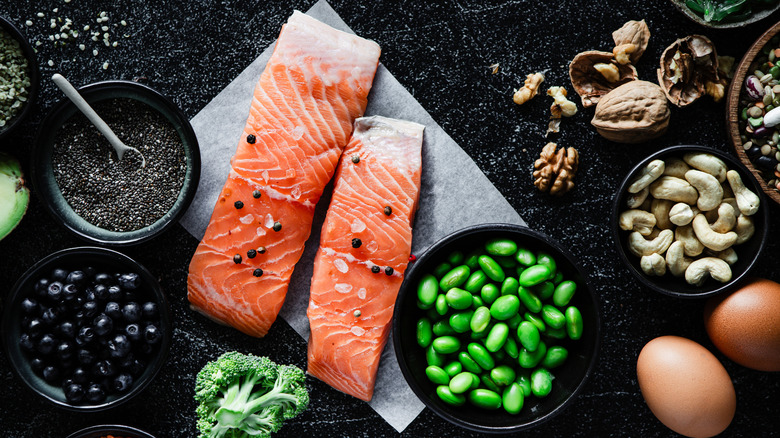
Michael Erickson has several more tips for cooking salmon that should make your next catch of the day a delight. "One of the biggest things is simply not overcooking it. I also like to let the salmon temper slightly before cooking, so I'm not putting an ice-cold piece of fish into a hot pan. I'll pat the surface very dry, season it appropriately, and use fairly high heat initially to develop the exterior — especially when cooking skin-on salmon — then moderate the heat, so the inside cooks more gently."
When it comes to imparting extra flavor to a dish, Erickson eschews marinades in favor of a breadcrumb crust. "Whether it's an herb butter crust by food processing panko or nuts, herbs and then adding butter to make it spreadable or a mustard crust, that I add when there's 2 minutes left, that will crust up as the salmon finishes cooking." Naturally, there's more than one way to cook a bit of fish, but with Erickson's tips under your belt you're sure to produce a main dish that's flavorful — and, most importantly, so tender you can cut it with a fork.