

Why A Bar Owner Says To Think Twice Before Ordering Olives In Your Martini

Cocktail garnishes can make or break otherwise carefully crafted works of art, like a classic martini. Whether enjoying the expertise of professional bartenders or making a pristine martini at home, you know there's often an olive involved in the final presentation. Most folks don't think twice about that perky little olive — but maybe they should, according to an expert on all things cocktails.
According to Justin Lavenue, master mixologist, co-owner of The Roosevelt Room in Austin, Texas, and owner and operator of The Eleanor and RoadHaus Mobile Cocktails, it's wise to be concerned about the cleanliness of olives going into martinis, just as you would be with any other food. "Olives are usually stored in brine, which helps preserve them, but brine is not a holy water that cleanses everything it touches," notes Lavenue. Factors like exposure to oxygen, warm temperatures, cross-contamination, or improper handling and storage can all compromise the safety of those olives.
Though fairly unlikely, these garnishes could turn an otherwise delightful evening into a stomachache. In some extreme instances, the olives could even expose you to foodborne illnesses like botulism. "That is not me trying to turn a martini garnish into a horror movie; it is just the reality that salty water does not make food immortal," warns Lavenue. Fortunately, he shares a few qualities to look for in good olives, plus some red flags indicating when to avoid them.
Cocktail olives: good signs and red flags

Evaluating the olives pierced on a skewer or floating in your martini isn't really rocket science. Just think of it as you would any other type of stone fruit or vegetable garnish. According to Justin Lavenue, "A good olive should taste briny, firm, and clean. It should not look tired, smell funky, feel slimy, or make you wonder whether it has been on the bar longer than the bartender."
Apart from those general food safety standards, it may be difficult for some consumers to make distinctions between fresh olives or "tired" ones, especially given the range of flavors and textures in the varying types of olives for martinis. Fortunately, Lavenue shares some ways to tell if olives have gone bad, both in the fruits themselves and with the surroundings and handling procedures. Here's what Lavenue says to look out for: "Olives sitting uncovered at room temperature, cloudy or funky-looking brine, dried-out or slimy olives, tongs buried inside the garnish container, flies hanging around the garnish tray, or new olives being dumped on top of old olives instead of the container being cleaned and refreshed."
You can also observe the person making your drink. Bartenders touch various items around the bar, like cash, credit cards, bottles, rags, menus, and computer screens. If you see them picking up garnishes for your drink using the same bare hands that have touched other items without washing them first, that's a huge red flag.
Pay attention to the bar itself when ordering dirty martinis
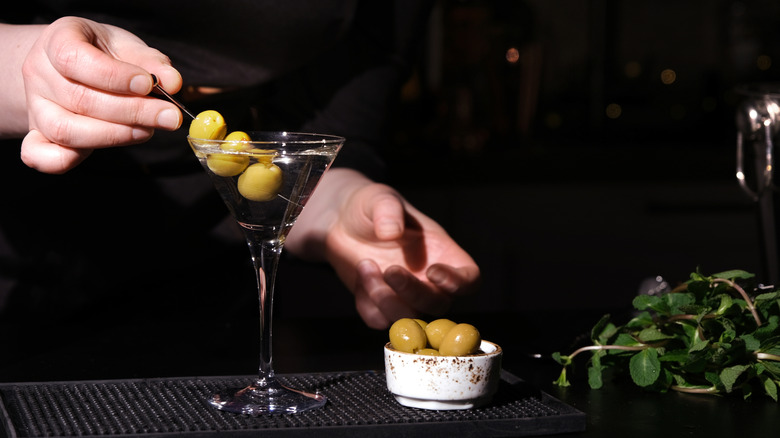
An oft-quoted admonishment is "don't judge a book by its cover," but in the case of any establishment or home bar serving something going into your body, it's perfectly fine to glance around — or do a few double-takes as circumstances dictate. The overall environment is a visual storyline reflecting the standards. "Is the bartop clean? Are there sticky spills, crusty speed rails, dirty ice wells, dusty bottles, filthy lowboys, or bathrooms that look like they lost a bet?" Justin Lavenue questions. And those are just the parts that customers can actually see.
Absent those obvious signs that martini olives could be compromised, there are several reassuring cleanliness traits to put your mind at ease — and keep your glass full. "At a bar that cares, garnishes are covered, cold, fresh, handled with clean tools, rotated properly, and stored in containers that look like they were washed today," explains Lavenue. "If I walk into a place and the cleanliness is visibly questionable, I am probably ordering a beer and wiping down the rim of the can before I drink it." Once those concerns are put to rest, you can concentrate on all the nuances of this cocktail — like the dos and don'ts of ordering a martini.