

Why Bar Cocktails Often Use 3 Rums Instead Of One
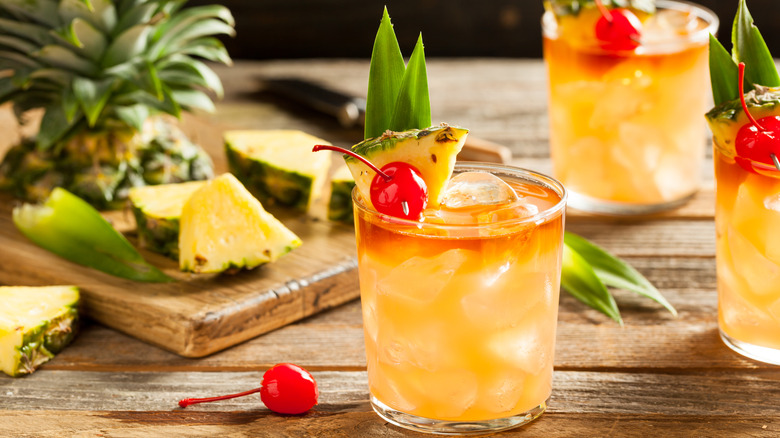
Just when you thought you'd mastered the art of creating cocktails, here comes a concept to send you back into experimentation mode. It's a method where mixologists use three different rums to create bespoke blends for intriguing cocktails. To get some insider intel, we reached out to Cody Nicoll, sommelier, mixologist, and owner of Hospitable Nicoll, co-owner of Bar Ocelli, and managing partner of Ember Live Fire Kitchen. There's definitely a method to this madness, which involves art as well as understanding.
As it turns out, this three-rum blending is actually a very common practice among bartenders, according to Nicoll. "By blending different styles of rum into tropical cocktails, we're able to achieve greater complexity in the glass," he says, "leveraging complimentary tasting notes that come from different styles of rum."
When blending rums, Nicoll shares three things to determine: "What was the rum made from (cane juice, molasses, cane sugar etc.); what style of still was used to distill the rum (copper pot vs. column still); and how was the rum aged (blanco vs anejo, what kind of barrel was used, and what level of char has the barrel experienced)." That's a lot for a casual home bartender to absorb, so Nicoll offered examples of how a mixologist could use different rums to build a blend that's fit for a specific cocktail.
Why mixing rums works in cocktails
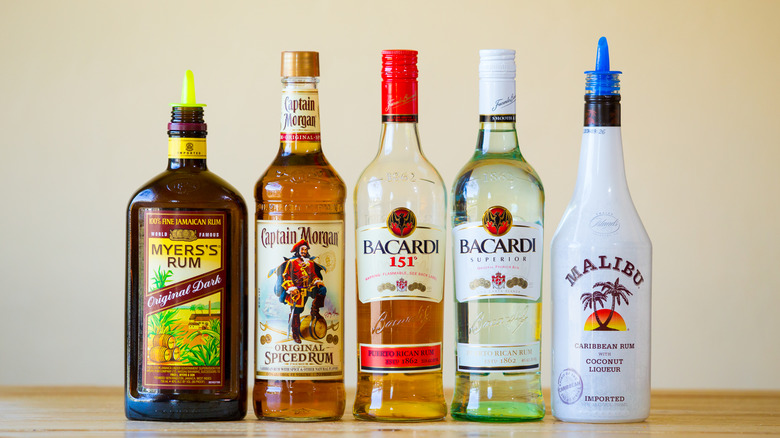
Mixing different styles of rum into a cocktail isn't just about creating something different to break typical cocktail routines. "A mixologist might choose to blend two to three different styles of rum into a cocktail in order to gain complexity in the glass," Nicoll explains. "Spanish, English, and French styles of rum can all have very different tasting notes, and blending them together might complement the stylistic notes of each rum."
He points to the Mai Tai cocktail as an example, since that type of blending is inherent to how it's always been made. For more ideas on using rum in this context, check out this rum blend that does wonders for Mai Tai cocktails. When it comes to tropical cocktails in particular, Nicoll notes that blending rums is very routine due to the wide-ranging rum varieties. "There are so many types of rum produced using various forms of cane sugar, distilled using different styles of stills," he says. He also notes that the same methodology can be used in other types of spirits. "For example, I blend three different whiskies for our house whisky blend, as well as four different sweet vermouths for our house vermouth used in Negronis and Manhattans."
Given the sometimes overwhelming world of rum spirits, which appear in so many incarnations with unique characteristics, we've compiled a primer that reveals and explains 13 types of rum. It includes a look at white, gold, and spiced rums, as well as dark, aged, flavored, English-style, and more. You can also find extra expert insights in our look at the best ways for beginners to identify quality rum.