

The Unwanted Surprise Hiding In Almost Every Cup Of Keurig Coffee
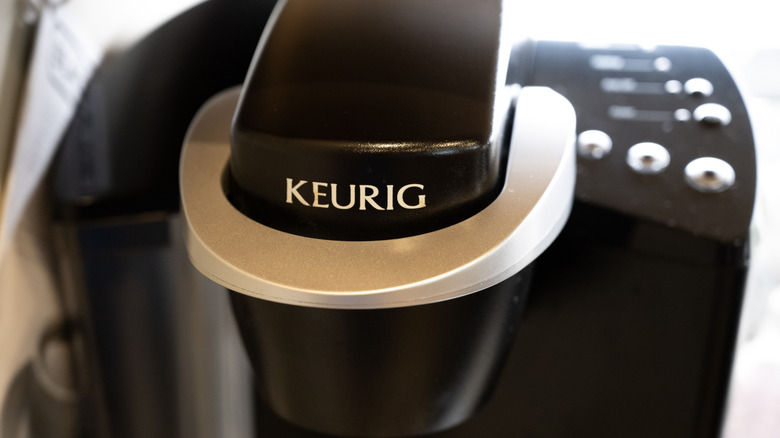
If you rely on a Keurig to provide your morning caffeine fix, you may not think twice about what's happening inside the machine as it whirs out your coffee. Pop in your favorite K-Cup pod, hit a button, and before you know it, you're holding a hot mug of joe. However, there's an extra ingredient that may be making its way into your brew, and it's not a particularly pleasant one: plastic.
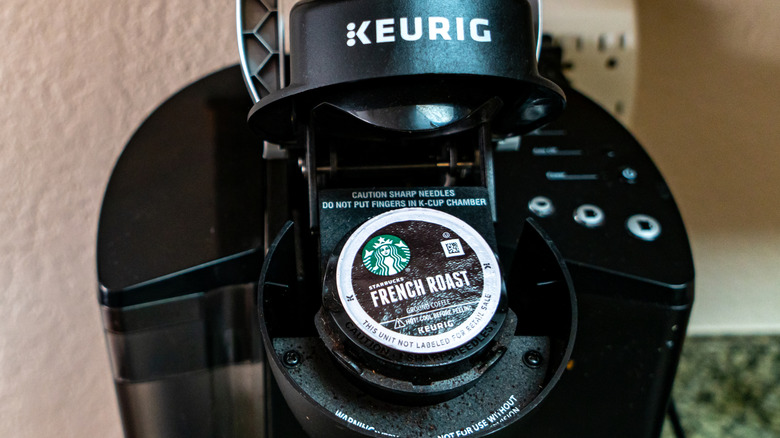
There's a good chance you've already heard about microplastics, but for the uninitiated, they're small particles of plastic that measure less than 5 millimeters in at least one dimension. They can be created when larger plastic items break down from repeated use, especially when the material is exposed to heat, pressure, friction, or regular wear. Standard K-Cup pods are primarily made from a type of plastic called polypropylene, and research suggests that when the Keurig machine forces hot water through the pod into your cup, tiny plastic particles are transferred into your coffee.
In all fairness, this issue isn't limited to Keurig machines — studies have shown it applies to a range of plastic-based coffee systems. The amount of microplastic released also varies depending on different factors, from the pressure and temperature of the water to the acidity of the coffee itself. Some estimates suggest it's only about 10 particles per cup, but there isn't much research about it. While the presence of microplastics in pod coffee is becoming increasingly well documented, what that actually means for your health is a more complicated question.
Should you be worried about microplastics in your coffee?
While scientists have known about microplastics for decades, research primarily focused on their environmental impact, particularly how they affect marine life. It's only in recent years that researchers have begun to understand just how widespread human exposure may be.
Microplastics have been identified in everything from bottled water and seafood to table salt and rice, and one study even suggested that the average person consumes a credit card's worth of plastic every week. Due to the recency of many of these findings, we still don't know exactly what kind of harm microplastics may be doing to our bodies in the long term, but it's unlikely to be anything good. There are all sorts of associated chemicals that may interfere with our hormones, potentially leading to cancer, diabetes, reproductive disorders, and even developmental issues for children and unborn babies.
While we don't know precisely what kind of harm microplastics may be doing to us, and we're not saying you should throw out your Keurig machine, there's still an environmental argument to be made for ditching the disposable plastic pods. Sure, you could find a different way to make your morning coffee — such as a moka pot, French press, or classic espresso machine — but there are sustainable solutions that may be more suitable. For example, you could turn to one of the multiple coffee brands that sell biodegradable pods, as many of them are Keurig-compatible, or purchase a reusable Keurig pod made from stainless steel. Ultimately, there's no reason to panic over the occasional pod coffee, but opting for eco-friendly alternatives can help reduce plastic waste while also eliminating a potential source of microplastics.