

This Unassuming Kitchen Scrap Makes A Handy DIY Wood Stain
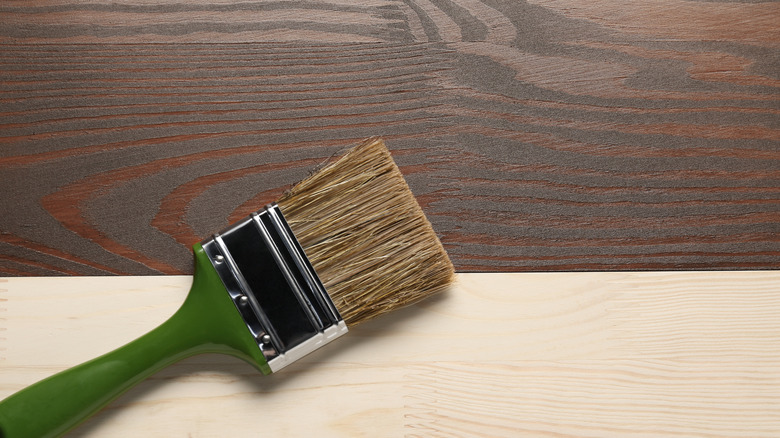
The aesthetic appeal of a dark, warm walnut color on woodwork will be obvious to any house-proud home improvement enthusiast, who can count on finding many commercial wood stains at their local hardware store. However, if you want to elevate some simple pine or oak by a means that's both cheaper and more natural, know that a handy DIY wood stain can be made from the unassuming kitchen scraps of walnut husks.
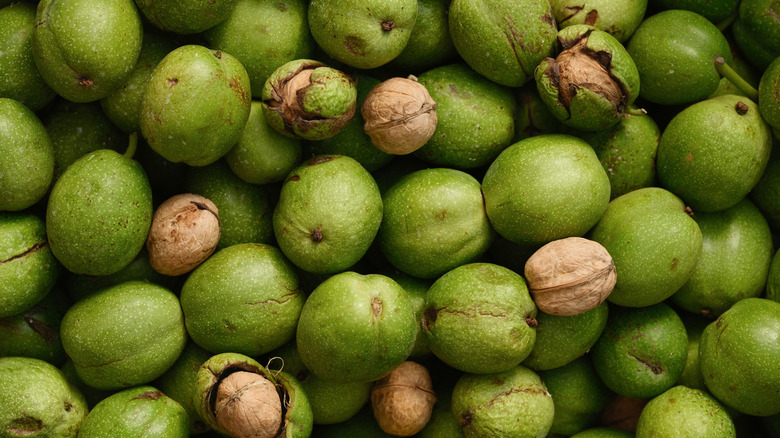
As they are one of the most widespread tree nuts in North America, you should hopefully be able to harvest some fresh black walnuts (one of the two main types of walnuts), which can be distinguished by their distinctively dense green husks. Highly pigmented, due to their tannic compounds, the husks make a great base for wood stains. Once you've gathered your nuts, remove the husks by hand — make sure to wear gloves and some suitable clothes, as this will, unfortunately, be messy work — and set them aside in a large bucket. To make sure that the hulled nuts don't go to waste, check out our recommendations for what to make with walnuts.
Once all the husks have been separated, pour in just enough water to cover them, then mix thoroughly with a sturdy stirring implement, breaking up as many of the larger elements as you can. Cover the bucket with a piece of fabric like an old T-shirt, securing it with string or bungee cord, and place your husk mixture somewhere dry to decompose. After a few weeks, you'll be left with a dark, syrupy gloop that can then be strained through the fabric covering into a smaller vessel. Combine this with an equal amount of rubbing alcohol in a container that can be tightly sealed, and you're ready to start staining.
How apply your homemade wood stain
There are alternative methods of making a DIY black walnut wood stain — one is to make your own walnut hull powder, a process that involves chopping up and drying out the walnut husks, then putting them in a coffee grinder (remember, there are many unexpected ways your kitchen coffee grinder can be used). Next, boil a pot of water and add one ounce of walnut hull powder per quart of water; though you can add more powder if you want a darker hue. After removing from the heat and stirring, transfer your liquid wood stain to glass jar and allow to cool overnight, making sure to shake before using. While this method is quicker that the one outlined above, and may appeal to those who wish to employ only natural ingredients, the alcohol used in the previous method will increase the effectiveness of the stain.
Whichever method you use, remember to exercise the same caution you would when applying a commercial wood stain. Ideally, you should sand down the wood that you plan to stain until it is smooth, making sure to remove any leftover coatings of paint or wax with paint remover or mineral spirit, respectively. While wearing gloves, apply the stain carefully with a lint-free cloth. You may also wish to test the stain on a disposable piece of wood first. Make sure not to apply too much, wiping away any excess, and lay down a tarp or some old newspapers before you begin work — you wouldn't want to stain anything you didn't mean to, after all.