

Whiskey Vs Scotch: What's The Actual Difference?
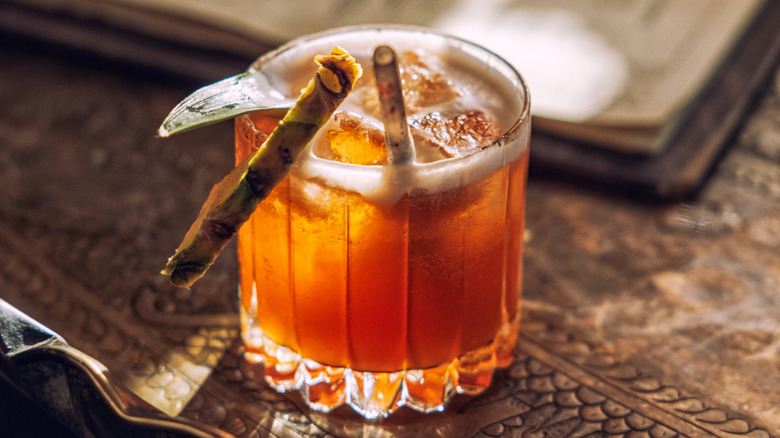
It's not uncommon to hear people use the terms whiskey and Scotch interchangeably, but this isn't actually correct. It's more accurate to say that Scotch is a type of whiskey, but even that isn't entirely true.
Broadly speaking, whiskey is the name given to spirits distilled from a mash of fermented grain, which are almost always aged in wooden barrels. However, it's sometimes spelled "whisky" depending on where it comes from. It's generally called whiskey in Ireland and the United States, and whisky in Scotland, Canada, India, and Japan. Scotch is a legally protected type of whisky that can only be produced in Scotland under specific rules, making every Scotch a whisky — but not every whisky a Scotch. Those rules are similar to the protections governing products like Champagne or Parmiagiano Reggiano. Just as sparkling wine can't legally be called Champagne unless it's made in a specific region of France, whisky can't be labeled as Scotch unless it's been distilled and matured in Scotland, while meeting the country's strict production standards.
The rules help preserve the identity, quality, and reputation of Scotch whisky, governing everything from where it can be distilled and matured to the ingredients and production methods that can be used. They're also a big part of why Scotch tastes notably different from Irish whiskey, bourbon, rye, and other whiskies from around the world.
The rules that define Scotch whisky
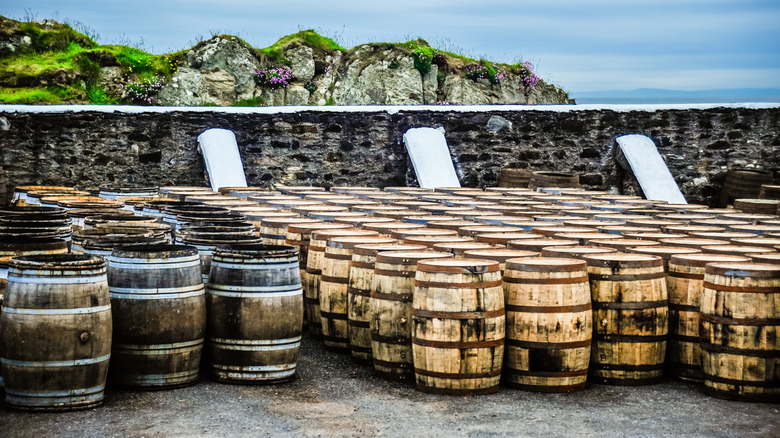
Scotch whisky production is very tightly regulated, and the rules aren't merely geographical in nature. Yes, Scotch must be distilled and matured in Scotland, but the official Scotch Whisky Regulations cover everything from the ingredients that can be used to how long the spirit must be aged.
At the most basic level, Scotch must only be made from water, cereal grains, and yeast, with a single exception — a plain caramel coloring that's permitted to ensure visual consistency between batches. The distillate must also be matured in oak casks for at least three years. These regulations also cover the different types of Scotch. For example, single malt Scotch must be produced at a single distillery using only malted barley, while blended Scotch may combine multiple whiskies from different producers.
Although these stipulations create a common standard, that doesn't mean Scotch is a monolithic spirit — far from it. Scotland is split into multiple whisky-producing regions, each typically associated with its own distinctive character. The individual distilleries also have considerable freedom to shape the final product by adjusting fermentation times, distillation techniques, cask selection, and aging methods. It's possible for two bottles of Scotch to taste remarkably different from one another despite both following the same legal requirements.