

Mix Equal Parts Of These 4 Liquors For The Best, Easiest Manhattan Of Your Life
We may receive a commission on purchases made from links.
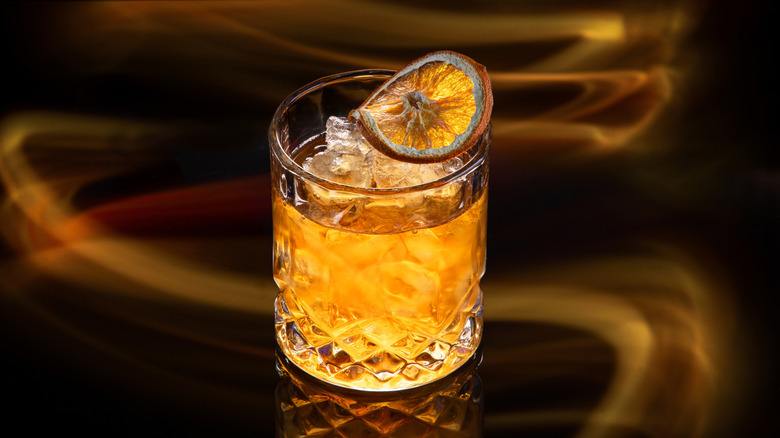
Making a Manhattan can be surprisingly simple depending on how you approach this beloved cocktail first created in the 1860s. In essence, it's a pretty straightforward cocktail, but the magic comes from which liquors you choose and how the quantities are measured and mixed.
For some expert advise on this core bartending skill, we reached out to Fred Siggins, the bartender, drinks educator, and writer whose book "Equal Parts Cocktails" debuts in August 2026. As fate would have it, Siggins includes a clearcut recipe for making the best, easiest Manhattan of your life. Noting that a Manhattan works just as well as an aperitif as it does after dinner, the book explains how this one diverges from a traditional version. As explained deeper in our look at what's really in a Manhattan, a classic version typically calls for two parts rye whiskey, one part sweet vermouth, and a couple of dashes of angostura bitters. But this new Manhattan carves out its own path.
With the innovative "equal parts" recipe attributed to Siggins' colleague John Hallet, the Manhattan is instead created with: one ounce rye whiskey, one ounce sweet vermouth, one ounce Cognac (for additional depth and complexity), and one ounce of Cynar amaro, noted as being earthy and savory. Following up with Siggins on how to make this twist on a classic Manhattan, we gleaned some extra intel on batching up, chilling, and the ideal kind of ice to use when stirring.
How to make this simple, innovative Manhattan
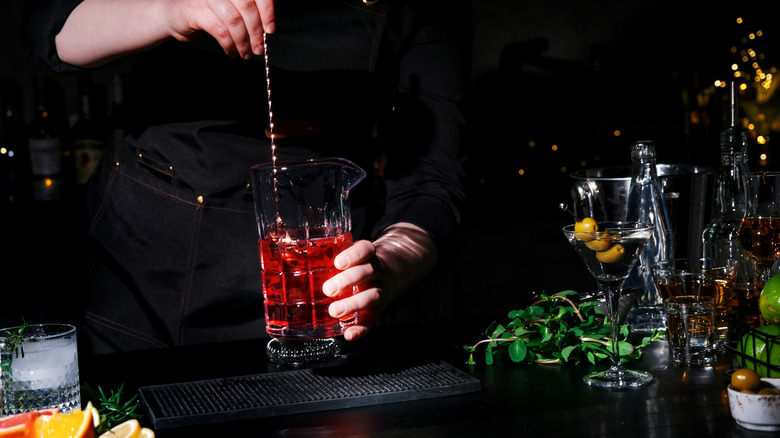
Unless you're a bartender or having a solo nightcap, you'll likely be making more than one Manhattan at a time. Which leads us to wonder, is this easy, super-tasty Manhattan recipe a good candidate for batching up using the same ratios? "Absolutely!" Siggins says. "A pre-batched Manhattan should stay fresh in the refrigerator for at least a week, and up to a month, in a clean, airtight, glass container."
The recipe instructions are quite simple: Add everything to a mixing glass with ice, stir until chilled, strain into a chilled cocktail glass, and garnish with either a twist of lemon or a maraschino cherry. But anyone who's attempted, failed, or succeeded in chilling cocktails knows it's not as simple as it sounds.
"This is one of those things that really comes down to feel and practice. It can be influenced by so many things," he explains, noting that room temperature may be quite different depending on the season. Beyond that, the size and shape of the ice matters as well. "Smaller, thinner ice melts quicker than larger, more solid cubes," he explains. "So the rule is to just stir for a short amount of time, have a taste, then keep going little by little, tasting along the way, until you're happy with the temperature and dilution. It will become more automatic once you've had some practice."
The best type of ice for this Manhattan cocktail recipe
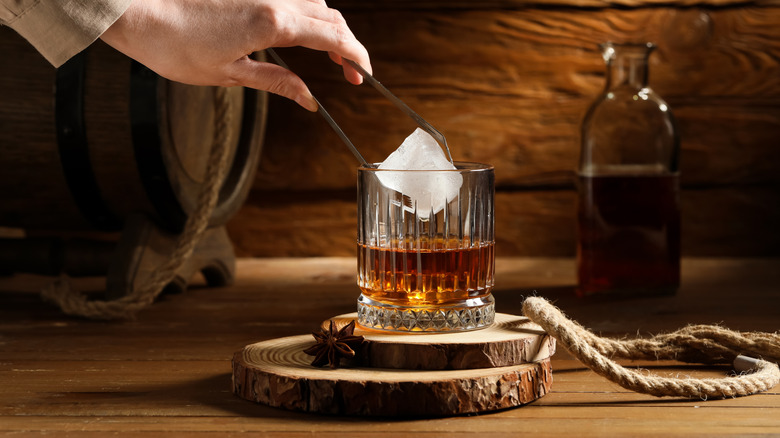
Unless you've paid close attention when ordering in a bar, it may not seem important what kind of ice is used. In reality, it does matter; the size and shape of the ice has an impact on the surface area, specifically affecting how fast the ice melts and dilutes, which in turn affects the temperature and texture as you drink. Choosing the right type of ice can also come down to whether your drink will be shaken or stirred.
In the case of a Manhattan, regardless of the recipe, Siggins states that the best type of ice will be large, solid cubes. "But the most important thing is to use a lot of ice, no matter what kind you have on hand," he explains. "Make sure to fill your mixing vessel at least halfway with ice, even if it's just to stir a small amount of liquid. This will stop the ice from melting too quickly, giving you much more control." That's because small amounts of ice melt very quickly in room temperature ingredients, according to Siggins, "leaving you with a tepid, watery cocktail."
Once you try this equal parts cocktail, you're going to want some more. Check out this guide to 11 other equal-parts cocktails, including versions of The Last Word, Blood and Sand, a Corpse Reviver #2, and more.