

What A McDonald's Hamburger Cost When The Chain First Opened
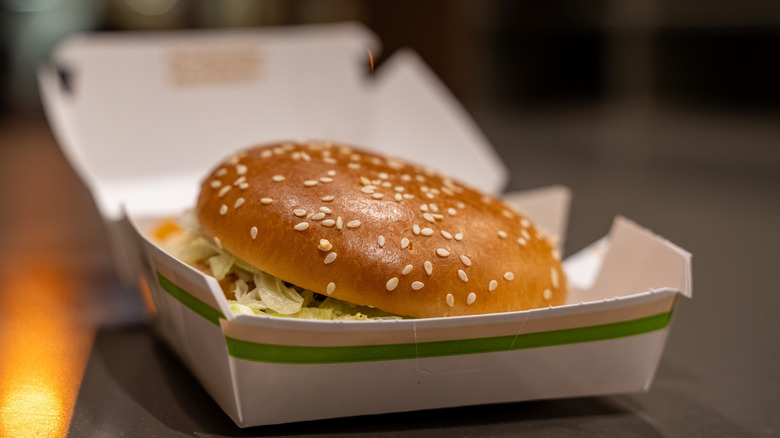
You may think of a McDonald's hamburger as one of the more affordable meal options available today, but when the chain first started serving its now-world-famous hamburgers back in 1940 they cost a mere 15 cents, with cheeseburgers only four cents more at 19 cents. Even more amazingly, the chain's hamburger price hadn't increased by 1955: A full 15 years later, two dollars was still enough to order every item on their menu.
In fact, the prices across the 1940 McDonald's menu are pretty mind-blowing by today's standards. Fries and a soda cost 10 cents each , so for little over ⅓ of a dollar you could enjoy a full meal of hamburger, fries, and a soda. What's most impressive is that even adjusting for modern inflation, the original McDonald's hamburger still didn't cost much: 17 cents in 1940 equated to a $1.76 dollar price in 2024. In reality, today's McDonald's hamburger hasn't quite been able to match the unbeatable value of its 1940 offering. Prices vary by location, but according to the McDonald's website, the standard price for a McDonald's hamburger in 2026 is $3.99.
How McDonald's were able to sell hamburgers for 15 cents
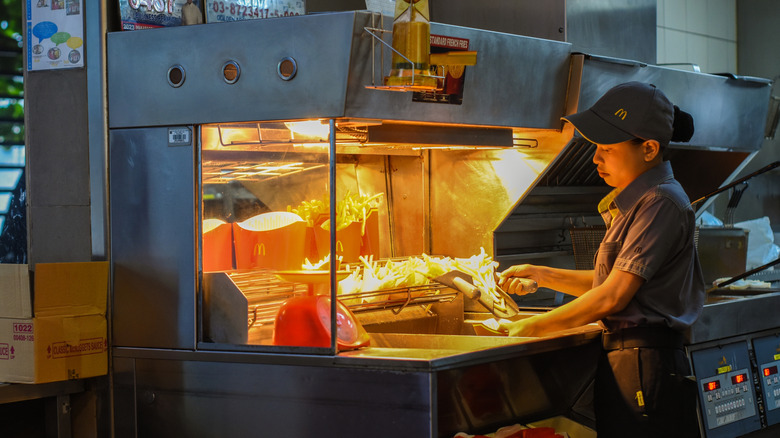
The revolutionary efficiency of the McDonald's kitchen model has been well-documented. In popular culture, the 2016 film "The Founder" focuses mostly on the dogged franchising ambition of businessman Ray Kroc, but not without first highlighting the innovation genius of the founders of the original McDonald's restaurant, brothers Maurice and Richard McDonald.
The McDonald brothers' Speedee Service System introduced Henry Ford's principle of assembly-line production to the food world. The system included concepts such as preassembling key menu items, dedicating kitchen workers to single-tasks, and streamlining the menu to offer only the most popular items. The efficiencies of the Speedee Service System hugely reduced McDonald's costs, allowing the chain to offer better value to customers, as well as a faster and more consistent service than its competitors. Other restaurant chains like Burger King soon followed suit with their own foodservice innovations, and today's competitive "fast food" industry was born.