

Is The Broccoli You See In Grocery Stores Man-Made?
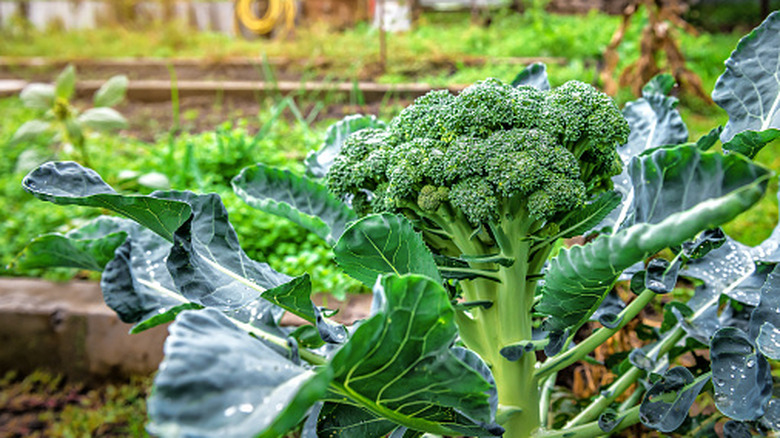
Lots of questions and confusion swirl around how vegetables are grown, especially with the advent of genetic modification of plants, biotechnology, chemicals, and pesticides. However, the term man-made doesn't necessarily fall into those categories, at least when it comes to broccoli. Those cruciferous cuties are nutritional powerhouses by any standard, but it seems that Mother Nature had a little help creating them long, long ago.
The broccoli you see in grocery stores today is man-made in the sense that it was selectively, purposely, and patiently bred back in ancient Roman times. Vegetable breeding and cross-breeding are now very common practices, essentially meaning that farmers create new plant varieties with desired characteristics by selective breeding of existing plants. Food growers have been doing this the natural way since long before the science of GMOs existed — including with the well-loved broccoli plant.
Today's broccoli belongs to the close-knit Brassicaceae species that includes cabbage, kale, cauliflower, Brussels sprouts, and collards, all shaped over time by people maximizing different edible parts of the plant. Broccoli's first iterations emerged around the 6th century B.C., deriving from wild cabbage (Brassica oleracea), also called wild mustard. Early versions proliferated in the Eastern Mediterranean region and Asia Minor, with concentrated cultivation happening in Italy. It eventually made its way to America around the 1700s, centuries before becoming what one Green Giant survey called "America's favorite vegetable" in 2022. It was a long journey to American soil, and the backstory explains why you'll never find wild broccoli growing freely on its own.
Intricacies of broccoli cultivation
The "man-made" distinction comes from certain elements of plant breeding, which the USDA defines as using processes such as cross-pollination, selection, and related techniques to create desirable traits and varieties — ones that pass through to later incarnations. As such, the familiar green, tree-like heads we scoop up from grocers and farmers markets today are especially associated with Calabrese broccoli, a type named for Calabria in southern Italy.
Long before modern genetics labs, farmers could shape crops by saving and replanting the seeds of ones that performed the best and delivered the qualities they desired. In the case of wild cabbage, that kind of artificial selection helped magnify different traits such as tastier or larger flowerheads, tighter leaf buds, and sturdier stalks – eventually morphing into what we now recognise as broccoli.
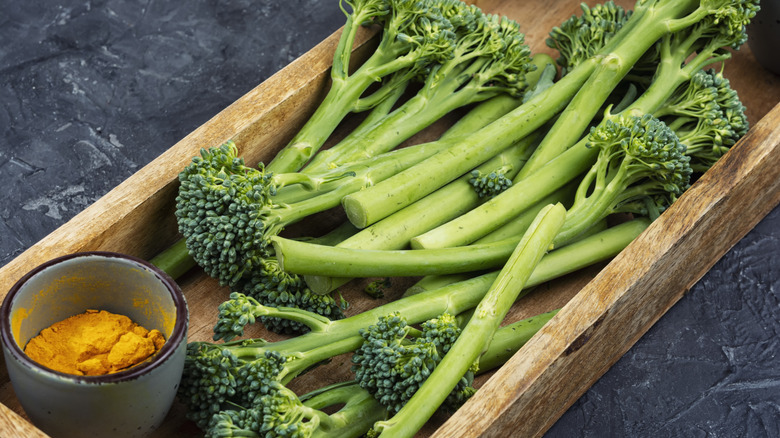
We love our modern-day broccoli, but it's worth noting that it, along with other wild-cabbage descendants, is still being modified today via similar plant breeding techniques. That includes the popular broccolini created in Japan just a few decades ago, featuring wispier heads and long stems, as well as the lime-green broccoflower, a cross between broccoli and cauliflower. Even beyond the Brassica family, you'll find vegetables and fruits that are actually man-made. So, yes, that broccoli in your grocery cart has a trajectory shaped by humans, but it's one unfolding over centuries of traditional hands-on farming and selective breeding — not as a GMO or biotechnology experiment.