

These 10 Mistakes Are Stopping Your Boxed Brownies From Being Bakery-Worthy
We may receive a commission on purchases made from links.
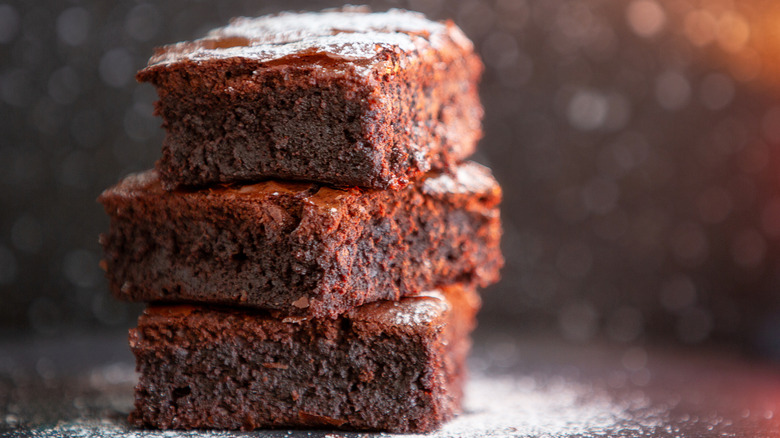
I've been baking brownies for a long time. I started tinkering around in the kitchen when I was a "wee thing," says my mom, and by middle school, I was full-on baking brownies and cookies for my family on a regular basis. Fast forward through culinary school, and one of the most popular desserts at my first restaurant job was a molten brownie — which meant lots of time perfecting the richest, gooiest brownie possible. Later, after opening my bakery, I continued to bake even more brownies than I care to recall.
But at home, I still occasionally reach for a boxed mix — between work and family life, sometimes I just need a shortcut to something sweet and chocolaty. Thankfully, many boxed brownie mixes produce excellent results. But even the best mixes can turn out less than ideal if some common brownie missteps take place. Small mistakes, like over-mixing the batter or using the wrong pan, can be the difference between moist, fudgy brownies and dry, disappointing squares. I've compiled some of the most common mistakes people make when preparing boxed brownie mix so you can avoid them. Take a read and get ready for bakery-worthy brownies every time.
Using expired brownie mix
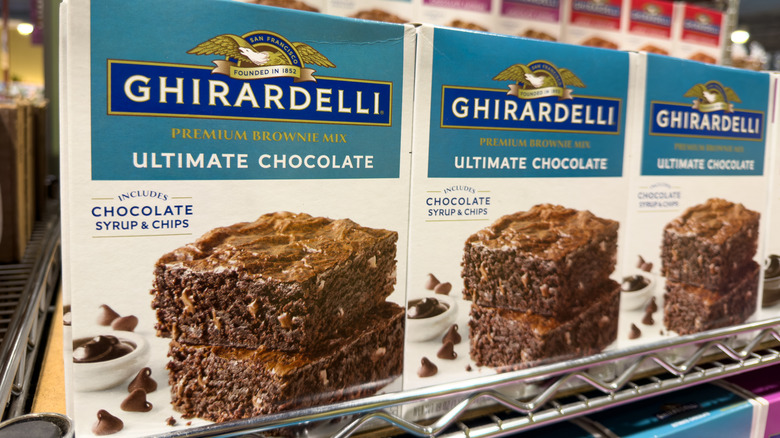
A boxed brownie mix can be a lifesaver when you need dessert fast and don't have time to make a batch from scratch. It's just a quick run to the grocery store and a sprint down the baking aisle. But before you toss that box into your basket, there's one small, yet crucial, step you should take that can make a big difference in how your brownies turn out — and it just takes a few seconds.
Always check the expiration or best-by date on the box. If you use a mix that's been sitting around too long on the shelf, your brownies can end up tasting dull. As ingredients like cocoa powder, chocolate, and flour sit stagnant on shelves, their quality deteriorates, and there's a greater chance that moisture may have entered, possibly leading to mold and clumping. Even more of a factor are the leavening agents, which can weaken over time, causing the brownies to not rise properly for the best texture. If you take the time to ensure your boxed brownie mix is fresh, you'll have a better chance at producing bakery-worthy brownies.
Not using high-quality ingredients
Everybody has an opinion on the "right" way to make brownies, but one thing most bakers can agree on is that the quality of your ingredients matters. Even with boxed brownie mixes, better ingredients can noticeably improve both the flavor and texture of your finished brownies.
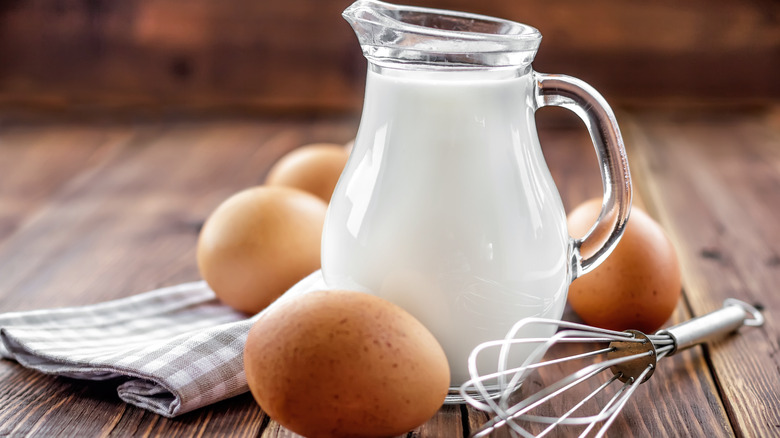
Most brownie mixes call for just a few add-ins — typically oil or butter, water, and eggs — so it's important that they each bring their A-game. Cheap oils can sometimes taste waxy or stale, while higher-quality oils tend to have a cleaner flavor that lets the chocolate stand out. Personally, I love the fruity notes a high-quality extra virgin olive oil brings to brownies. Butter can also make a big difference in flavor and aroma, especially if you use European butters like Kerrygold or Plugra, which have a higher butterfat content.
If you choose to swap water for milk, stick with whole milk as its higher fat content will add a slightly richer flavor and creamier texture. Depending on your taste, you may want to choose organic milk over regular. And when it comes to eggs, stick to organic pasture-raised eggs if your budget allows; these eggs have richer, nutrient-dense yolks that can add deeper flavor to your brownies.
Choosing to use oil over butter
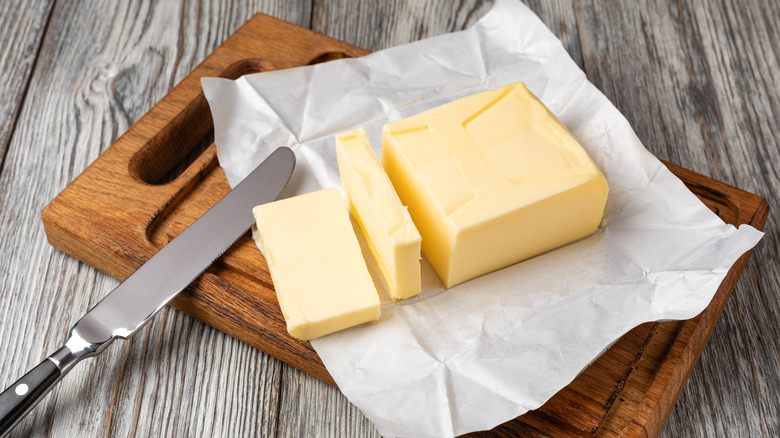
Boxed brownie mixes call for oil, because it's an inexpensive way to add moisture and yield a fudgy texture. But unless you're using a flavorful oil, like a high-quality extra virgin olive oil, most neutral oils won't bring much beyond fat. An easy fix to make your brownies taste way better is to replace some of the oil with butter.
In baking, butter adds not only moisture, but also richness, aroma, and lots of delicious homemade flavor. That's why with brownie mixes that call for oil, I almost always substitute half of the oil for butter to give the brownies a deeper, more bakery-style flavor. Stick with unsalted butter since there is already salt in the dry mix — and be sure to melt it so it blends smoothly into the batter. If you want to upgrade the brownies a notch further, brown the butter to add some nuttiness and toasted caramel notes, as in Tasting Table's ultimate fudgy brownie recipe.
Not enhancing the chocolate
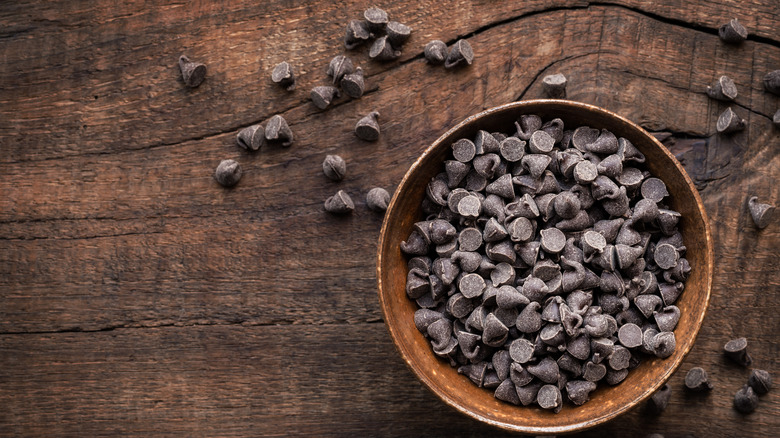
Boxed brownie mixes are developed to be simple. The whole point is to make a pan of brownies as fast as possible. But a mistake people often make is not enhancing the chocolate when making the batter. There are moves you can make to give your boxed mix brownies a deeper chocolate flavor that will make them taste more homemade.
One easy way is by adding chocolate chips to the batter. I prefer mini chocolate chips because they melt into the batter; large chunks remain solid even after baking. The result is a brownie that tastes extra decadent without changing the texture too much. The type of chocolate to use depends on your preference — semi-sweet chocolate chips offer a balanced, sweet chocolate flavor, while dark chocolate chips provide a more intense, slightly bitter chocolate flavor.
Another way to deepen the flavor of boxed mix brownies is to swap some or all of the water for brewed coffee. Coffee naturally intensifies cocoa flavor, so your brownies will taste richer and more chocolaty. Don't worry — the brownies won't actually taste like coffee. Instead, they'll end up tasting like mocha brownies. If you don't have brewed coffee on hand, a spoonful of espresso powder mixed into the dry mix also works.
Overmixing the batter
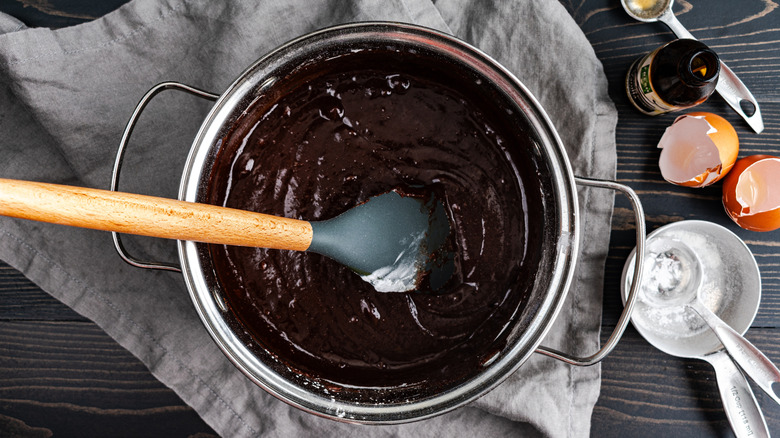
Overmixing can ruin many batters — think pancakes, muffins, cakes — and boxed brownies are no exception. There are two main reasons why: gluten development and excess aeration.As soon as the dry mix is combined with the liquid ingredients, gluten proteins begin to form the structure of the brownies. A little gluten is necessary, but too much mixing can create a tight network of protein strands, which can turn your brownies overly chewy and tough once baked.
The second issue is aeration. Overmixing creates excess air in the batter, which can puff up too much in the oven and then collapse as the brownies cool. This often leads to a cakier texture and a sunken brownie.
To prevent overmixing, keep the electric mixer in the cabinet and make the batter by hand. Use either a silicone spatula or a wooden spoon, and mix just until the dry ingredients are incorporated. In the end, your brownies will taste more like they came from a bakery than a cardboard box.
Using the wrong baking pan
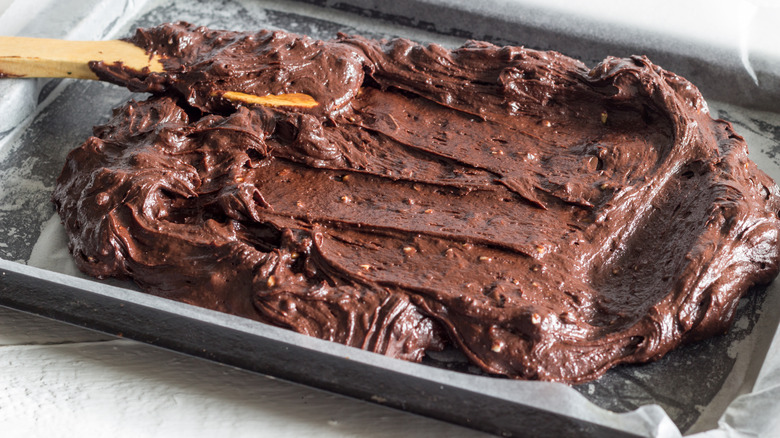
The size and type of baking pan you use can impact the taste, texture, and appearance of your brownies. The wrong pan size can affect how evenly the batter bakes, throwing off baking times. It doesn't help that baking dish sizes can seem deceptively similar. An 8 inch by 8 inch baking pan is easy to mistake for a 9 inch by 9 inch pan. Likewise, a 9 inch by 13 inch pan can look nearly identical to an 8 inch by 12 inch pan at a glance.
Those slight size differences change the depth of the batter, which directly affects baking time. Using a pan that's too large can leave brownies thin, dry, and overbaked, while a pan that's too small can result in underbaked centers and edges that cook too quickly.
Material matters, too. I stick to light-colored aluminum pans, because they distribute heat evenly, which prevents the brownies from browning too quickly. I avoid glass pans, too, because they conduct heat slowly — meaning there's a good chance the edges of the brownie will cook faster than the center.
Not prepping the pan correctly
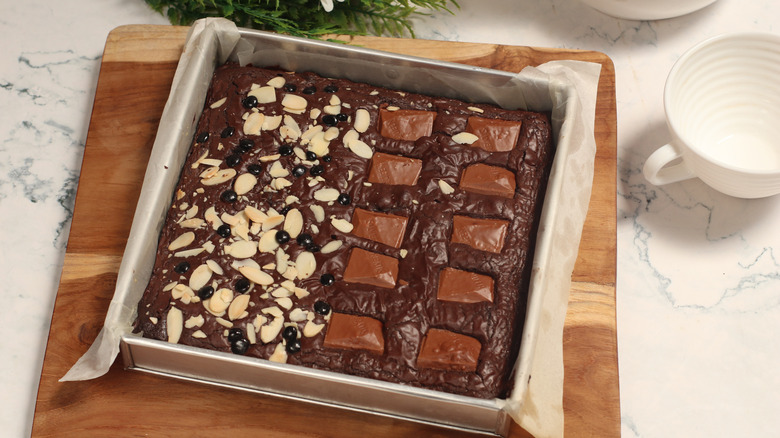
There's nothing worse than baking a batch of shiny, crackly-topped brownies only to discover they're stuck to the pan. You can try to pry it out, but chances are they'll tear apart and turn into a crumbly mess. Thankfully, there's a quick and easy way to make sure this never happens — and it all comes down to prepping the pan correctly.
Brownie batter is naturally quite clingy, so you need to create a barrier to prevent it from sticking to the pan as it bakes. You'll also want a way to remove the brownies easily, in one piece, without ruining the beautiful crackly top. Enter: parchment paper and nonstick spray.
Start by greasing the bottom and sides of the baking pan with a light coating of nonstick spray. Then line the pan with parchment paper, leaving an overhang on two opposite sides. Those overhanging pieces act like handles, letting you lift the entire brownie slab out of the pan easily and cleanly. While greasing and lining the pan is an extra step, it makes removing, serving, and cleaning up much easier and less stressful.
Baking at the wrong temperature
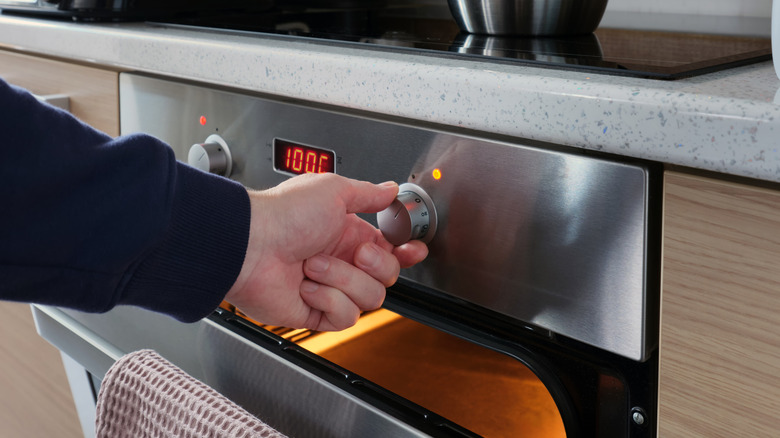
Baking brownies at the wrong temperature can lead to poor texture, burnt edges, or an underbaked center. Many home ovens can run hotter or cooler than the temperature they're set at, and even small temperature inaccuracies can throw off the final result. If your oven is too hot, the brownie edges can bake too fast, while the center remains undercooked. Too high a temperature can also cause the brownies to rise quickly and collapse as they cool, creating a dense texture and sunken top. On the other hand, if your oven is too cool, your brownies may take a long time to cook through, leaving them dry, rather than moist and chewy.
To avoid this, make sure your oven temperature is accurate with a thermometer specifically designed for measuring heat in the oven, like this Pecula Stainless Steel Oven Thermometer. It's inexpensive, easy to use, and can eliminate a lot of the guesswork in baking.
Not cooling the brownies long enough
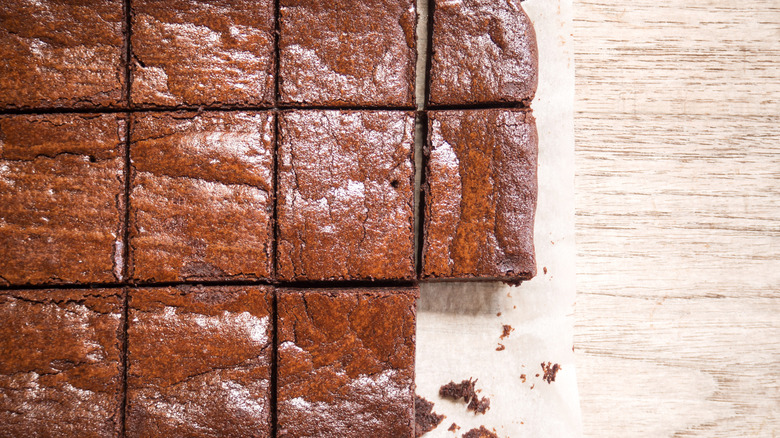
Cutting into just-baked brownies almost always leads to messy, mushy slices. Even if the top looks firm, the interior is still too soft. Brownies need time to cool so the chocolate can solidify properly and the texture can fully develop.
The most obvious way to cool your brownies is to let them sit at room temperature. But that may prove challenging for even the strongest-willed of us. If you'd like, you can place the just-baked brownie in its pan in the refrigerator, though it may slightly raise the fridge's internal temperature for a short period.
My preferred cooling method? I always let the brownie slab cool for an hour at room temperature, then continue chilling it overnight in the refrigerator to let it fully develop its structure and make it easier to cut. At my bakery, this was our go-to method for the cleanest, most precise cuts. Once the brownies are completely cool, use a sharp chef's knife to slice them, and wipe the knife between cuts if crumbs stick to the blade. Long, confident strokes produce the cleanest, most bakery-like edges.
Not storing the brownies properly
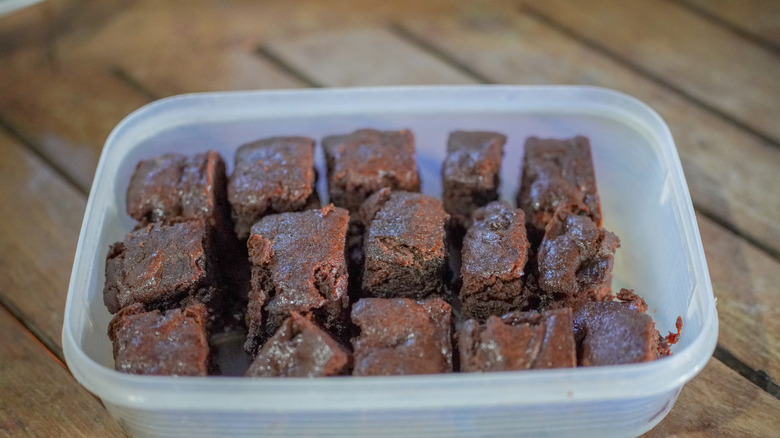
Now that you've got a delicious, fully cooled brownie slab in front of you, it might seem impossible to imagine that there'll be leftovers. But if you want to enjoy them for more than just a day, there are some storage techniques that can help keep them rich, moist, and chewy for as long as possible.
For short-term storage, brownies will stay fresh for a few days at room temperature when kept in an airtight container. If you want them to last a week or two, the refrigerator is your best bet. At my bakery, we stacked three or four brownies at a time, wrapped them tightly in plastic, and stored them in the fridge to maintain freshness.
For longer storage, the freezer works beautifully. I recommend freezing the brownie slab whole — or at least in larger pieces — since cutting them into small squares exposes more surface area to air, which can dry them out. It also further exposes them to the cold temperature, which can cause freezer burn. Wrap the slab in plastic, then foil, and place in an airtight container. Stored properly, brownies can keep well in the freezer for up to three months.