

10 Cocktails That Defined The 1990s
The 1990s gave us dial-up internet, unforgettable fashion trends, and a soundtrack of iconic pop anthems. It was a decade of bold expression, and that same energy continued behind the bar, shaping a whole host of vibrant cocktails that truly defined the era. During this time, many of the drinks we know and love today were just entering the mixology scene. In fact, the '90s are often referred to as the "cocktail renaissance," thanks to a new wave of fresh and fruity sips that embraced bright colors and punchy flavors.
The standout drinks of the decade include everything from crisp, vodka-based creations to colorful tiki-style favorites and refreshing citrus-forward mixes. You'll likely recognize a fair few of them, too. The cocktails of the '90s remain popular in bars around the world, offering universal appeal through playfulness, elegance, and nostalgia. Perhaps your go-to order has 1990s roots you never realized, or maybe this boozy lineup will inspire you to try something new. Either way, there's no denying the lasting legacy the '90s have left on global cocktail culture.
Cosmopolitan
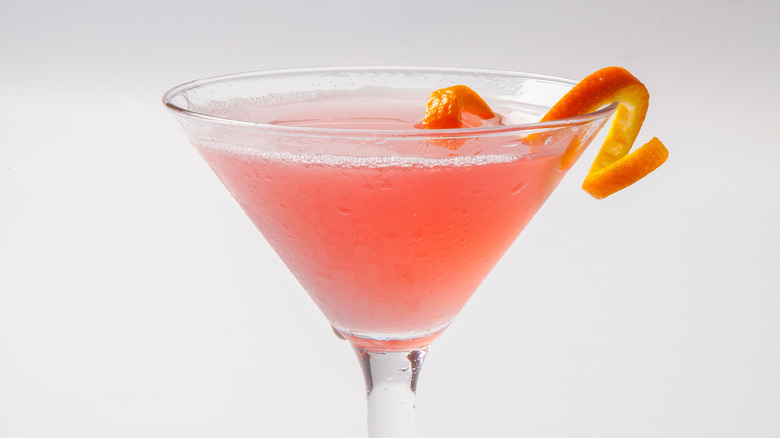
Fans of the '90s cult classic "Sex and the City" will know the cosmopolitan as Carrie Bradshaw's tipple of choice. This vibrant cocktail was a fitting extension of the protagonist's vivacious character, and the drink swiftly gained a cult following after its numerous appearances in the series. A classic Cosmopolitan blends orange-flavored vodka with triple sec liqueur, cranberry juice, and lime juice. Everything is shaken up with ice, then strained into a chilled glass and garnished with an orange twist, creating a bright, citrusy sip with a striking pink hue.
Despite its strong association with the beloved comedy-drama, the cosmopolitan was actually invented years before the show aired. In 1988, New York bartender Toby Cecchini put a zesty spin on the similarly pink-hued vodka and grenadine drinks of the time, and thus the first Cosmo was born. It fast became a hit across the city and beyond, with its reputation only strengthened thanks to celebrity fans such as Madonna and Sandra Bernhard. And the cocktail's appeal has endured. Today, it remains a firm favorite for many, serving as a stylish yet laid-back option for casual at-home sipping and special occasions alike.
Espresso martini
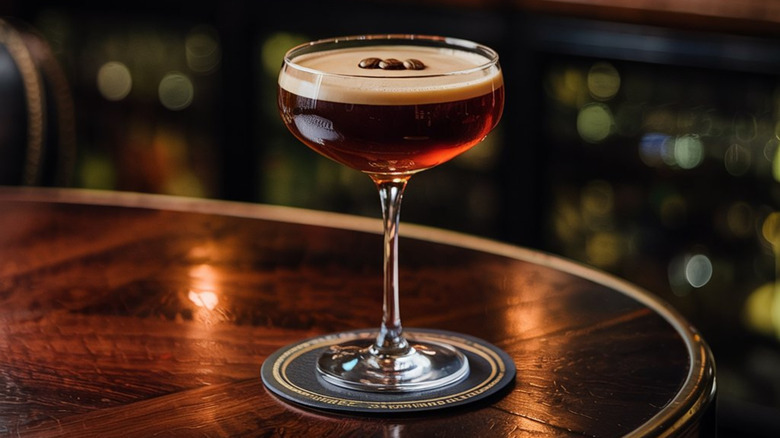
Offering creamy indulgence and a welcome hit of caffeine, the undeniably chic espresso martini is a top choice amongst modern-day bargoers. However, it was in the 1990s that this cocktail really had its heyday. Typically served in a long-stemmed glass, the espresso martini is made with vodka, freshly brewed coffee, and coffee liqueur. Shaken and strained, the martini is brightened by expressing a lemon twist over the top, and finished with a coffee bean garnish. The drink boasts a wonderfully frothy top and a crisp, lively flavor with just the right hint of sweetness from the liqueur.
The espresso martini has its roots in the 1980s London bar scene. Dick Bradsell was the first to create the drink, and as his bartending work took him to various venues across the city, he shared the concept with more and more people (allegedly including a well-known top model). The cocktail soon took off, becoming the trendiest sip of the moment, and by the 1990s, its popularity had really boomed. While the hype gradually wore off in the decades that followed, the espresso martini never really went out of style, and it's since enjoyed a major resurgence. In 2022, Forbes highlighted the drink's comeback, speaking of its timeless elegance and versatility as both a daytime sip and post-dinner treat.
Appletini
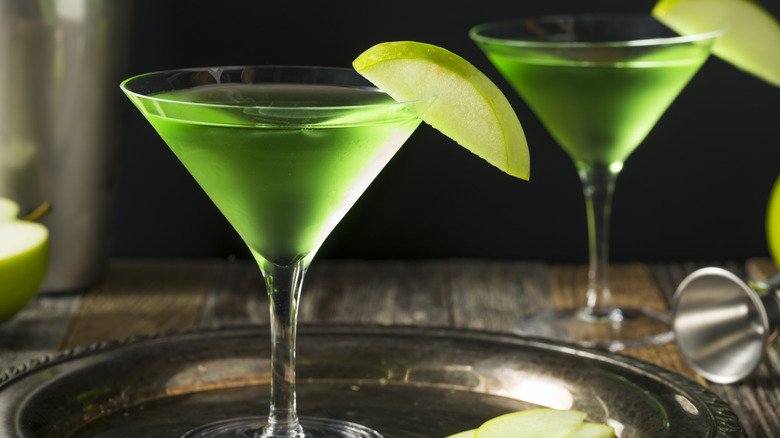
Another bold take on the classic martini, the appletini boasts a striking neon green hue and the punchy, sweet-tart flavor to match. Some versions of the drink are made with just three ingredients — vodka, apple liqueur, and simple syrup, while others build on this base with lime cordial and fresh citrus juices, or add a glug of grenadine for an eye-catching two-tone finish. Garnish-wise, a maraschino cherry or apple slice is the go-to, and these fruity finishing touches perfectly complement the cocktail's playful vibe.
Los Angeles is the birthplace of the appletini. It was the Fourth of July weekend in 1997, and a bartender at Lola's on Fairfax Avenue was tasked with using up a bottle of Sour Apple Pucker schnapps. The simple, apple-spiked martini was the result, and it went down a treat. Before long, it became a nationwide hit. Part of this drink's appeal is its ability to bridge generations, and while the appletini might feel a little out of place in an upscale cocktail bar, you can always rely on it to bring the fun factor.
Sex on the Beach
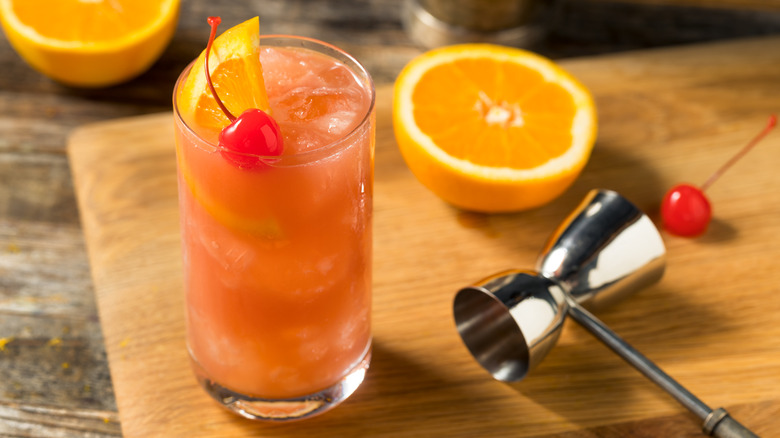
If there's any cocktail that has the ability to instantly transport you somewhere sunnier, it's a Sex on the Beach. This fruity sip begins with a layer of peach schnapps, pineapple juice, and orange juice, which are mixed up and added to a tall Collins glass. Then, to create that signature red-yellow gradient, a mixture of vodka, cranberry juice, and raspberry liqueur is slowly poured over the top. The idea is to mix the two elements together before enjoying the drink, and the resulting blend offers sweetness, tang, and booziness in equal measure.
The exact origins of this cocktail are a little hazy, but one popular theory attributes its creation to a bartender in Florida in 1987. Allegedly, the idea was to promote a specific brand of peach schnapps by showcasing its versatility as a mixer. And, since it was spring break, crafting something summery and fruit-forward was the natural approach. With its bold name and refreshing, crowd-pleasing flavor profile, it's no wonder the cocktail took off, and it quickly cemented its place as an icon of the '90s party scene. Now, the iconic Sex on the Beach maintains its presence as a beachside staple, being the vacation tipple of choice for many.
Long Island iced tea
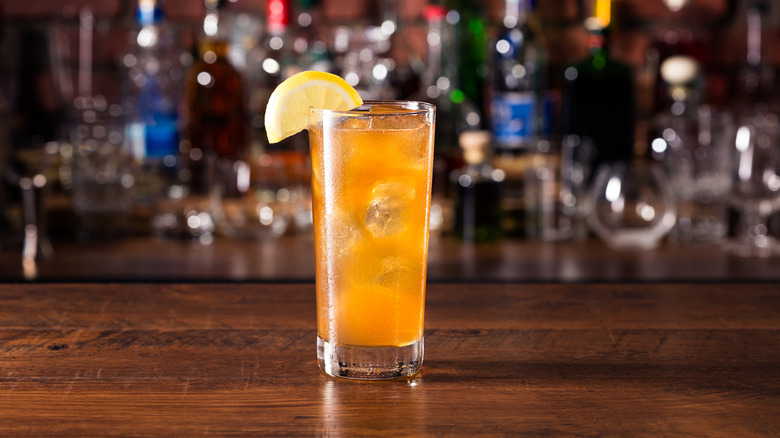
The booziest of the bunch, the Long Island iced tea is a potent, spirit-forward cocktail that also found its fame in the '90s. To make it, you'll need no less than five different spirits. There's white rum, vodka, tequila blanco, gin, and triple sec, which are shaken with sugar syrup and citrus juice, before the mixture is strained and topped up with cola. It's fresh, fizzy, and certainly packs a punch, making it an ideal pick for those seeking a strong, no-nonsense sip that'll still go down easy.
The Long Island iced tea is thought to have hit the cocktail scene back in the 1970s, when bartender Robert "Rosebud" Butt whipped the drink up while participating in a cocktail competition. The criteria called for a drink made with triple sec, and his boozy take on the brief was surprisingly refreshing. Soon replicated in bars around the world, the cocktail was a fixture of '80s and '90s nightlife, though it's also likely linked to some questionable morning-after memories for many.
Mojito
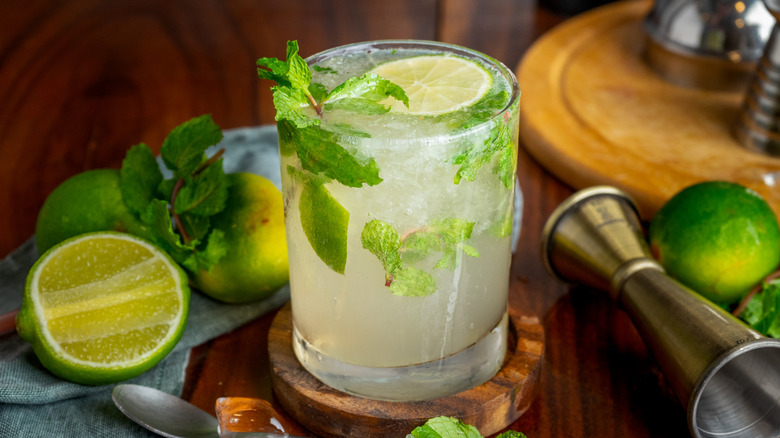
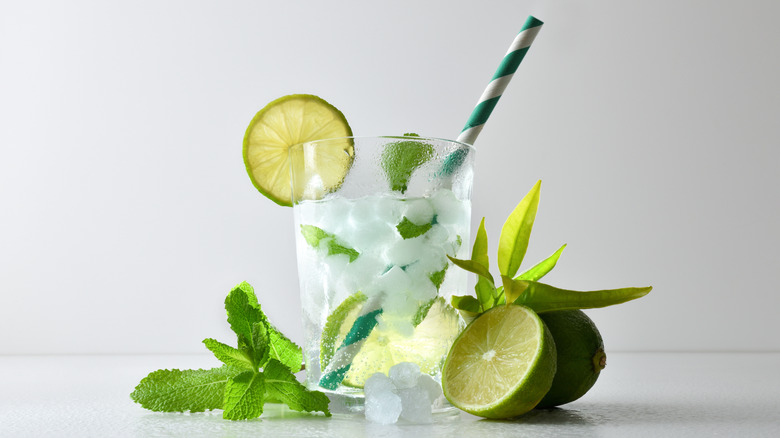
As timeless as it is refreshing, the mojito cocktail has long been associated with warm-weather sipping. Its light and bright combination of rum, lime juice, fresh mint, and sugar syrup, all topped up with sparkling soda water, is a perfectly balanced mix of sweetness and citrus. This drink is delightfully cooling, with plenty of fresh, citrusy flavor, and a delightfully fizzy finish.
In the 1990s, the mojito was thrust into the limelight after it became a hit on the vibrant bar scene of Miami's South Beach. However, the drink's roots trace much further back than this. The idea to blend lime, mint, and sugar with liquor is often attributed to Captain Francis Drake's crew, who acquired the ingredients during their attempted invasion of Havana, Cuba, in 1586. The drink was originally concocted as a remedy for scurvy and dysentery, and it did the job.
By the mid-1800s, the drink had taken on a format closer to its modern-day counterpart, with the original aguardiente liquor swapped for rum. The establishment of the popular Bacardi brand was a key contributor to the drink's success, with mojitos being the star of countless advertising campaigns. Fast-forward to the 1990s, and growing demand for cocktails made with crushed ice saw the mojito adapted yet again. It became the fizzy, ice-filled sip we're familiar with today, and this approach has kept the drink firmly in the spotlight ever since.
French martini
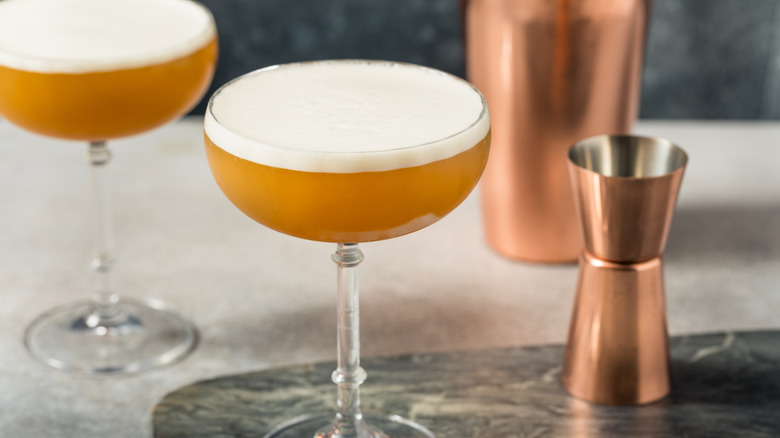
The French martini is a simple, sophisticated choice for fans of fruit-forward cocktails. This lesser-known member of the martini family requires just three ingredients — vodka, raspberry liqueur, and pineapple juice. The fruity additions to the clean vodka base introduce a good dose of sweetness, yielding a drink that's wonderfully easy to sip.
This cocktail doesn't hail from France, but instead gets its name from the French raspberry liqueur (Chambord) that's typically used to make it. A New York restaurant called Pravda is actually the French martini's place of origin. The drink was invented here in 1996, and word of its light, sweet-tart flavor spread fast. Soon, it was a mainstay of star-studded parties and upscale lounges, famed for its elegant yet approachable feel.
In recent years, the French martini has experienced a comeback, winning renewed attention thanks to the power of social media. Among those to sing its praises is Martha Stewart, who strongly endorses the drink's status as a stylish, easy-to-prep modern classic.
Daiquiri
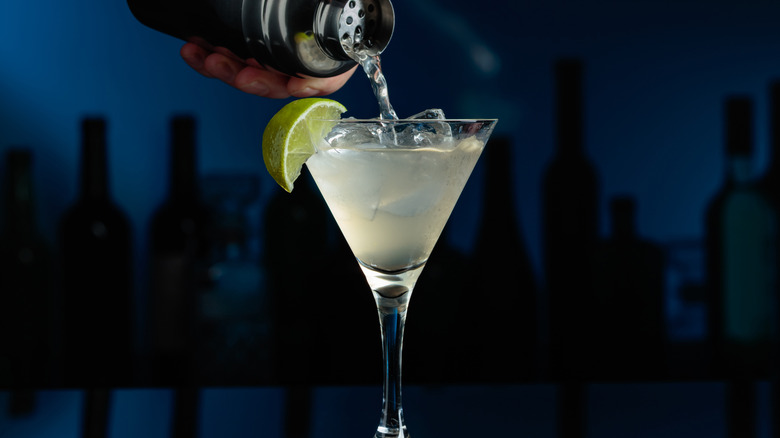
When you hear the word daiquiri, you might think of the slushy-like frozen cocktail that's become synonymous with poolside sipping. However, a classic daiquiri actually takes a rather different form. There's no crushed ice in sight, but rather a simple, sophisticated blend of white rum, lime juice, sugar syrup, and chilled water, sometimes with a dash of daiquiri bitters in there, too. In the '90s, this version of the drink was especially popular in the U.K., thanks to features in the Difford's Guide magazine.
The idea to mix rum with sugar and citrus can be traced back to 19th-century Cuba. It wasn't until the early 1900s that the daiquiri found its way to America, and over the decades, the drink gradually became better known. By the 1970s, frosty drinks were all the rage, and brighter, fruitier takes on the cocktail were commonplace. Today, the traditional daiquiri base has been adapted into many variations, from strawberry-flavored frozen sips to the grapefruit-laced Hemingway daiquiri.
Mai tai
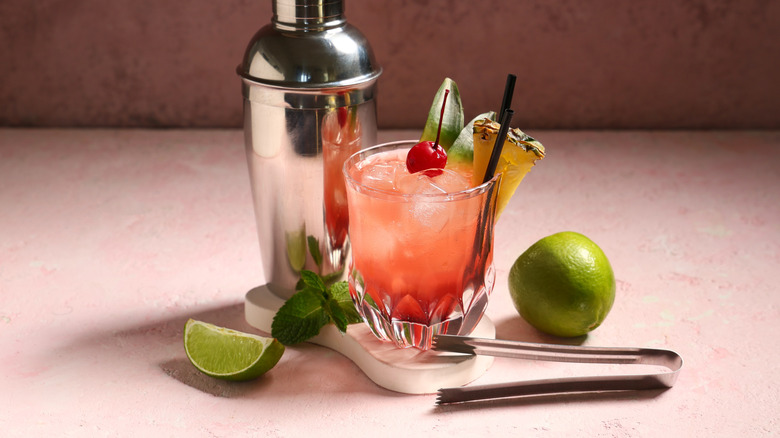
A beloved tiki favorite, the mai tai hits all the right notes. It's fruity, citrusy, and sufficiently boozy, with a sunny orange hue that brings all the tropical vibes. The liquors used to make this cocktail are white rum and dry curaçao (a type of orange liqueur). Then there's lime juice, almond-flavored Orgeat syrup, and sugar syrup, which help create that beautifully balanced sweet-and-tangy profile.
Dating back to 1944, the mai tai was invented by Victor Bergeron (aka Trader Vic), who ran a Polynesian-themed bar in Oakland, California. He whipped up the rum-based blend for two Tahitian visitors on a whim, and they were so impressed they reportedly exclaimed, "Mai tai — roa ae", which translates to "out of this world." In the 1950s, Trader Vic took his creation to Hawaii, and this is where it really found its fame. The mai tai became closely tied to the island's growing tourist scene, and while the hype had died down by the 1970s, the cocktail gained widespread popularity in the 1990s thanks to the buzzing Los Angeles tiki scene, which brought it firmly back into the spotlight.
Modern-day take on the mai tai often leans sweeter and less potent than the original version. Orange juice and pineapple juice are common additions, and some versions also incorporate grenadine for a richer, pinkish-orange hue.
Caipirinha
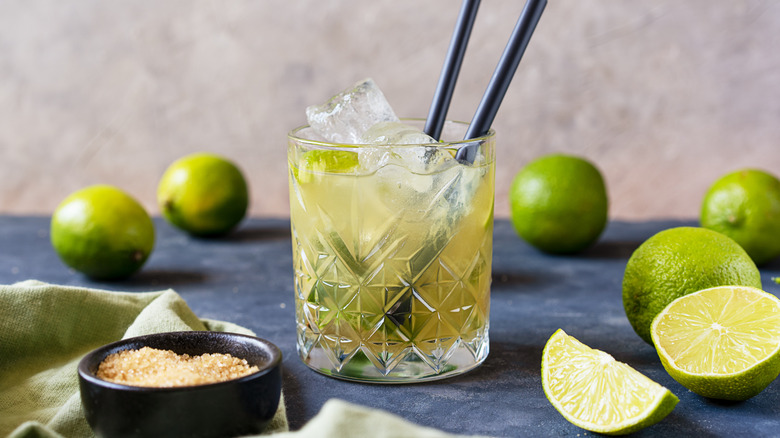
This zesty Brazilian cocktail is sure to get the party started, and the caipirinha's cooling medley of sweet and sour flavors has earned it a place as a summertime staple. The traditional version consists of fresh lime, powdered sugar, ice and/or chilled water, and cachaça (a Brazilian spirit made from sugar cane). However, this base is highly customizable, and you'll find many creative spins on the original, such as those infused with strawberry, kiwi, or mango.
It might be Brazil's national drink, but the caipirinha has garnered worldwide attention. While its origins are unclear, evidence points towards a similar concoction's use as a flu remedy as far back as 1918. The cocktail slowly evolved from an alcoholic blend of lime, honey, and garlic into its infinitely more refreshing modern-day format, with the 1990s being a notable turning point in its rise to international stardom. At this time, the caipirinha was one of the trendiest sips on the London bar scene, due to rising interest in cachaça and muddled cocktails. Now, it remains a favorite worldwide, loved for its simplicity, versatility, and lively flavor.