

Why Cashews Are Technically Toxic When Taken Off The Tree (And Smell Like Gasoline)
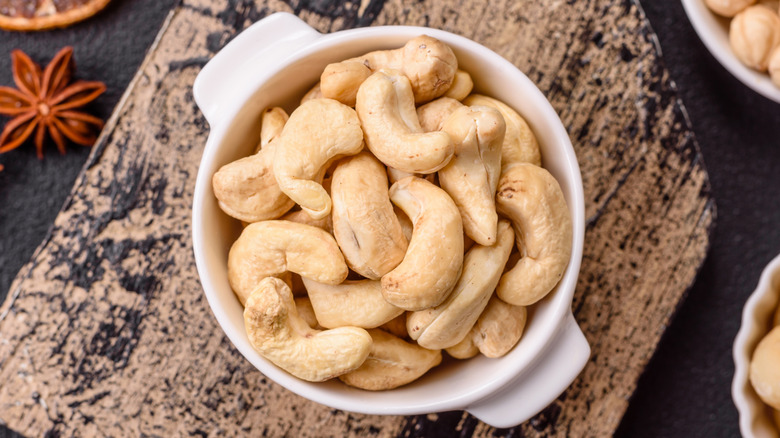
Cashews get a lot of well-deserved love in the snacking universe. The curvaceous little fruits-posing-as-nuts are buttery, soft, crunchy, and slightly sweet in every bite, perfect for hand-cupping on the go or nibbling through an evening binge-watching session. But they also harbor a little secret unknown to many consumers: When fresh off the tree, raw cashews are technically toxic, and for reasons that may surprise you.
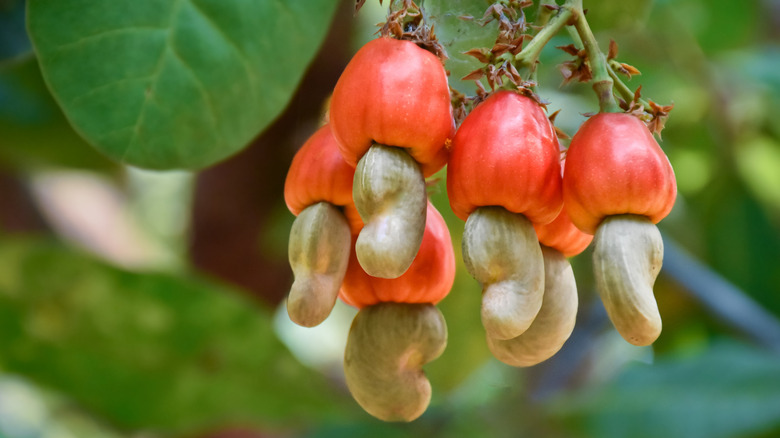
When craving cashews, you usually head to the nut section of the grocery store — but cashews technically aren't nuts at all. They come from fleshy fruits called cashew "apples." What we eventually eat as cashews grow inside shells perched on the bottom of these fruits, and they contain a toxic compound called urushiol. It's commonly present in the Anacardiaceae family of trees and plants, which, in addition to cashew trees, includes poison ivy, poison oak, and others. This oily substance can wreak havoc on human skin, causing dermatitis, rashes, blisters, and more. Workers handling unprocessed cashews often wear protective gear to avoid chemical burns from the shell oil, while some processors implement practices such as absorbing the oil in sawdust before it is handled.
Fortunately, removing the shells, cooking the fruits, and processing the nuts removes the hazards and negative effects for cashew consumers. So, unless you're mouth-popping cashews straight from a tree, or stumbling across uncooked ones or accidental shell fragments, you're unlikely to be exposed to those sneaky toxins. But there's another quirky attribute of cashews reported by some consumers, and it involves the smell of gasoline.
What gasoline smells mean in cashew nuts
Other than unexpected toxins in cashews, there's the curious matter of smells. Some folks describe the freshly pressed juice of the cashew fruit, as well as newly processed or packaged cashews, as having a slight gasoline-like odor. It's possible the same compounds that make cashew shells toxic and irritating can also contribute to the sometimes-reported aroma, but it's more likely due to you encountering rancid cashews or ones that have deteriorated on some level.
Cashews can become rancid from exposure to heat, air, humidity, or too much light, which affects more than just the taste. During the spoiling process, cashews can be exposed to chemicals, molds, and other toxins, leading to not only a nasty taste but also to unwanted smells — including chemical-like odors of paint or gasoline. Rancid cashews can also smell sour or taste bitter.
Keeping your cashew stash fresh can be as easy as storing it in an airtight container and placing it in a cool, dark pantry. Some even suggest keeping them refrigerated to keep the natural oils from breaking down too quickly, thereby keeping them fresh for longer periods of time. You can even freeze nuts, but it helps to purchase smaller quantities at a time to ensure a fresh supply when the craving hits.