

Should Butter Always Be Refrigerated?

We may receive a commission on purchases made from links.
When I was in college, I had a roommate who stored the butter in the cupboard. As I was always taught to refrigerate store-bought butter, I was horrified. I told her it would become rancid and we'd all get sick. She laughed and assured me it was fine. So, who was right? Turns out, both of us were partially correct. Butter doesn't always need to be refrigerated.
Tasting Table spoke with a Kerrygold spokesperson to get some clarification, and the primary answer to the question of butter refrigeration has to do with retaining the best taste. "If you'll be enjoying your butter within a month, keep it refrigerated," according to the spokesperson. "For the freshest taste, we don't recommend leaving Kerrygold butter at room temperature for more than four hours."
So what's going on with all of those folks storing butter on the counter? There's a bit more to the science and circumstances surrounding butter refrigeration, and although the FDA has recommended butter be refrigerated for maximum shelf life, it also doesn't deem all types of butter to be a Time/temperature Control for Safety (TCS) food.
TCS foods include many dairy products that should be stored at 41 degrees Fahrenheit or lower. What's the only type of butter you should leave out at room temperature? Non-TCS butter has a high fat and salt content that slows the growth of bacteria, so salted butter is safe to leave out for short periods of time. Unsalted butter, whipping butter, and margarine, on the other hand, should all be refrigerated.
How to store and freeze your butter
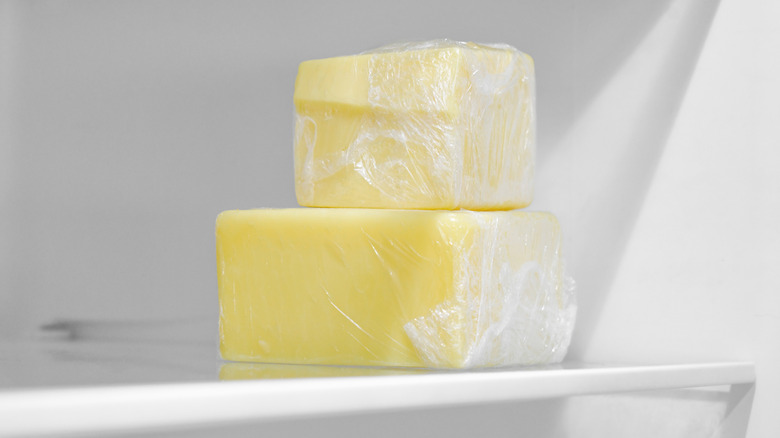
Butter is simply the result of separating buttermilk from the butter fat in cream. Nearly all of the butter you buy at the grocery store is pasteurized, so don't sweat it too much if you've left it out at room temperature for short periods. When you're talking about butter, pasteurization plus salt can make it safer from bacteria, but how long can you store butter on the counter?
Per Kerrygold's spokesperson, you already know that for the freshest taste, you shouldn't leave your butter out for more than a few hours. But for safety purposes — and if your preference is soft, room temperature butter — you can leave it out for up to two days. If you're someone who always uses unsalted butter for baking, you can simply leave a stick on the counter for about an hour to get it to room temperature or cut it into smaller cubes for a shorter warming time.
To ensure extra freshness and shelf life, there are some tips and tricks for storing butter properly. If you are storing salted butter on the counter, consider investing in a butter crock. Containers like the Kook Butter Crock with lid are ideal for frequent use. Keep butter that's refrigerated thoroughly wrapped in its original paper to prevent oxidation and absorption of odors. Kerrygold experts recommend freezing butter if you don't plan to use it within a month, which can then easily be thawed for 6 to 7 hours in the fridge or 3 to 4 hours on the counter.