

Why You Should Be Cooking Fish In An Oil Bath (Confit Style)
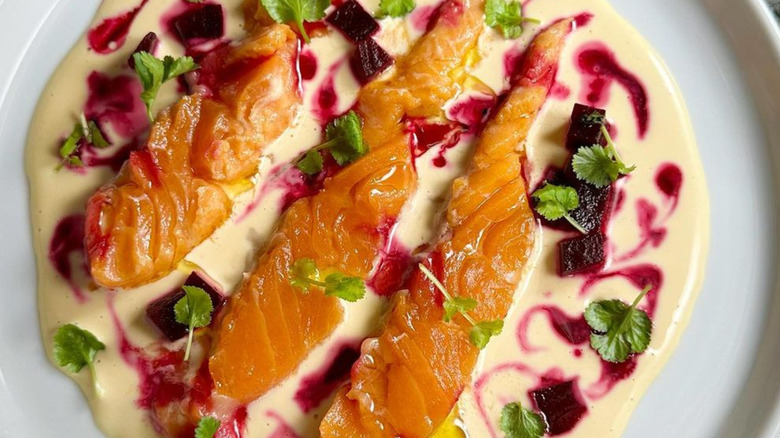
If the word "confit" sounds like something fancy on a restaurant menu, that's not surprising. The French-inspired cooking technique isn't common in many American home kitchens, and it's often associated with cooked duck or goose — again, not an everyday meal for most folks. But the confit method is easier and more versatile than you might imagine, especially when it comes to fish.
The confit style of cooking essentially uses warm oil or fat to gently cook food in an oven at low temperatures. When applied to fish, it delivers moist, delicately flavored filets without the dreaded overcooked texture of techniques such as deep frying. The defining difference is the temperature: While deep frying typically happens at temperatures above 325 degrees Fahrenheit, confit cooking uses much lower heat, roughly hovering around 200 degrees Fahrenheit. The lower cooking temps help food cook slowly and evenly, avoiding the rapid moisture evaporation that can happen with higher heats.
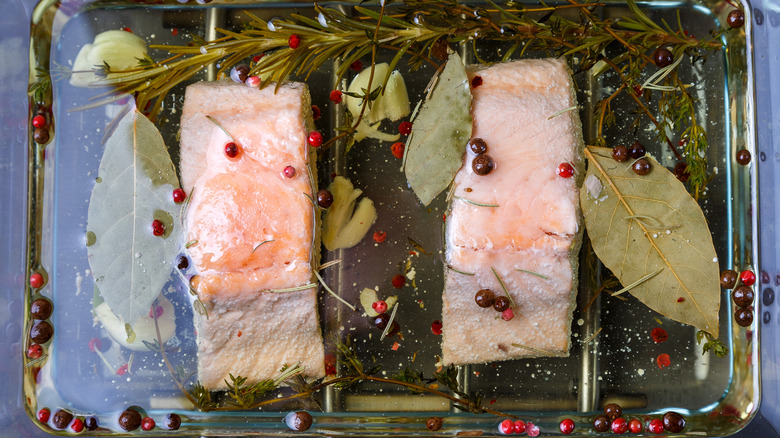
Fish in general is more delicate than other meats, so it's super easy to overcook. Even a few minutes of high heat can cause the proteins in fish to tighten and lose moisture, leaving you with dry or chalky flesh. With confit, the slow-simmering oil bath keeps temperatures even, with no sudden spikes to ruin the fish. Another big plus is that you can use the oil as a flavoring agent. Just add aromatics, herbs, or spices to the oil as it simmers the fish; Some good options include garlic, citrus peel, thyme, oregano, peppercorns, or even warmer spices such as cumin and paprika.
Best types of fish for confit cooking
Confit cooking gets its name from the French verb "confire," which means "to preserve." That's because, centuries ago, confit was a way of preserving food (most famously duck legs.) In pre-refrigeration days, the meat was salted and slowly cooked in its own fat, then stored beneath that fat to protect it from air and keep it from spoiling.
The same principles remain true today, but the process is much more often used in slow-cooking rather than preserving. Many types of fish work for confit cooking, but some varieties are particularly well-suited. Fatty fish tend to work best because the rich texture holds up during slow, warm-oil cooking. Salmon, trout, and Arctic char are popular choices, resulting in remarkably tender results.
Firm, meaty fish respond well to confit cooking, including several types of tuna, as do lean white fish such as cod or halibut. The flesh tends to be delicate, so they may require more attention, though the oil bath does keep them from drying out. Any type of fish will confit much more quickly than duck or other meats, typically in 20 to 30 minutes and sometimes much less.
How to cook fish in a warm oil confit bath
Despite the elegant plating and high-brow reputation, confitting fish is pretty straightforward. You don't need specialized cookware or equipment, just a bit of time for the salt curing, prepping, and oversight during cooking. Home chefs generally start by lightly curing the fish with salt for up to 40 minutes, which helps evenly season the flesh and firm up the texture. Some cooks like to inject extra flavor from the get-go by mixing a bit of maple sugar into the salt.
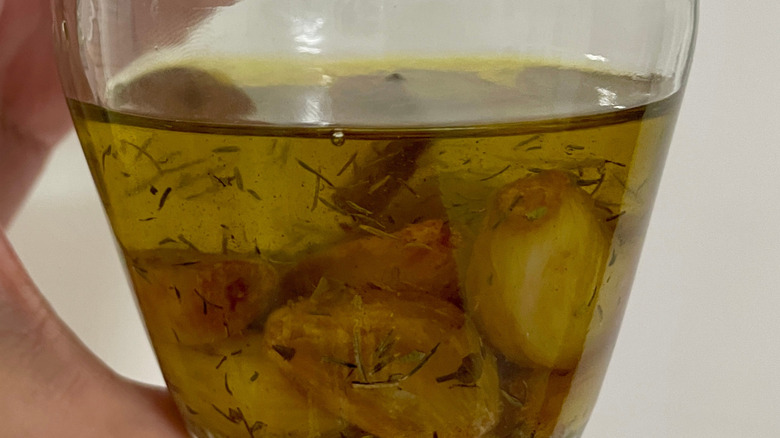
After curing, rinse off the salt and pat gently to dry, taking care not to damage the filets. Then place them in a small baking dish and completely cover in olive oil, or a more neutral oil if preferred. Here's when you toss in any aromatics and spices to gently flavor the fish during the confit. Set the oven at about 200 to 250 degrees Fahrenheit, making sure it never bubbles or reaches frying temps.
Depending on the thickness of the fillet, the fish typically cooks in about 15 to 30 minutes. Telltale signs of fish being sufficiently cooked are opaque flesh that gives slightly when pressed with a fork. Remove from the oven and serve right away, or for deeper flavor, let it rest and cool in the infused oil. Consider giving that lovely oil a second life in cooked veggies or other seafood. For a deeper dive into this unique cooking technique, check out the 11 best foods for the confit process and the biggest mistakes you're making with confit.