

Green Vs Red Grapes: Which Variety Provides Better Nutritional Value?
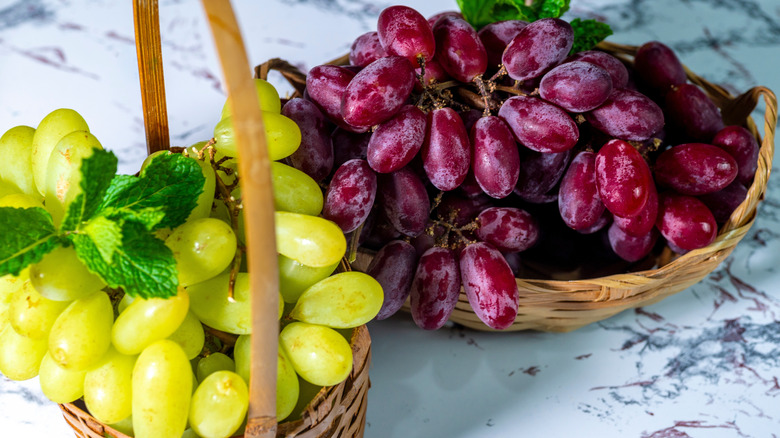
Grapes are one of the easiest "say yes" snacks out there, with very few downsides, especially on the nutrition front. Whether red or green, grapes are naturally sweet, highly hydrating, and offer a tidy bundle of nutrients and plant compounds to support your daily health goals, even in small amounts. We're talking vitamin A, C, and K, plus folate, potassium, magnesium, and lots more. And while grapes aren't a fiber powerhouse, they do contribute about 1.44 grams of fiber per cup, which can help with digestion and cholesterol levels.
For those reasons, it's fair to say that grapes belong in your steady repertoire of healthy snacks. But there's one even bigger incentive to give these pop-in-your-mouth cuties a bit more fridge space. It's the antioxidants — those under-the-radar power players that protect your body in more ways than you might imagine. This is where the green vs red grape distinctions really come into play.
In most ways, red and green varieties go "neck and neck" in nutrition comparisons, and both have excellent nutritive value. But when those antioxidants enter the equation, the two diverge in fairly considerable ways.
The power of red grapes
The word "antioxidant" gets tossed around nutrition conversations like it's a commonplace, tangible entity. In some ways, that's true, since antioxidants are indeed measurable physical components of many foods we eat. But they're more subtle: defined, in simplified terms, as natural molecules found in plant-based foods and vitamins that boost immunity and protect human cells from disease. They appear in many fruits and vegetables, as well as in vitamins C and E.
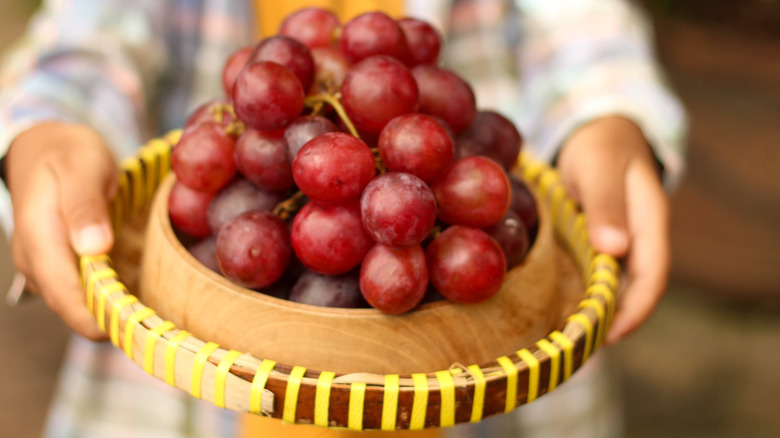
Grapes, in particular, are powerhouses of antioxidants, especially in their skins and seeds. Though present in both red and green grapes, red grapes show higher antioxidant activity. In many ways, this gives red grape varieties better nutritional value. Antioxidants come in several different forms, and red grapes specifically carry an abundance of health-enhancing antioxidants known as resveratrol and anthocyanins, which are what give them the red pigment.
These two antioxidants bring plenty to the table, with resveratrol helping ward off cancer, enhancing heart health, reducing inflammation, and supporting the vascular system. Anthocyanins, in particular, can even support healthy brains. It's important to note that these two beneficial antioxidants are found primarily in the skin (resveratrol) and the seeds (anthocyanins), so keep that in mind when peeling grapes or choosing between seeded and unseeded versions. This is especially true when drinking grape-based wines. While white wines are generally made with skins off, red wines retain the skins during the winemaking process — thus, theoretically, more nutrient-rich wine-drinking with the benefits of resveratrol antioxidants.
Green grapes hold their own, in a milder way
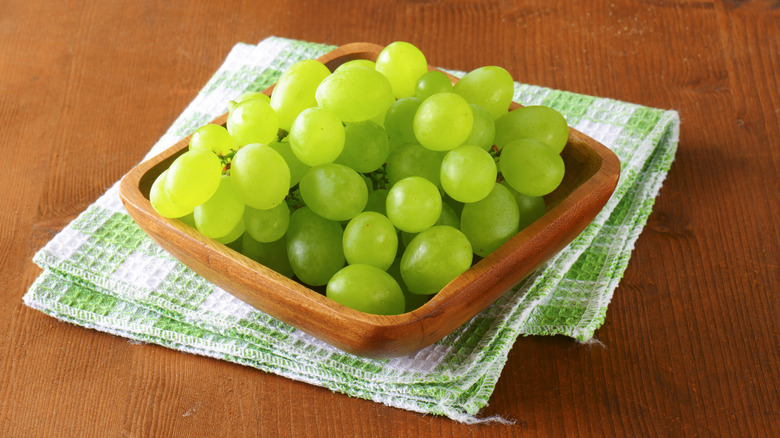
Red grapes get a lot of glory on the nutrition stage, but green varieties hold their own. Many people love them for the mild flavor and snappy texture, making them an easy choice for snacks, appetizers, or salad enhancers any time of day. This helps curb intermeal cravings while also providing plenty of hydration from the 80-percent water ratio inside those light-green skins.
Like red grapes, green grapes contain plenty of antioxidants — just in different amounts and types. For example, green grapes contain the same amounts of resveratrol and anthocyanins as red ones, but in smaller quantities. They instead excel in a category of antioxidants known as flavanols, whose star power lies in bolstering the immune system. That, in turn, could help prevent conditions such as cancer, inflammation, and heart disease while supporting healthy blood vessels and thwarting damage from free radicals.
Remember that, apart from the antioxidant benefits, green grapes have very similar nutrition profiles to their red counterparts. So both are healthy, tasty, refreshing, and fun snack foods any time you have a craving. All types of grapes harbor notable amounts of natural sugars, so keep that in mind if you're watching sugar levels. For comparison, blueberries have roughly half as much sugar as grapes.