

The One Thing You Should Never Do To Steak Before Cooking
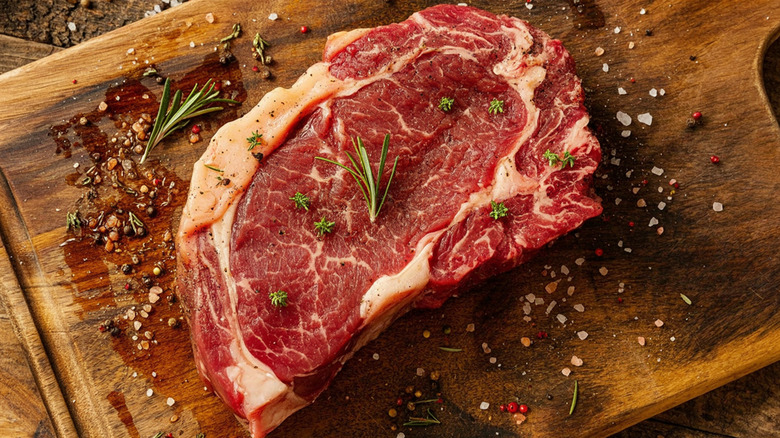
You've been dreaming about ribeye all day, and now it's time to make that juicy steak a reality. You shopped around for the best deal on steak, spent your lunch break studying cooking tips, and are finally getting ready to prep it for the pan. But if that prep involves a quick trip to the sink, there's something you need to know. Skip the rinsing, because that will make your steak less safe, and nobody wants to deal with a stomachache.
There are a few big mistakes when it comes to cooking steak, and one of them is trying to "clean" your raw steak before you start cooking. This can cause cross-contamination, as the water can create a splash zone that spreads bacteria like E. coli and salmonella all over your kitchen. In fact, this can potentially launch bacteria up to 3 feet away from your sink, according to Michigan State University, meaning you could also be contaminating your countertops, dish towels, and even the cutting board you were about to use for salad. And if you're thinking about using soap or dish detergent when washing your meat, that will only make things worse by leaving unsafe chemical residue on your food.
Besides, refrigeration and modern safety regulations have made it so that washing meat isn't even necessary. So what should you do instead? Just season your steak and go straight to the pan, because the heat will kill any bacteria on the meat and make it safe to eat.
Safe steak is the best steak
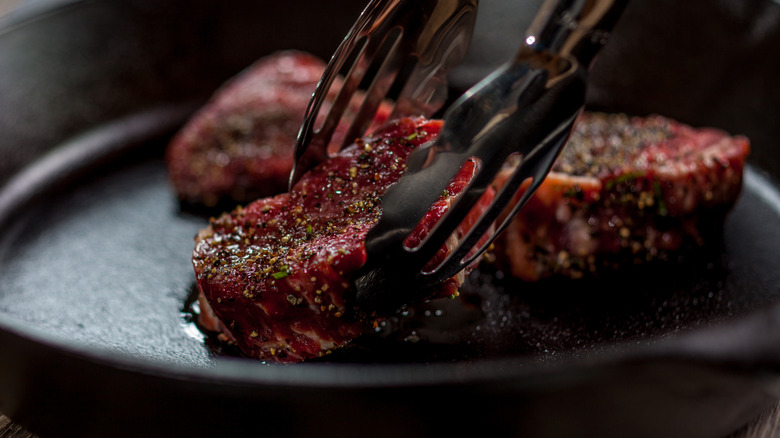
To make sure your steak is totally safe, you still need to make sure it's thoroughly cooked. For reference, USDA guidelines recommend cooking it to a minimum internal temperature of 145 degrees Fahrenheit and then letting it rest for three minutes, which is about a medium to medium-well level of doneness. The most reliable and accurate way to see whether your steak meets this threshold is to use an instant-read meat thermometer. Of course, there are other methods to test doneness, like the touch test, but these aren't as precise and can lead to undercooking. So it's probably best to play it safe and invest in a thermometer.
Apart from temperature checks and not rinsing your raw meat, there are a few other food safety tips you should follow to make sure you don't get sick. To further minimize any potential cross-contamination, make sure raw meat is securely stored away from other foods, and use separate utensils and cutting boards while cooking.
You should also sanitize dishes, tools, and kitchen countertops that have come in contact with the meat with hot, soapy water after each use. The same thing applies to your hands while handling raw meat, so wash your hands for at least 20 seconds while remembering easy-to-forget spots like under your fingernails before drying them with a paper towel. While this may seem like a lot, it's always worth putting safety first, especially if it means you can concentrate on finally enjoying that amazing ribeye you just finished making.