

What Is Date Paste And How Is It Used?
We may receive a commission on purchases made from links.
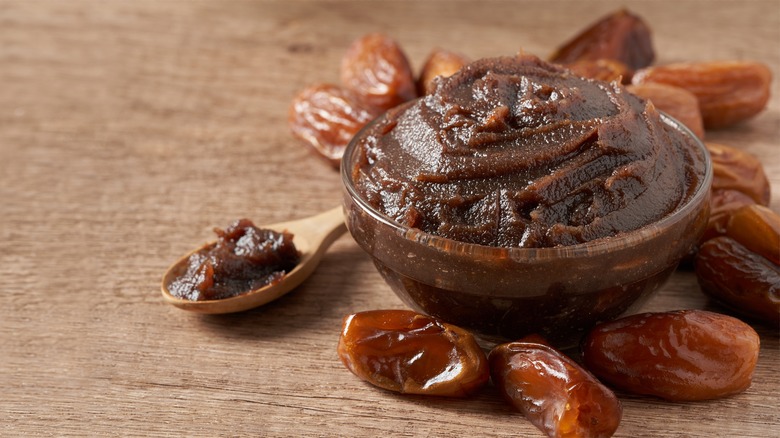
Packed with natural sweetness and rich, caramelized flavor, date paste is a traditional ingredient that's becoming more and more popular in modern day cooking. One of its main draws is how minimally processed it is. The thick paste is generally made with nothing more than pitted dates and water, with no added sugars or preservatives necessary. This way, the natural flavor of the dates can really shine, and the resulting paste certainly isn't short of sweetness.
You might be familiar with date syrup, which sees dates simmered and strained to create a smooth, pourable sweetener. Date paste is essentially a less refined version, and preserving the date flesh yields a thicker and more nutrient-dense sweetener. And, while it's yet to reach the cult status of other natural sweeteners like honey and maple syrup, this fruit-packed paste has an impressive number of culinary uses. It's easier to get hold of than you'd think, and there are a whole host of reasons why it deserves a spot in your pantry. So, if your curiosity has been piqued, join us as we explore everything you need to know about this versatile paste, includes its origins, benefits, and the many ways it can elevate your everyday cooking.
What is date paste?
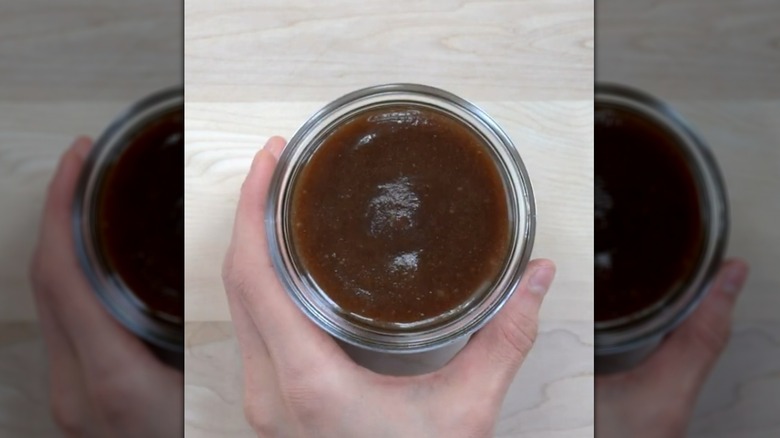
With roots in Middle Eastern and Mediterranean cuisine, this thick, sticky paste was once seen as a symbol of prosperity, and served as an easily transportable source of energy for nomadic people as they embarked on long journeys through the desert. Today, date paste is prized for its whole-food nature, appealing to health-conscious home cooks looking to sweeten recipes naturally without compromising on nutritional value.
Because it's made solely from dates, the paste is naturally plant-based and vegan-friendly, and its simplicity, versatility, and impressive nutritional profile make it a real standout in the kitchen. It makes for an excellent alternative to refined sources of sugar, especially in baking and no-bake treats, and can even come in handy when whipping up savory dishes too.
You'll find some variation in consistency between different date paste products, with some versions being softer and more spreadable, and others coming in the form of a dense but easily sliceable block. Either way, the sticky mixture will blend seamlessly into everything from smoothies and energy balls to sauces and cake batters.
How is it made?
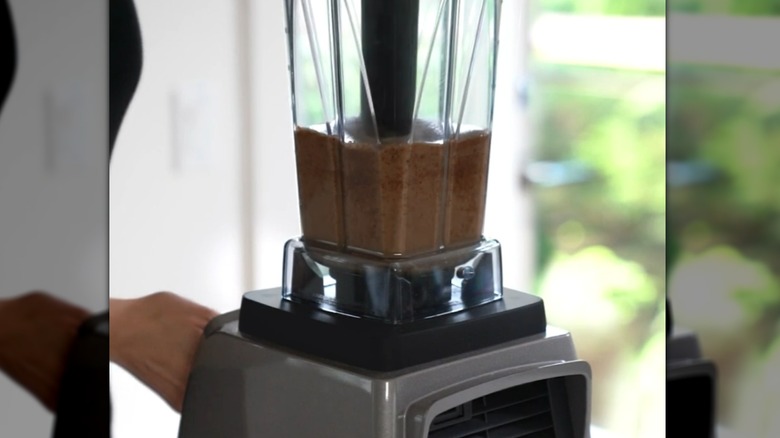
While date paste is available to buy premade, it's also incredibly easy to prep from scratch. In its simplest form, the paste consists of just two ingredients (pitted dates and water). Medjool dates are ideal, as they boast a soft, sticky texture that makes them a breeze to blend. However, other varieties will work just as well. If you're using firmer dried dates, you may need to soak them in hot water for around ten minutes to soften them up before blending.
To transform the dates into a spreadable paste, it's a simple case of adding them to a food processor or high power blender with some water (or reserved soaking liquid), and blitzing everything thoroughly until smooth. Stop to scrape down the sides as necessary, to ensure a lump-free result. The date paste will be ready to use right away, and since it'll keep well for up to a month, it's perfect for prepping in a large batch and storing in the fridge for all of your natural sweetening needs.
There's also the option to boost the flavor of homemade date paste with some extra add-ins if desired. Consider throwing in some warming spices like cinnamon, nutmeg, or ginger, or giving the mixture a savory twist with bold, tangy ingredients like tamarind or apple cider vinegar. Orange zest would also make for a fantastically fragrant addition. You could even transform the paste into a silky date caramel by blending in some milk (or a plant-based alternative).
What does it taste like?
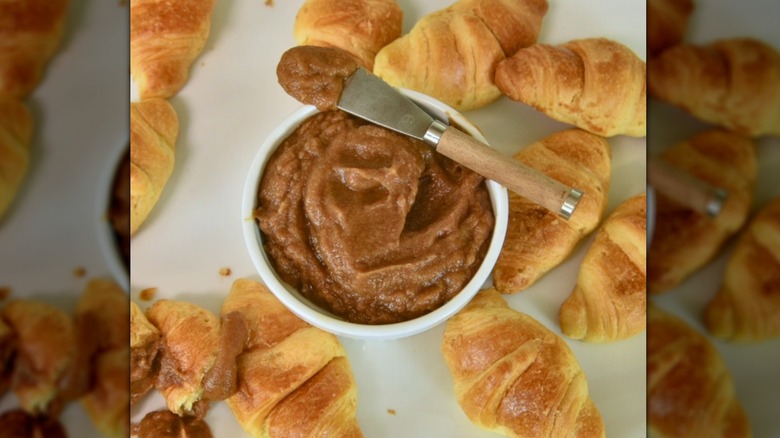
Aside from its distinct natural sweetness, date paste has a wonderfully rich taste, with warm, caramel-like notes that are reminiscent of toffee or brown sugar. While white, refined sugar is great for making recipes sweeter, date paste brings so much more to the table. Thanks to its whole-fruit make-up, the paste has a deep, layered flavor, and this natural complexity makes it much less cloying that sugar. The texture of the paste contributes to the eating experience too. The thick, sticky texture gives a spread a fudgy richness that makes it feel incredibly decadent.
The exact flavor of date paste can vary somewhat depending on the variety of dates used to make it. For example, Deglet Noor dates bring honey-like notes, while Zahidi dates have a nuttier, creamier profile, and Khasab dates offer hints of roasted chestnut and molasses. Whatever your approach, the paste is sure to give your recipes a unique edge while keeping things natural, wholesome, and full of flavor.
How does it differ to other sweeteners?
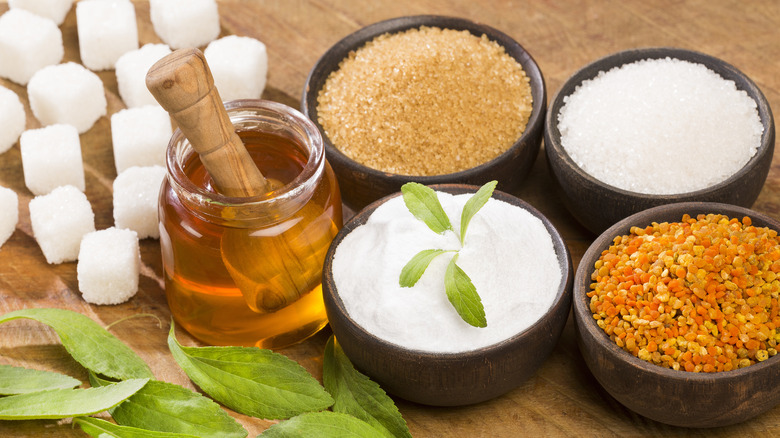
Date paste differs from other common sweeteners in several ways. First up, we have the obvious textural differences, with the paste neither fitting into the traditional syrupy liquid sweetener category, or the dry, powdered form. This unique consistency of date paste makes it perfect for adding body to recipes, and it also serves as an effective binder too, especially in no bake snacks like energy balls and oat bars.
As well as boasting a richer flavor than many other sweeteners, date paste is also far superior nutrient-wise. Unlike white sugar, which is heavily refined and stripped of goodness, date paste packs a welcomed dose of fiber, vitamins, and minerals, all while still delivering plenty of sweetness. The paste's impressive health benefits also surpass those of honey, maple syrup, and monk fruit sweetener, which provide far fewer nutrients.
Essentially, it's the use of the whole fruit that sets date paste apart, and this approach gives the ingredient its rich flavor, dense texture, and impressive nutritional profile. Since so few sweeteners are made in this minimally processed way, it's no wonder that date paste has earned a place in kitchens looking for a wholesome, versatile alternative.
How to use date paste in homemade desserts
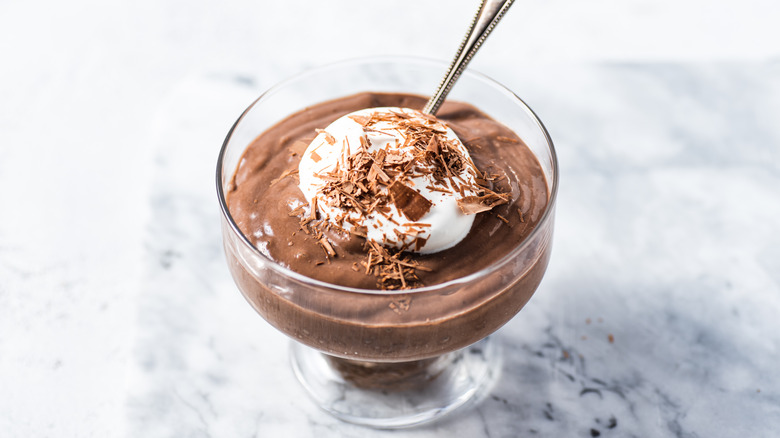
A fitting addition to a wide variety of desserts, date paste is an amazing tool for adding sweetness and a rich, fudgy texture to homemade treats. In many cases, it can be used as a direct replacement for dry sweeteners. If you're whipping up a batch of brownies, cookies, or cupcakes, try swapping the usual sugar for date paste in a 1:1 ratio, and you'll be left with a wholesome yet totally delicious dessert that comes with a hidden boost of nutrients. It's also a go-to for enhancing no bake recipes. Think energy balls, cheesecakes, caramels, and layered bars. Here, the paste acts as both a sweetener and a binder, helping the other ingredients come together seamlessly.
Date paste is also incredible as a filling and topping. Try layering it inside buttery, flaky pastries, using it to fill tarts, or swirling it over scoops of ice cream for a healthier hit of sweetness. It absolutely has a place on the breakfast table too, serving as a fitting addition to oatmeal bowls, yogurt, and smoothies. The caramel-like notes of the paste will pair beautifully with chocolate, nuts, coconut, and warming spices like cinnamon and ginger, so there are plenty of tempting flavor combos to consider.
Unexpected savory uses
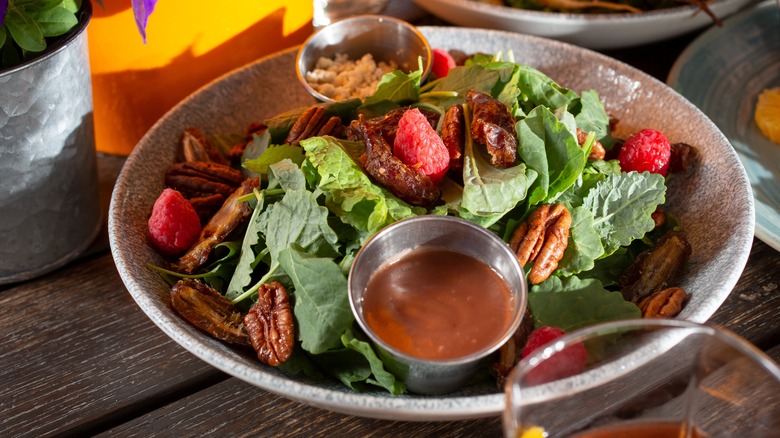
It certainly shines in sweet recipes, but date paste can also help you elevate a wide array of savory dishes. Its complex flavor and natural sweetness make it particularly adept at balancing the salty and tangy notes of other ingredients, and it couldn't be easier to incorporate.
One of the most popular savory applications is in sauces, marinades, and glazes. A simple spoonful of date paste can take a homemade mixture to the next level, bringing all-important sweet-savory contrast to favorites like barbecued meats, stir fries, and salads. For a tasty twist on the beloved honey-mustard dressing, mix date paste with Dijon mustard, olive oil, apple cider vinegar, and any other seasonings of your choice. Then, you'll have a smooth, creamy sauce that's perfect for drizzling over leafy greens or roasted chicken. Or, to craft a bold, Asian-inspired stir fry sauce, warm the paste in a pan with soy sauce, garlic, ginger, red pepper flakes and a sprinkle of cornstarch until sticky and pourable.
Date paste also works well in slow-simmered dishes like curries and tagines, where it adds richness without the need for refined sugar, and complements the punchy flavors of spices and aromatics. You can even use it add depth to a batch of caramelized onions, pairing the paste with a glug of balsamic vinegar for a beautifully balanced finish.
Where to buy date paste
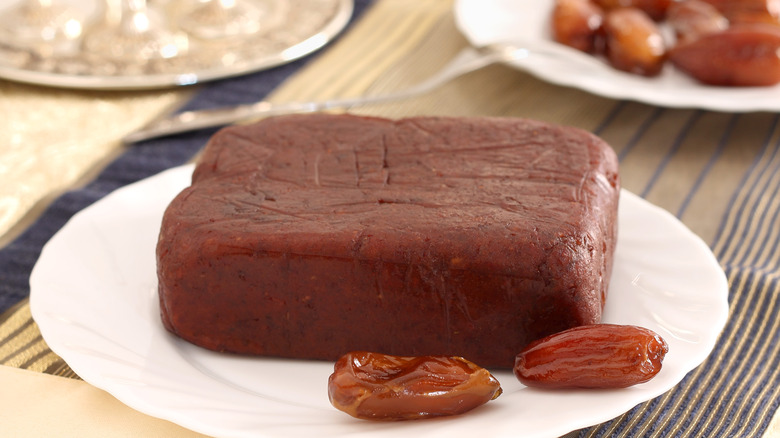
As interest in natural and whole-food sweeteners continues to grow, date paste is becoming easier to source. You'll find it in Middle Eastern and halal grocery stores, as well as in the international aisles of some larger supermarkets. It often comes in the form of a shelf-stable block or tub, sometimes with the addition of vegetable oil. Health food stores are another good option, and here you'll commonly find products that contain nothing but pure, organic dates, as well as more spreadable versions sold in jars.
If you don't live close to a speciality store, that's no problem. A wide selection of online retailers, including Amazon and Date Lady, have date paste on offer. Plus, browsing from home gives you more opportunity to compare different brands and formats that might be harder to find in physical stores. And of course, if you don't want to wait for shipping, you can always grab some whole dates and whip up a batch of paste yourself!
Are there any good substitutes for date paste?
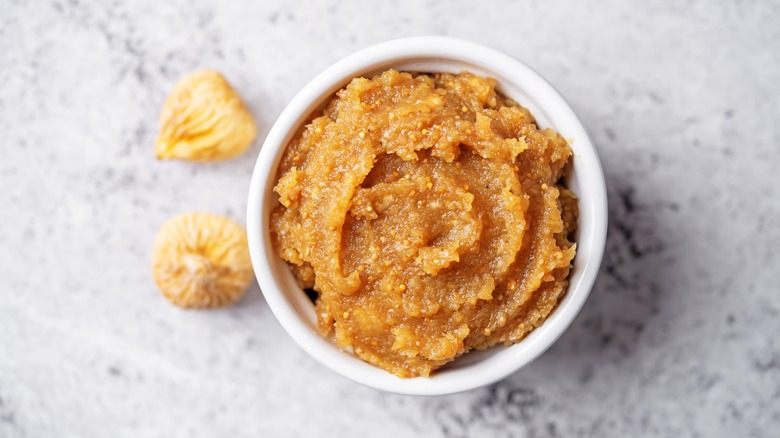
There's no denying the unique qualities that date paste offers, and finding alternatives that provide that same thick, sticky texture and depth of flavor can be tricky. But, there are a few options that'll come surprisingly close to replicating those mouth-watering characteristics. The best substitutions are those that offer a similar level of structure and whole-fruit sweetness, and fig paste is a top pick. This has a rich, jammy consistency and natural honey-like taste. And, it's made much like date paste, by simply blitzing up dried figs with water until smooth. The two can be used interchangeably, both fitting seamlessly into no bake treats and savory classics alike.
Raisin paste is another effective option, that's equally easy to make at home. When blended with water, the tiny dried fruits also come together into a thick puree, that packs the same binding and sweetening properties of the date-based version. Applesauce can also work well for adding fruity sweetness and moisture to recipes, but note that this lacks the density and binding power of whole-fruit pastes. Then, there's date syrup. Like the paste, this will deliver a concentrated hit of deep, caramel flavor, but a one to one ratio substitution won't work here. The syrup's higher moisture content means you may need to reduce other liquids in your recipe to achieve the right consistency.
Nutritional benefits of date paste
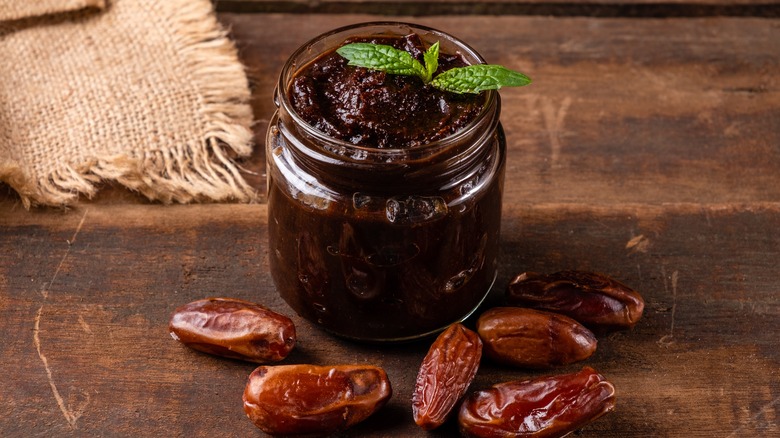
Because it makes use of whole dates, date paste contains all of the dietary fiber and other nutrients you'd get from eating the fruit itself. With most refined sweeteners, these beneficial components are lost during processing, so this whole-fruit puree is a standout for anyone in need of a sweet hit without sacrificing nutritional value. Fiber plays a vital role in digestion and heart health. It also helps to create a steadier release of energy in the body. While refined sweeteners often cause a rapid spike in blood sugar, the presence of fiber slows the absorption of the carbohydrates in the paste, thus reducing the spike.
Every dollop of date paste is packed with essential vitamins and minerals, too. It's a particularly great source of potassium, which is vital for maintaining healthy muscles, as well as magnesium and copper, both of which are involved in energy production and bone health. Small amounts of iron and vitamin B6 are also present, contributing to oxygen transport in the blood and supporting brain function. Date paste's antioxidant content is also worth a mention. Its potent medley of flavonoids, carotenoids, and phenolic acid help to combat harmful free radicals in the body, and reduce the risk of developing several diseases.
While this sweetener certainly packs some impressive benefits, it is still high in natural sugars, so enjoying it in moderation is key. But, used in place of refined sugars, it'll offer a significantly more nourishing way to sweeten foods.
How to store it
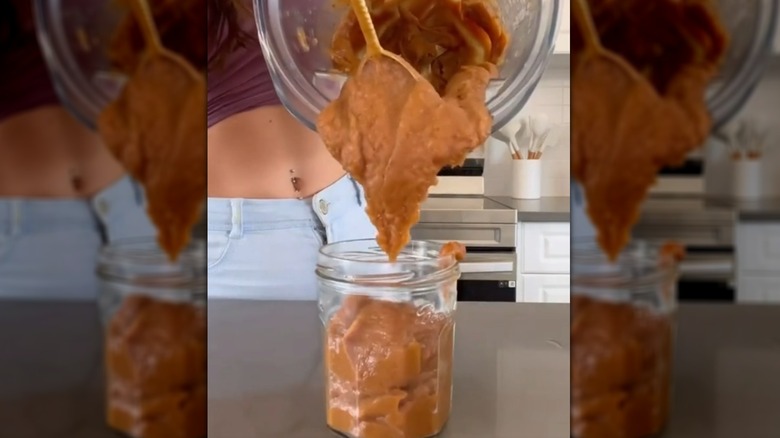
To keep your store-bought or homemade date paste as fresh as possible, you'll want to store it in the fridge once it's been opened. Since most varieties don't contain added preservatives, ensuring the paste is kept at a low temperature will reduce the risk of spoilage, while also preserving its flavor and texture. It's also best to store the paste in an airtight container, such as a lidded jar or plastic box, which will protect it from exposure to oxygen and mould-causing moisture. Stored this way, date paste should keep well for up to one month, so if you've prepped a large batch, there's absolutely no rush to use it up.
If you do need to store the paste for longer, try freezing it instead. A top tip is to portion it into small dollops, freezing these on a parchment-lined sheet pan until solid, and later transferring them to a freezer bag. This way, you can defrost small portions as needed rather than having to thaw and use up a whole jarful.