

What Makes Abalone So Expensive
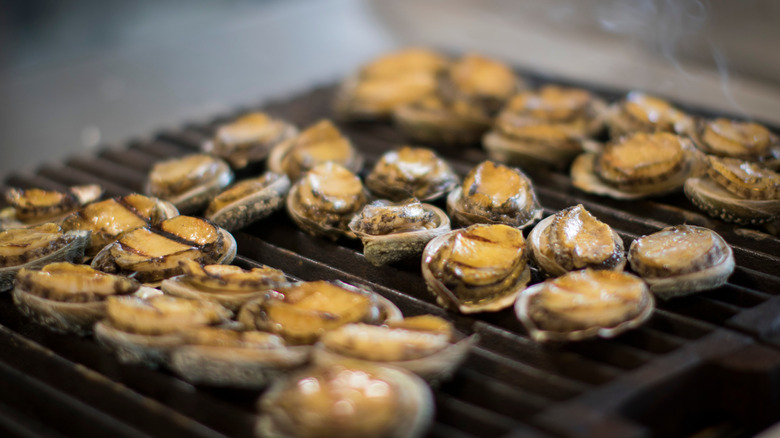
Seafood lovers know their way around various species, from sockeye salmon to shrimp, oysters, scallops, lobster, and dozens more sea creatures either common or elusive. But abalone? Not so much. That's partially because it's a misunderstood or overlooked species, unlikely to appear on everyday seafood menus. Abalone is a marine gastropod, essentially a large sea snail in the genus Haliotis, which lives in the wild or in aquaculture environments. It's considered a high-end delicacy, especially in Asian cuisine. And by high end, we mean unquestionably expensive.
There are several reasons why this curious little gastro-phenomenon commands such high prices out of the water and on the table. First of all, inside the unusually ear-shaped shell, the firm meat is considered buttery rich and briny, similar to scallops or oysters. It sits in the upper echelon of seafood, where consumers often consider the experience and flavor well worth the cost. But there's a lot more to the abalone story before it expensively perches on dinner plates.
One big reason for pricey abalone is that wild populations have been hammered by overfishing and environmental stress. Several species, like white and black abalone off California, are even listed as endangered and closed to further commercial fishing for years to come, which further limits availability. Abalones also grow slowly and have long lifespans, with farmed abalone taking from three to five years to reach market size, and wild populations potentially growing for a couple of decades. In the meantime, factors such as difficult environments, harvesting techniques, and rarity keep prices soaring.
Abalone is elusive and prestigious

Farmed abalone allows more control over the environment in which it grows — but that also comes with continuing long-term care for years of pre-harvest feeding and monitoring, driving up overall production costs. On the other hand, wild populations have their own particular challenges. They often inhabit cold waters, rocky shores, and kelp forests, leaving harvesters exposed to waves, strong currents, jagged rocks, and working windows dependent on tide charts or calm conditions.
Unlike many fish or marine animals that can be caught with nets or trawls, abalone gets collected one at a time, typically by hand. Harvesters either free-dive or work at low tide to pry abalones off rocks using hand tools. When located, each abalone has to be carefully detached to lessen the chance of damage, making the process slow, physically demanding, and often dangerous, including potential encounters with sharks or other unfriendly water-mates. These labor costs, plus special shipping to keep them fresh, get rolled into the price you eventually pay, whether at a restaurant or seafood market.
Finally, abalone remains expensive sheerly because of high global demand, especially in China, whose fishing practices are already threatening global seafood stocks. Along with other Asian countries, it's linked to things like luxury, wealth, and celebrations. It's common to find premium live and dried abalone as centerpieces at banquets, events, and festivals, with buyers willing to pay whatever is necessary for the occasion. Even though farm production is increasing, the prestige and rarity of wild-caught abalone keep it in the top tier of seafood royalty.