

Where Great Value Actually Sources Its Milk
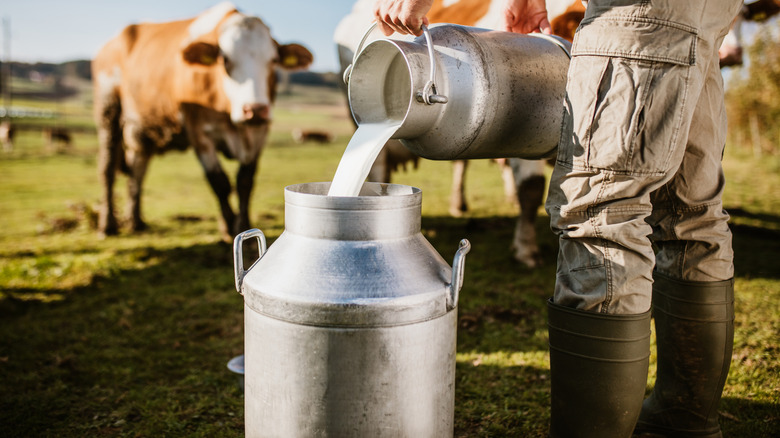
The push for supply chain transparency is one of the biggest trends to hit the food industry. Brands have taken notice and adopted a variety of certifications to prove their products are farmed organically, their farmers receive a fair wage, or to address other specialty concerns. There's also the food safety aspect, as learning where a salmonella outbreak, for example, occurred is key to issuing a warning to consumers. As the biggest retailer in the world and a huge buyer of agricultural products, Walmart has been one of the most visible faces in food transparency, with its push involving blockchain technology, requiring suppliers to provide traceability data, and expanding its own in-house milk processing capacity.
But even with a third milk plant of its own slated to open in 2026, the retail giant still has to source milk from a myriad of dairy farmers to fill up all those jugs of its house brand Great Value milk. Luckily for curious American consumers who want to know where the milk they buy at Walmart comes from, or perhaps support certain farms, there's a pretty simple way to find out. Each milk container has a code that identifies the state and farm where the milk is produced, regardless of which brand it is. But because Walmart has such an outsized footprint on various markets, including dairy, it's worth exploring in depth.
Cracking the code on milk origins
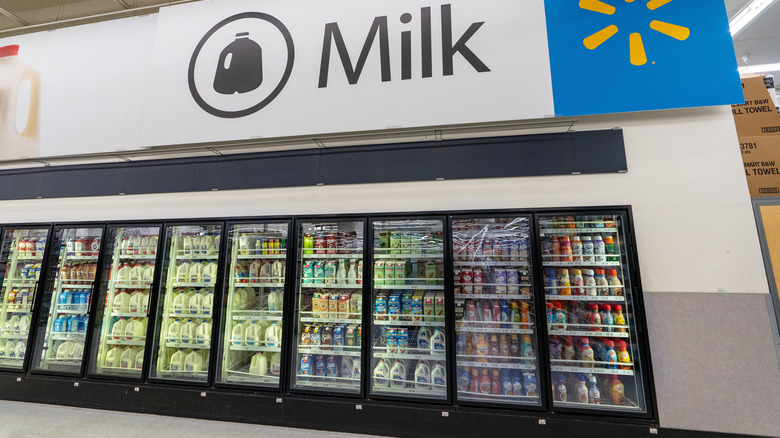
The code will start with two numbers denoting the U.S. state or territory where the milk was produced, followed by a dash and then one to five digits that can be numbers or letters that tell the exact dairy farm where it came from. You may see the letters PLT in front of the code, which stands for "plant." It's helpful to know that the code won't contain a colon. Also, keep in mind that if there's no code on your container, it may not contain dairy, like these brands of almond milk, or it may be from a new dairy that hasn't been added to the database yet.
Let's say you've bought some Great Value milk that seems to have spoiled faster than normal and want to find out where it was produced. You can take the scenic route by looking up the code in the interstate milk shippers list published by the U.S. Food and Drug Administration. Or you could take the much easier way and enter the code into a search bar on the website whereismymilkfrom.com. This site not only searches the database for you but also provides a helpful primer on all the details you'll need to find and understand the code, perhaps making breakfast conversation a little more interesting as you pass around that gallon of milk.