

Bottled Vs Fresh: How To Know Which Lemon Juice To Use, And When
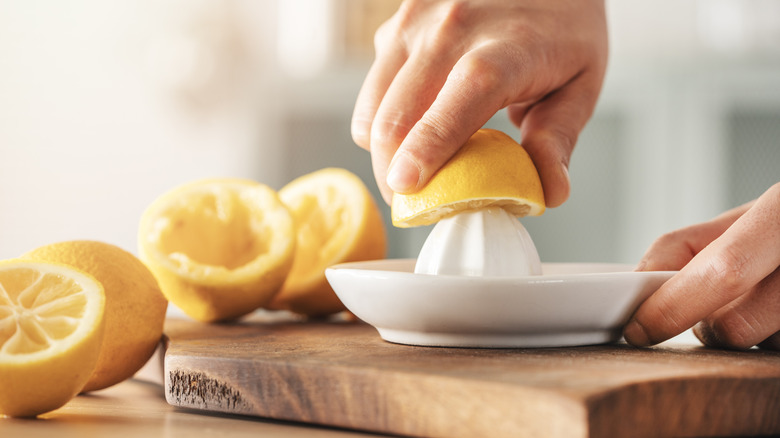
Lemon juice plays a vital role in a wide array of recipes, from chicken dinners to cheesecake. The acidity cuts through cream and lifts flavors with just one squeeze. It's also a favorite for toning down sweet recipes and adding balance. But given the rising cost of groceries and that bottled juice lasts longer in the fridge, is there a right time to use bottled over freshly squeezed?
Honestly, the answer is quite straightforward, and Samantha Merritt, creator of Sugar Spun Run, has one simple rule: If lemon is the primary flavor of the dish, use fresh lemon juice. "If I'm making a lemon meringue pie, lemon bars, lemonade, or lemon curd, the lemon flavor is the main feature of the recipe," Merritt says, "so I'll always opt for fresh-squeezed lemons." It offers the brightest, most natural flavor, and isn't that what we all want when biting into a slice of lemon meringue pie?
Another clear advantage of using fresh lemons is the lack of preservatives. Many bottled juices are from concentrate and contain a number of other ingredients and stabilizers to extend the shelf life and provide predictability. This can make the end flavor dull or overly acidic. "Concentrated lemon juice tends to have a flatter taste, and, in my opinion, can sometimes taste a bit like a cleaner," Merritt says. But that doesn't mean you should avoid it altogether. Merritt recommends juice not from concentrate, and suggests you "look for 100% pure lemon juice as the only ingredient with no added flavors." She prefers Santa Cruz organic lemon juice because "the only ingredient is organic lemon juice." It's slightly more expensive but worth the splurge.
When bottled lemon juice is the right choice
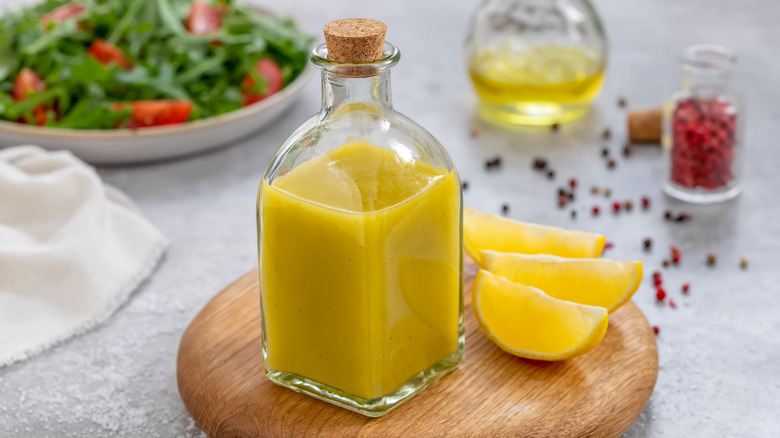
We've established that certain recipes benefit from fresh juice. For example, we firmly believe that you should always use fresh lemon when making cheesecake. But in some cases, consistency wins out over flavor alone. Where fresh fruit changes with the seasons, being sweeter one month and more sour the next, bottled juice will give you the same result every time, which is ideal when "adding a splash to applesauce, vinaigrette, or even a marinade," Merritt advises.
There's also practicality to consider. When you only need a few tablespoons here and there, it's much easier to simply keep a bottle in the fridge. Curious about bottling fresh juice at home? As Merritt says, "The fresh lemon juice simply has a better, brighter flavor that bottled juice can't quite duplicate." Sadly, it won't last as long without preservatives. In fact, once exposed to oxygen, the flavor begins to turn bitter within hours, so it's best used within a couple of days. Alternatively, you can freeze lemon juice in ice cube trays for long-term storage.
Ultimately, the choice comes down to the recipe. "If lemon is called for in the recipe to add brightness or acidity to the dish rather than featuring as the main flavor, bottled lemon juice is usually fine," Merritt says. Both versions have their place in a cook's kitchen. You just need to know which one is right in the moment.