

This Is Hands-Down The Best Type Of Vinegar To Clean Blueberries With
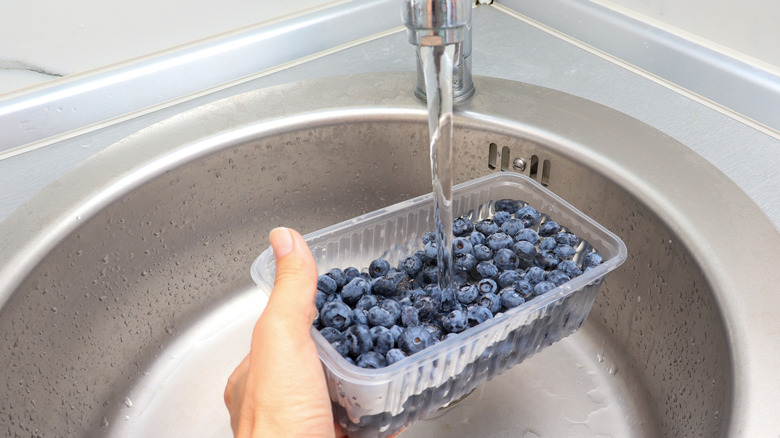
The sad truth about fresh fruit is that it can also come with some unwanted hitchhikers. Bugs, dirt, and pesticides naturally find their way into the fruit you buy from your grocery store, and proper cleaning is an important first step when enjoying treats like blueberries. Luckily, it's nothing that a quick vinegar rinse can't fix. While any vinegar will certainly get the job done, there is one type that is better than the rest at cleaning your precious fruits and berries.
The reason vinegar is so great for cleaning fruit lies in its low pH, which can break down pesticides and stop harmful bacteria and mold from growing. A vinegar bath can even make your fresh berries last longer. But what type of vinegar you use matters, and while any kind of vinegar would get the job done, white vinegar is particularly good for cleaning blueberries and other fruits. White distilled vinegar is a household staple and is often used for cleaning and other non-cooking purposes. When added to water and used as a fruit rinse, white vinegar creates an acidic environment that banishes bugs and pesticides from your precious fruit bowl, leaving you with plump and delicious blueberries.
A deeper dive into why white distilled vinegar is best
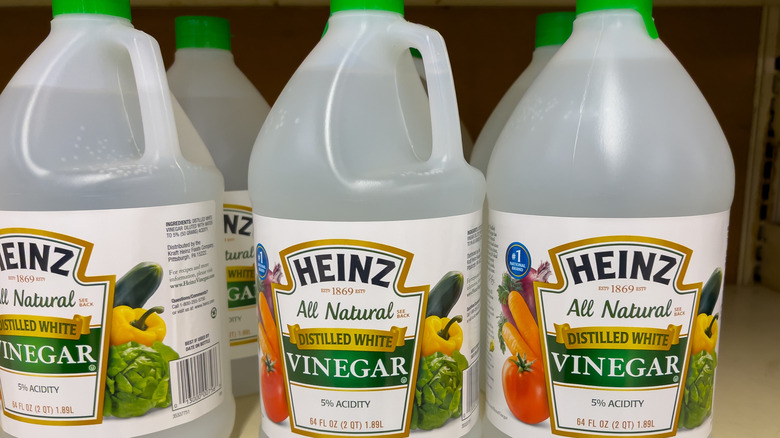
There are a few reasons distilled white vinegar outshines its other acidic counterparts when it comes to washing your berries. One, it's much more likely to be sold in bulk quantities and at an affordable price. At Walmart, for example, the price of a gallon of distilled white vinegar is comparable in price to a red wine vinegar, apple cider vinegar, and a balsamic vinegar, which are a fraction of the size. You don't want to be using even marginally pricier vinegar to clean fruit because even though it will be serving its purpose, it will also literally be money down the drain. Second, distilled white vinegar is just a tad bit more acidic than other common household vinegars. It typically lands between 2.4 and 2.8 on the pH scale, with balsamic and wine vinegar being the next closest. While both balsamic and wine vinegar would technically be just as effective as distilled white vinegar at ridding your blueberries of pesticides and contaminants, they have stronger and more distinct flavor profiles that get wasted as a berry wash.
To clean blueberries without turning them to mush, combine a 1:3 ratio of vinegar and water in a bowl and let your blueberries soak in the mixture completely submerged for about 5-10 minutes. You can even softly agitate the bowl or the berries to dislodge any extra stuck-on dirt and grime. After soaking, thoroughly rinse the blueberries under a gentle stream of water to wash away the impurities and residual vinegar.