

Here's What Wawa Does With All Its Uneaten Leftover Food
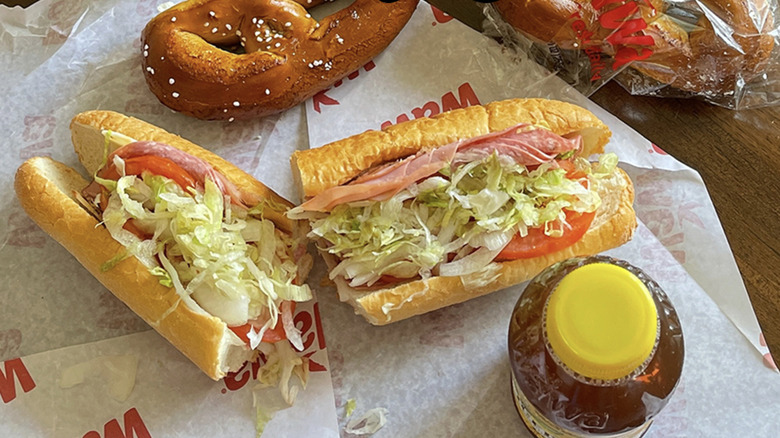
If you've ever wondered what happens to all the baked goods and hot foods that Wawa doesn't sell by the end of the day, the answer is surprisingly heartwarming. The beloved Mid-Atlantic convenience store chain — known for its coffee, hoagies, and friendly service — has found a purposeful way to ensure leftover food doesn't go to waste, but instead reaches people who need it most.
Through its Food Donation Connection (FDC) program, Wawa partners with local nonprofits that collect and distribute unsold food to community food banks, shelters, and pantries. The FDC oversees each step of the process, coordinating logistics and ensuring that every donation meets strict safety and freshness standards. What might have been discarded instead becomes a meal for local families — a simple act of kindness that strengthens the communities Wawa serves.
The results speak for themselves. Wawa's donations now total over 16 million meals, joining a global network that provides the equivalent of two meals every second through Food Donation Connection's partners. And through The Wawa Foundation — the company's charitable arm — Wawa has contributed more than $160 million to hunger-relief and community programs over the past decade. It's proof that philanthropy doesn't always start in a boardroom; sometimes, it begins with a sandwich that doesn't get sold.
A growing movement of care

Across the restaurant and retail industry, major brands are proving that sustainability and compassion can go hand in hand. From coffee chains to neighborhood grocers, companies are finding creative ways to give leftover food a second life — turning everyday excess into meaningful change. Starbucks and Chick-fil-A have each launched programs in partnership with Food Donation Connection to redistribute unsold food, showing how small operational shifts can make a big difference.
Trader Joe's takes that mission further with its Neighborhood Shares program, donating 100% of unsold products every day to more than 2,000 local partners. Even Panera Bread plays its part with the Day-End Dough-Nation program, sharing leftover bread, bagels, and pastries with community kitchens and shelters before closing time. Behind each of these initiatives is a quiet act of care — one that echoes a time when people relied on one another to make sure no one went without. In an age when big business can often feel distant, these efforts rekindle that same sense of neighborly connection that once lived in small-town markets, when a bag of flour or sugar came with a familiar smile.
Together, efforts like these — from national chains to regional leaders like Wawa — remind us of a simple but powerful truth. Food recovery isn't just about reducing waste; it's about feeding connection. Each donation links businesses, nonprofits, and families in a shared network, proving that generosity can be built into everyday operations — one meal, one store, and one community at a time.