

10 Iconic Hawaiian Foods You Need To Try At Least Once
Hawaii is known for its stunning beaches, vibrant culture, and laid-back island vibe, but something else that's just as central to its identity is food. Home to an array of unique and vibrant dishes, Hawaii's culinary landscape is wonderfully diverse, shaped by waves of immigration from various corners of the world. And, this is a place where food truly brings people together, with shared meals being at the heart of every gathering.
Seafood is an especially popular ingredient in Hawaiian food, and fresh salmon forms the base of various dishes here. But, you'll also find heartier meals featuring tender slow-cooked meats, as well as simple savory snacks, and sweet treats that are packed with rich, tropical flavors. Many of these dishes have captured attention worldwide, too, being just as popular in Europe and on the American mainland as they are on the islands themselves. So, if you're planning a trip to the Aloha State, or simply looking to bring a little Hawaiian flavor into your own kitchen, here are ten delicious dishes that come highly recommended.
Poke
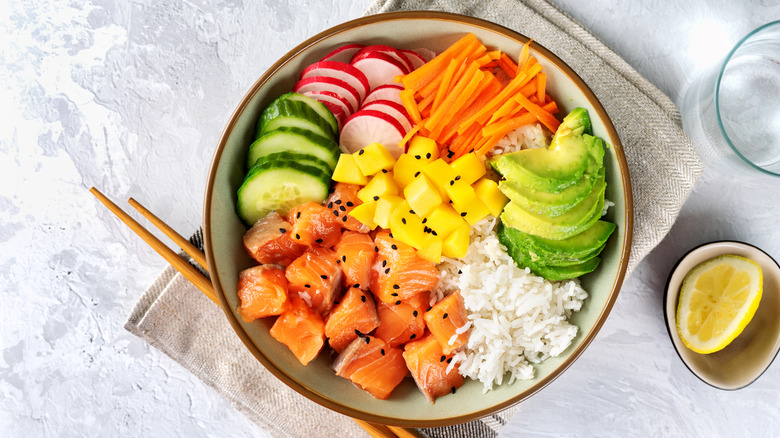
Perhaps the most iconic Hawaiian food of them all, poke is a fantastically flavorful way to enjoy fresh fish. This traditional dish began as a simple way for native Hawaiians to season and preserve reef fish, by rubbing them with salt and seaweed. Over time, this concept has evolved, with preparation techniques heavily influenced by Asian immigrants in the 1970s and 80s. Ingredients like soy sauce, teriyaki sauce, and sesame oil have now become popular add-ins to the marinade, and raw ahi tuna or salmon is often the fish of choice. Today, poke is nothing short of a global sensation, with bowls popping up on trendy cafe menus around the world. And, it's easy to see why. This dish is endlessly customizable, rich in protein, and oozing with visual appeal.
To craft a poke bowl, you'll typically serve the cubed, marinated fish over a bed of sticky sushi rice. Then, it's time to get creative with an array of complementary toppings. Fresh cucumber, avocado, mango, and shredded carrot are all excellent options, and edamame beans are great for giving the bowl an extra protein boost. Pickled veggies like beetroot or radish can also bring a delicious touch of tanginess. If fish isn't your thing, poke can easily be adapted with chicken, beef, or tofu. Just aim for a variety of textures and a balance of sweet and savory flavors, and you'll soon have a totally moreish bowlful, that's packed full of color and nutrients.
Spam Musubi
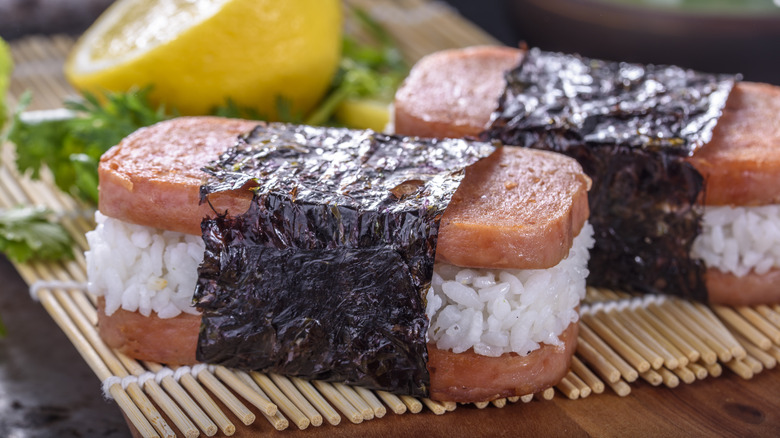
Another Hawaiian favorite with universal appeal is the humble Spam musubi. This portable snack perfectly reflects Hawaii's melting pot of cultures, and knack for making the most of simple, flavorful ingredients. A classic recipe consists of sticky rice, which is sandwiched between two slices of pan-fried Spam. Then, everything is wrapped neatly in a strip of nori.
Spam became a staple in Hawaii during World War II, when its affordable, shelf-stable nature made it popular amongst locals. Japanese immigrants, inspired by the art of sushi-making, then began combining this convenient canned meat with rice and nori, giving rise to the beloved Spam musubi. The dish quickly gained popularity, and it remains a local delicacy today.
A key element of Spam musubi is the sticky marinade, which is typically made with soy sauce, oyster sauce, and sugar. The Spam slices get marinated in this mixture before or during cooking, infusing them with the ultimate blend of sweet and salty flavors. Once pan-fried to golden perfection, the meat takes on an irresistible caramelized finish. When it comes to preparing the sushi rice, this gets a flavor boost too, and rice vinegar, sugar, and salt are popular seasonings to the sticky grains. With everything assembled, the resulting musubi makes for a satisfying snack, and its portable nature makes it ideal for picnics and packed lunches.
Loco Moco
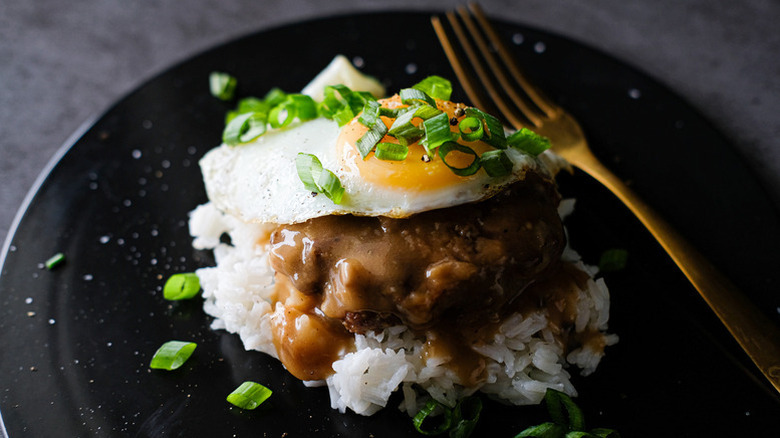
To experience Hawaiian comfort food at its finest, you simply have to try a plateful of classic loco moco. This delightfully hearty dish is a fuss-free yet undeniably satisfying, and it can be whipped up in just 30 minutes. Loco moco comprises a mound of fluffy rice, topped with a juicy hamburger patty, a fried egg, and generous spoonful of rich, savory gravy.
This recipe allegedly dates back to the 1940s, invented by a local diner owner on the Big Island. When a group of hungry teenagers requested a meal that was both unique and affordable, the owner combined some delicious staples onto one plate, and the rest is history. Loco moco is now firmly rooted in the Hawaiian food scene, and you'll find various takes on the original, including versions made with Spam, kalua pork, or even fried chicken.
A traditional beef loco moco sees the hamburgers made from scratch, and flavored with add-ins like Worcestershire sauce, diced onion, and garlic powder. The gravy is often made with a beef-based broth, with mushrooms and soy sauce being popular additions. After pan-frying the burger to your desired level of doneness, you'll pile it atop the cooked white rice with the gravy and egg, before garnishing the stack as desired — perhaps with a scattering of diced green onions and sprinkling of cracked black pepper.
Ube Butter Mochi
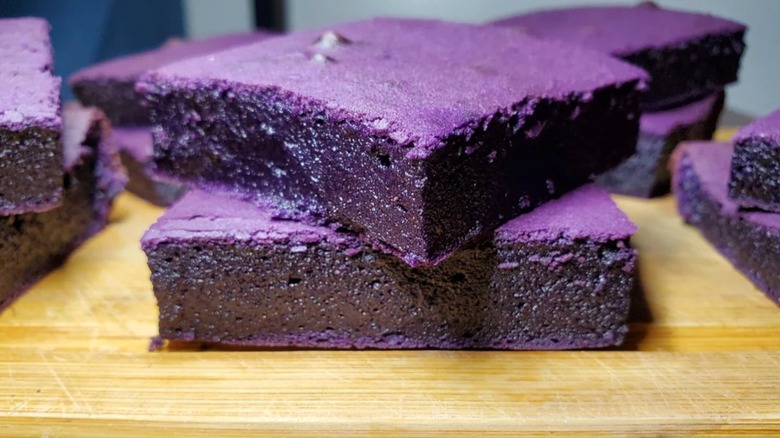
Sweet, chewy, and oh-so moreish, butter mochi is one of Hawaii's best-loved desserts, and the addition of vibrant purple ube takes it to the next level. This treat can be described as a cross between a cake and a custard, with a slightly crispy top, and moist, tender interior.
Ube, or purple yam, has long featured in Hawaiian desserts. Brought to the islands by Filipino settlers in the early 1900s, these colorful veggies found their way into a wide range of sweet and savory dishes. When making sweet treats, the ube is often added in the form of ube halaya jam or ube extract, which pack plenty of earthy, vanilla-like flavor. To make this purple-hued butter mochi, the ube element is typically combined with mochiko (a type of glutinous rice flour), coconut milk, sugar, butter, and eggs, with everything oven-baked and sliced into gorgeous, gooey-crisp squares. Being quick to prep and easy to bake in a large batch, ube butter mochi is a staple at potlucks and bake sales, and it's easy to find in Hawaiian grocery stores too.
Kalua pork
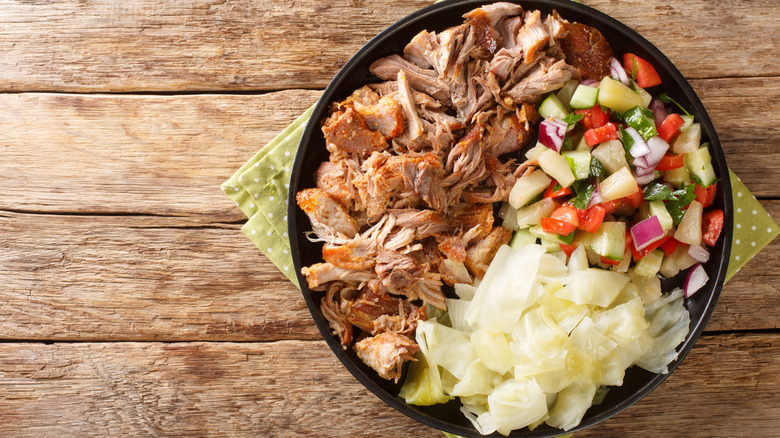
A versatile dish with roots deeply embedded in Hawaiian culture, kalua pork has been the star of island celebrations for generations. This slow-cooked pulled meat is smoky, tender, and flavorful, and perfect for pairing with other savory side dishes. The word "kālua" translates to "to cook in an underground oven", referring to the traditional Hawaiian method of slow-roasting the meat in an imu — a fire pit lined with hot stones and covered with banana leaves. This ancient cooking technique infuses the meat with a distinctive smoky taste, and gives the meat a juicy, fall-apart texture.
While most modern versions of this dish don't use the original imu-cooked method, there are plenty of other ways to recreate that signature flavor and texture. Seasoning the meat with liquid smoke or cooking it with bacon are both fantastic hacks for achieving that all-important smoky profile. And, to ensure a perfectly tender result, you could reach for the Instant Pot, slow-cooker, or try wrapping the pork in banana leaves and slow-braising it in the oven.
Once cooked and shredded, kalua pork can be served with a medley of sides, such as rice, Hawaiian macaroni salad, or mango salsa. It's also commonly paired with cabbage, and makes an amazing addition to sandwiches, tacos, and nachos.
Huli huli chicken
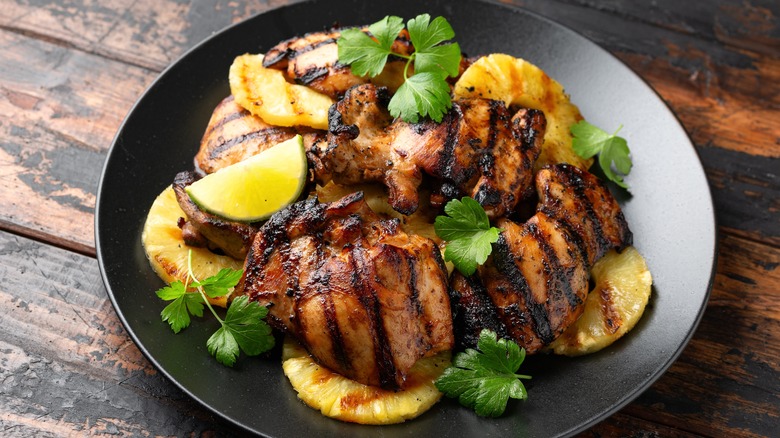
Huli huli chicken is a Hawaiian barbecue favorite, with a crowd-pleasing sweet and smoky taste. It was invented by businessman Ernest Morgado back in 1955, who first served up the grilled, marinated meat at a charity event. The name "huli huli" comes from the Hawaiian for "turn turn", which refers to the method of repeatedly turning the chicken on the grill as it cooks. The meat is often cooked over a specific type of wood charcoal called kiawe, with further contributes to its smoky depth.
Flavor-wise, the signature marinade is similar to an Asian-style teriyaki sauce, but with a slightly fruitier, tangier profile. Huli huli sauce typically begins with a base of soy sauce, pineapple juice, brown sugar, and ketchup, which all get combined with some flavorful aromatics like garlic and ginger. Sherry is another popular add-in, bringing a dose of balancing acidity, while a dash of sriracha is perfect for injecting the chicken with a hint of heat. Once marinated overnight, the meat is cooked on the grill until beautifully charred. Regular turning ensures even cooking, and basting the chicken with more of the marinade mixture after each flip yields the optimum flavor, all whilst creating a gloriously sticky, caramelized coating. Huli huli chicken tastes great served with fresh pineapple rings, coconut rice, or chargrilled veggies such as eggplant, zucchini, or bell peppers.
Lomi lomi salmon
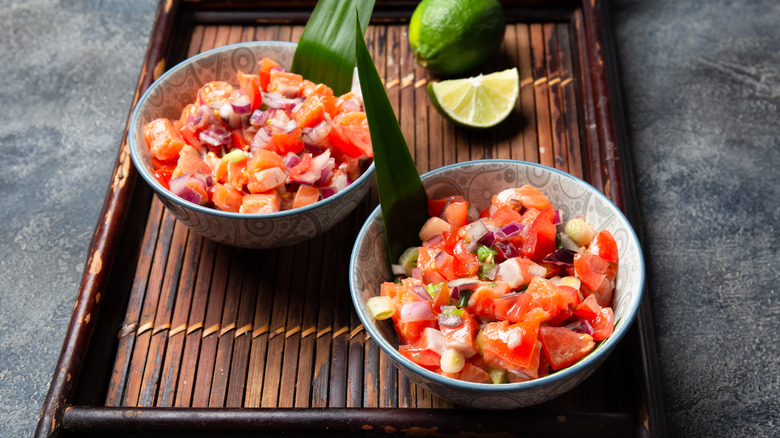
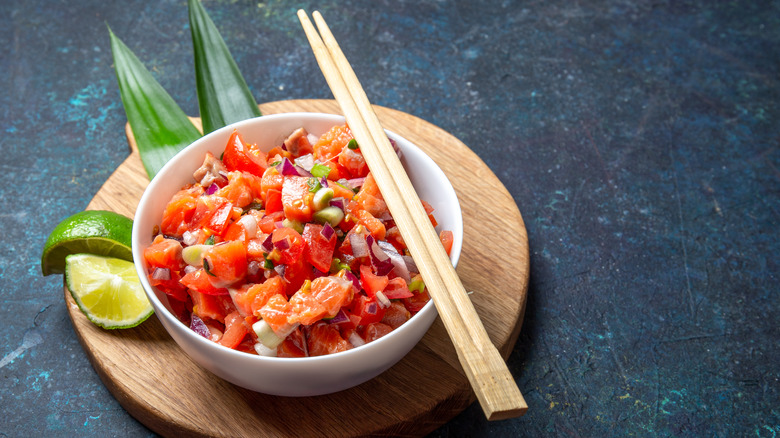
Made with a handful of simple, fresh ingredients, lomi lomi salmon is a popular side dish that seamlessly blends salty, tangy, and aromatic flavors. It gets its name from the Hawaiian for "to rub", since the recipe is prepared by gently hand-mixing the ingredients together. Frequently served at traditional Hawaiian luaus and other island gatherings, lomi lomi is loved for its refreshing lightness and unique savory taste. Traditionally, the dish combines salted, cubed salmon with chopped tomatoes, onions, and green onions. But, modern versions often incorporate a few extra add-ins, such as avocado, cilantro, and lime juice. This vibrant medley tastes best cold, and the final dish is often served with a few ice cubes mixed in to keep it chilled.
Lomi lomi salmon is thought to have been introduced to Hawaii by Western sailors in the early 19th century. Salting the fish served as an effective preservation technique, and made it all the more flavorful too. When combined with fresh, local ingredients, the chunks of salted salmon were transformed into a colorful salad that balanced saltiness, sweetness, and crunch in every bite. Today, you'll often find lomi lomi salmon served alongside other dishes in this line-up, such as kalua pork, poke bowls, and chicken long rice. It also pairs beautifully with poi, a starchy side dish made by boiling and mashing taro root.
Chicken long rice
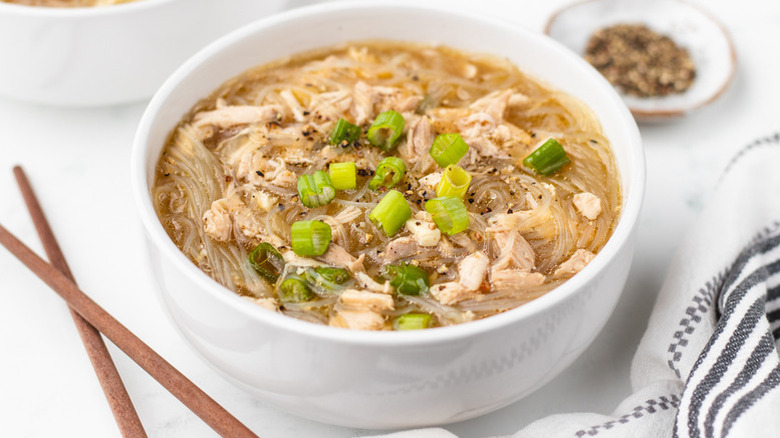
This comforting bowlful is Hawaii's take on a noodle soup, and despite the name, it's not actually made with rice at all. Instead, chicken long rice features bean thread noodles (aka cellophane noodles), which have a unique translucent appearance and moreish chewy texture. These get simmered in a fragrant broth with chicken thighs, ginger, garlic, green onions, and soy sauce, to create a light yet satisfying dish that brings all of the cozy, soothing vibes.
Chicken long rice is heavily influenced by Asian cuisine. It was first introduced to Hawaii by Chinese immigrants, who brought their culinary traditions to the islands in the 19th century. Over time, the dish has been adapted to suit local tastes, and its delicate flavors make it a go-to comfort food. Traditional versions of chicken long rice aren't especially brothy, with the noodles soaking up much of the liquid, but many modern recipes call for a much soupier consistency, so the approach is very much down to individual preference. Either way, the resulting dish is wonderfully warming, and perfect for feeding a crowd. Chicken long rice can be enjoyed as an appetizer or light lunch. And, served as a side dish, it makes for an excellent, palate-cleansing accompaniment to rich, smoky mains like kalua pork.
Lau lau
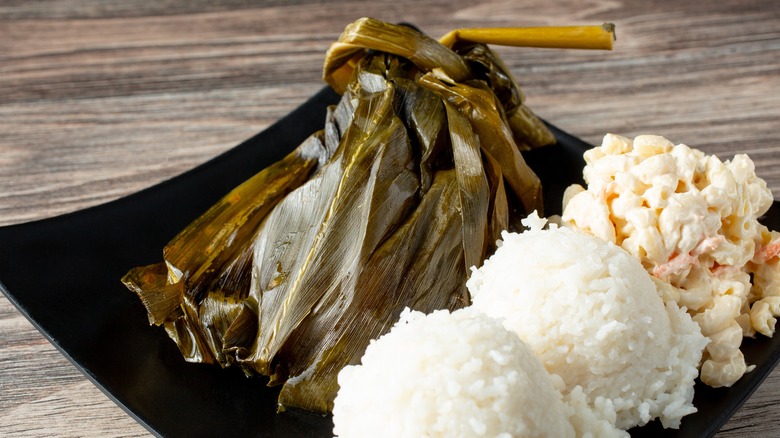
Slow-cooked to tender perfection, lau lau consists of pork butt, black cod, and vegetables, all wrapped up in layers of taro leaves and ti leaves, before being steamed. While the outer ti leaves are not edible, they help to seal in moisture, leaving the meat inside delightfully succulent. The inner taro leaves, however, are eaten alongside the filling, boasting a soft texture and subtle herbal taste.
Historically, lau lau was cooked in an underground oven called an imu, much like kalua pork. Nestled between layers of banana leaves, the parcels would steam slowly over the hot stones until the meat or fish inside was succulent and fall-apart tender. While most modern versions are made in steamers or slow cookers, with the right techniques, you can still produce that familiar comforting taste and melt-in-the-mouth texture. Often served alongside rice and poi, and other Hawaiian favorites like lomi lomi salmon and macaroni salad, lau lau is a must-have at any Hawaiian gathering. In fact, locals often say that a truly great feast can be judged by the lau lau itself, with a successful dish achieving the just right balance of richness and saltiness.
Haupia
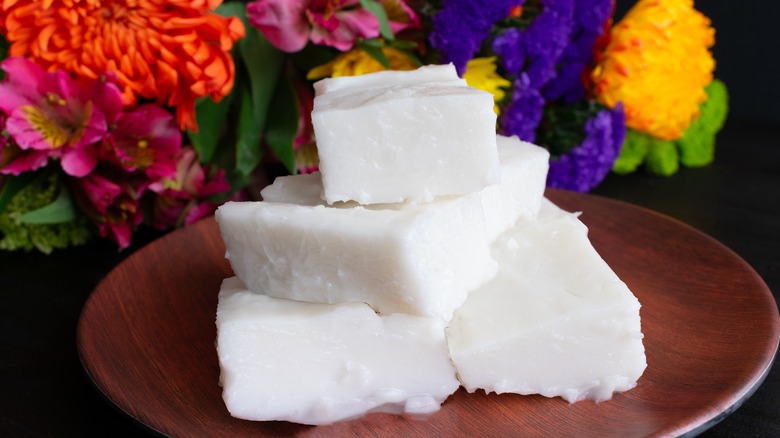
Haupia is a smooth, creamy, coconut-based dessert with a brilliantly simple prep method. You'll need just four ingredients to make this treat, which is typically set and sliced into jelly-like squares. The mixture was traditionally thickened with a starch derived from the pia plant (aka Polynesian arrowroot), but today this is trickier to source. Hence, most modern recipes call for cornstarch, which is far more accessible.
To make haupia, the cornstarch is first dissolved in water and set aside. Then, coconut milk and sugar are heated together in a saucepan, before the cornstarch slurry is poured in. After ten minutes or so of gentle cooking, the mixture thickens up, taking on a glue-like consistency. This means its ready for transferring to the baking pan and chilling in the fridge, so it can firm up further. Some versions are also topped with toasted coconut for a crunchy finish.
Served in pleasing bite-sized squares, haupia often appears at luaus, weddings, and family gatherings. And, while it makes for a delicious dessert in its own right, it can also be incorporated into other tempting creations. Haupia bars are a favorite, which see the coconut mixture layered atop a shortbread crust alongside another sweet component, such as chocolate or purple sweet potato.