

This Simple Mistake Could Seriously Ruin Your Fondant Potatoes
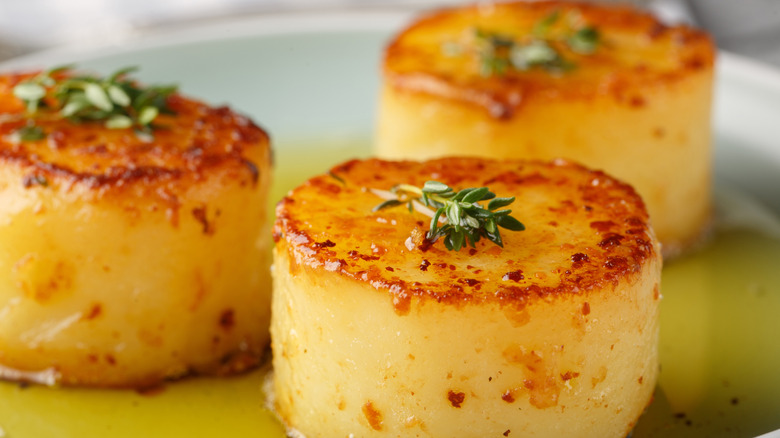
Fondant potatoes are a true labor of love, but one that also gives back over and over again with every single bite. Also known by their French name, pommes fondantes, fondant potatoes are a classic side dish in France. It's no wonder they're colloquially known as "melting potatoes," since the French word fondant means "melting." These deeply flavorful potato rounds literally will melt in your mouth — if they're cut and cooked, correctly.
To make sure that happens in our own kitchens and yours, we reached out to an expert on the topic, Chef Kieron Hales, Managing Partner & Head Chef at Zingerman's Cornman Farms near Ann Arbor, Michigan. But first, for the uninitiated (or slightly timid), here's a brief explanation of how fondant potatoes are typically prepared. They begin with peeled potatoes trimmed into cylindrical shapes, which get browned in butter or oil on the flat sides until crispy. Then, the spuds are transferred to the oven for braising with aromatic herbs until tender. The mistake that could seriously ruin your precious fondant potatoes is a simple one, however, requiring ordinary kitchen implements and a bit of patience. According to Chef Hales, the key is uniform cutting and sizing.
"Fondant potatoes are all about even caramelization and consistency, buttery, golden tops and bottoms, with tender centers," he explains. "Even sizing ensures every piece cooks through at the same rate. If one's thicker, it'll be underdone inside when others are meltingly soft."
The best herbs and aromatics for fondant potatoes
To achieve the necessary even sizing, Hales recommends using large Russet or Yukon Gold potatoes, slicing the ends to create flat tops and bottoms, and then cutting them into 2-inch cylinders with a cookie cutter. "This gives you maximum surface area for browning and stability in the pan," he shares.
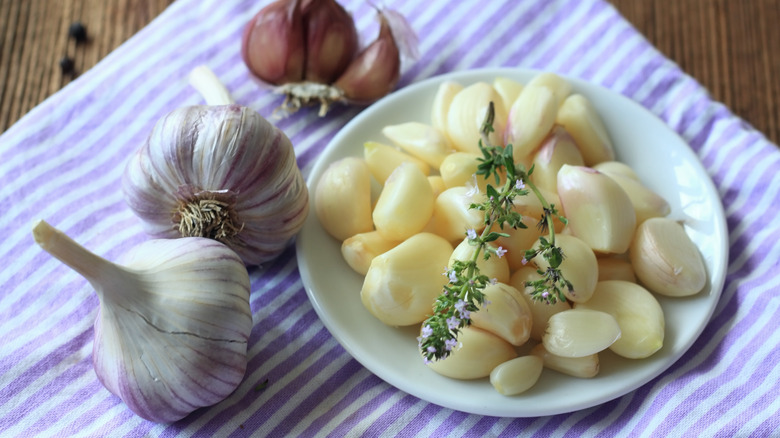
As for the herbs, aromatics, and other ingredients needed for braising in the second phase of cooking, Hales suggests using classic fondant components like fat, plus a few personal favorites. "Classic fondants are cooked with butter, thyme, garlic, and a splash of stock," he says. "I also love adding rosemary for a woodsy note or a few juniper berries; they bring out the buttery sweetness of the potato." There's also an intriguing suggestion from the chef, one not routinely used in fondant potatoes. "For an added zestiness," he reveals, "I love a dash of sumac in the pan, too."
Sumac, often used in za'atar spice blends, is a ruby-red spice made from the dried, ground berries of a shrub called Rhus coriaria. It has long been part of Middle Eastern and Mediterranean cooking, bringing a bright, tangy taste similar to lemon juice. Some people also note earthy undertones with hints of delicate florals. Be sure to choose edible sumac, which comes from red berries, rather than the poisonous white berries when foraging. To use sumac in fondant potatoes, simply sprinkle it in toward the end of the oven-roasting period to help retain its vibrant, citrusy flavor. Adventurous chefs have even recommended serving sumac-roasted potatoes with salted lemon yogurt.