

Is Vintage Champagne Worth The Splurge? What To Know Before You Buy
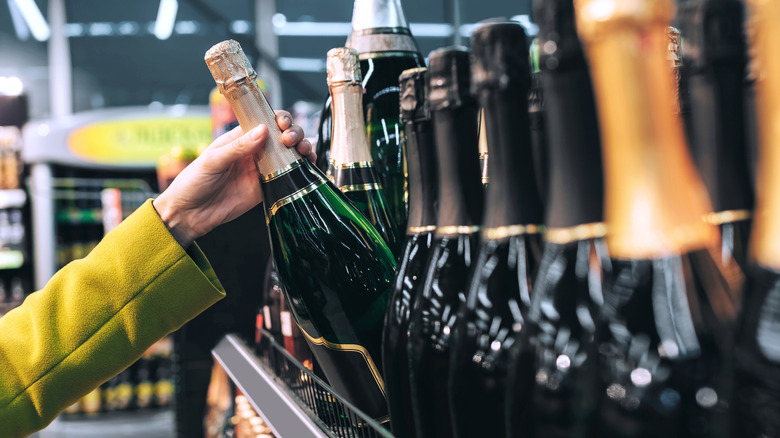
Every corner of Europe seems to have its own sparkling wine. Italy has Prosecco, Spain is known for Cava, and Germany has Sekt, but Champagne, the most lauded toasting wine, is only produced in a specific corner of France, making it a very special glass. Sparkling wine has been coming out of the Champagne region since the days of Julius Caesar, and while those century-old bottles might be long gone, vintage champagne is alive and well.
In France, vintage wine is called millésimé, and it's always made from a single year's grape harvest. "When a year deserves to be exalted, when a harvest reveals a typicity worth preserving, a Vintage Champagne is produced," France's official Champagne website eloquently explains. Given the unpredictability of weather and terrain, farmers can only do so much preparation for the season ahead, and as one can imagine, every season is full of surprises. With this in mind, vintners only tackle the process of making a vintage every few years when the harvest proves exceptional. This means these bottles are extremely limited, which translates to the big bucks. Purchasing rare, vintage champagne can be thought of like art collecting, it's all in the eye of the beholder, but its market value remains.
The worth goes beyond the year on the bottle
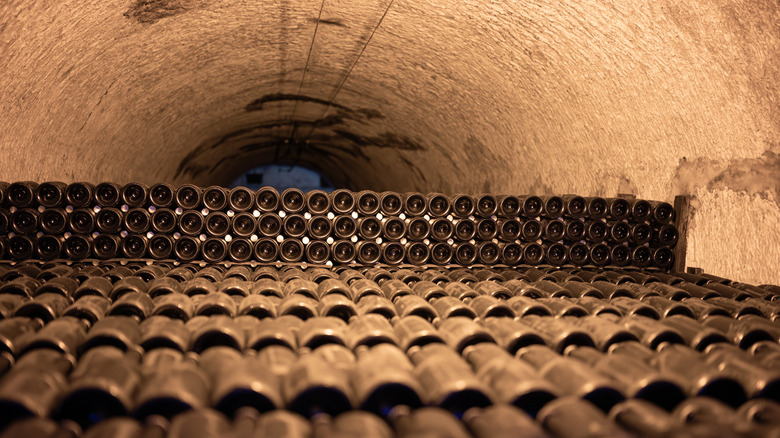
Not only is vintage Champagne limited to certain years, but each bottle also has to age for at least three years, tacking on even more steps and rarity to the bottles. Three years may be the minimum, but most Champagne houses commit to longer for a more developed result.
Moët & Chandon dedicates eight years to aging its well-known bottles of Dom Pérignon. Some years are particularly notable in the sommelier world, like 1988, 1996, 2002, and 2008. Whether it was ideal weather or the farmers just had some good karma, those noteworthy bottles are extremely coveted and can be worth thousands of dollars. While some rare bottles reach those digits, there are plenty that hover around the $200 mark, like the 2012 Brut Rosé Cuvée Elizabeth Salmon and the 2015 Bollinger La Grande Année, which is a much better entry point for vintage Champagne newcomers.
Non-vintage Champagne like Veuve Clicquot Brut's yellow label sells for about $60. Vintage Champagne is only worth its cost to those who appreciate the craftsmanship and history that comes with each bottle. If you're looking at it through an investment lens rather than a hobbyist, vintage Champagne can definitely be worth the initial splurge. As long as it's properly stored in a temperature-controlled cellar, these bottles can continue aging for 50 years, if not longer. A $500 bottle of vintage Champagne today could be worth a fortune down the line.