

This Fall, Make Pumpkin Pie With Duck Eggs And Taste The Difference
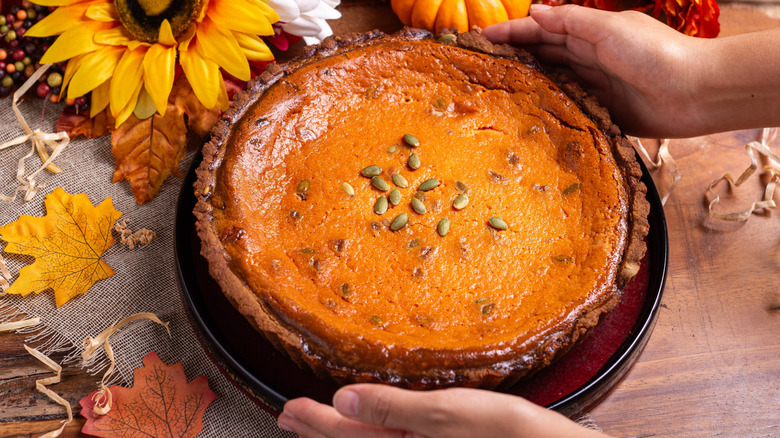
When the season for pumpkin rolls around, there's nothing simpler or tastier than a homemade pumpkin pie. But that doesn't mean you have to stick with your standard recipe. Instead, make your pumpkin pie the star of the show with an easy upgrade: Duck eggs.
Loved for their ability to make any baked good more moist and rich, duck eggs are found in specialty grocery stores and farmers' markets alike. They are often larger than chicken eggs. And as a result, duck eggs will have a different ratio of yolk to white. This means they also have a higher fat content than chicken eggs, which makes custard creamier and silkier. Another bonus, depending on the recipe, is that duck eggs produce a brighter yellow color.
Using duck eggs as a replacement will also add a subtle decadence that will have your guests coming back for a second slice (or guessing what the secret ingredient might be). But before baking with duck eggs, there are a few things you should consider.
How to properly swap duck eggs for chicken eggs
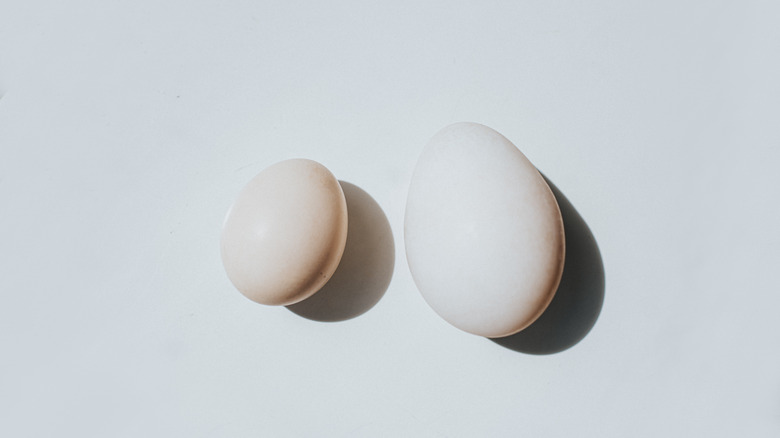
In most baked goods, eggs serve as emulsifiers, which means they possess a unique ability that allows them to combine water and fat components effortlessly. Due to their protein, eggs also contribute a significant amount of structure, which helps desserts like pumpkin pie set perfectly.
When substituting duck eggs for chicken eggs, is it as straightforward as a one-to-one swap? First, make sure you understand some of the key differences.
In most cases, swapping one duck egg for one chicken egg will provide similar results. But when it comes to recipes that call for multiple eggs, you need to reduce the number of eggs due to the size difference. For example, in a recipe that calls for four chicken eggs, you may be okay with adjusting the recipe with three duck eggs. In pastry-forward recipes or in recipes where measurements are weighed and need to be precise, consider using a scale for your eggs.