

The Best Microwave Wattage For Most Households
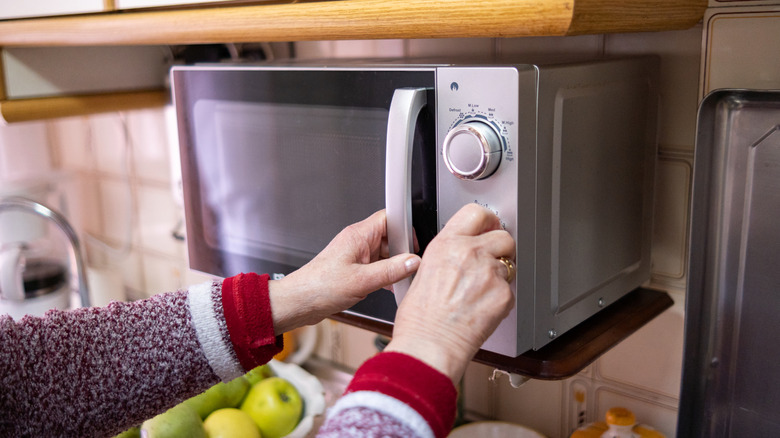
Not all microwaves are made the same. They come in various sizes and with all kinds of settings and functions, from defrosting to heating popcorn. It can be challenging to grasp the many nuances of microwave cooking, but you can simplify things by focusing on one key metric: wattage. Wattage indicates the amount of energy that is used for microwaving — options range from as low as 600 to over 1,700 watts. Generally speaking, 1,000 to 1,100 watts hits the sweet spot for most households' needs, allowing you to reheat foods to perfection.
In short, the higher your microwave's wattage, the more energy and heat it produces. Most consumer microwaves on the market use between 600 and 1,200 watts. While this is a fixed maximum setting, some microwaves have dials that allow you to reduce the wattage and, therefore, the heat. This handy feature makes it easier to melt chocolate in the microwave, or other delicate ingredients such as butter without scorching them.
So, why does wattage even matter? First and foremost, the correct wattage ensures evenly heated food, because no one likes unappetizing cold spots hidden in reheated lasagna. Setting your wattage between 1,000 and 1,100 covers all of your bases and is powerful enough to cook large portions and frozen foods evenly, making it the best choice for families. Cooking power also affects texture, as overcooked food often develops a rubbery texture. Higher wattages cook food faster, which can be a major convenience factor. Particularly for microwaves with a steam cooking function, high wattage enhances flavor by maintaining moisture, nutritional value, and aroma, making your dinner taste better. Keep in mind that a high-wattage microwave that is used frequently or for long periods of time could affect your electricity bill.
Choosing the right microwave wattage for your needs
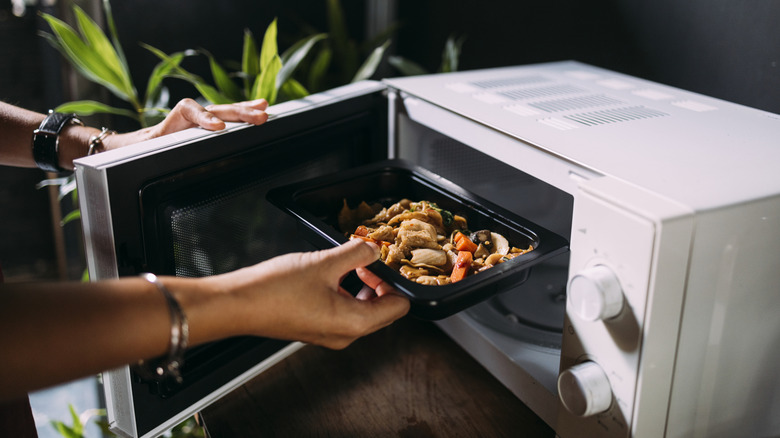
Maximum power doesn't necessarily yield the best results. Many foods benefit more from lower wattages of 700 or less, like the aforementioned chocolate and butter, noodles, and grains such as quinoa and rice. These starchy foods should be left to simmer in the microwave at low power for the best results, as high-heat microwaving could lead to over-boiling or burning.
A low-wattage setting is also ideal for defrosting frozen foods because it thaws them more evenly. Microwaves are better at heating liquid than solid ice — the low power setting allows the frozen dish to melt slowly, which allows the microwave to do its job more efficiently. This creates a moist, uniform thaw instead of an uneven mix of frozen patches and hot spots. Keep in mind that the cooking instructions for frozen meals in grocery aisles are often based on a 1,100-watt microwave, so remember to adjust based on the wattage of your microwave.
The 700 to 900-watt range is popular for reheating food, steaming vegetables, and popping popcorn with minimal fuss. A lower wattage makes the most sense for occasional microwave users, who use it for reheating leftovers or whipping up a bowl of instant oats. However, size matters, and if you're constantly heating large meals for family or visitors, higher wattages will get the job done more efficiently. Most people fall into the middle lane of 1,000 to 1,100 watts. This strength makes cooking fast and easy, allowing you to heat both small plates and family-sized portions in minutes.