

Why Ketchup Tastes Different When You Don't Refrigerate It

Even though the age-old debate on whether ketchup should be stored in the refrigerator came to a close when Heinz made repeated and punctuated posts on Twitter declaring that "FYI: Ketchup. goes. in. the. Fridge," there's still an argument to be made that the ultimate decision comes down to each person's preference. In addition to a cold versus room temperature preference, the taste profile of ketchup can actually be different when it's stored in the cupboard or pantry instead of the fridge.
There are a few reasons for this taste difference ranging from the separation of ingredients, to possible fermentation, to muted flavor due to a not-ideal environment for freshness. Additionally, sometimes, the flavor isn't different at all but the texture changes to the point that it can seem like it is. It should be stated again that because of the acidity in ketchup, you can store it at room temperature, but there's a reason why the back of bottles such as Heinz say "For best results, refrigerate after opening." Just because you can store it in your pantry, doesn't mean that you should.
What happens to ketchup's ingredients in the pantry?
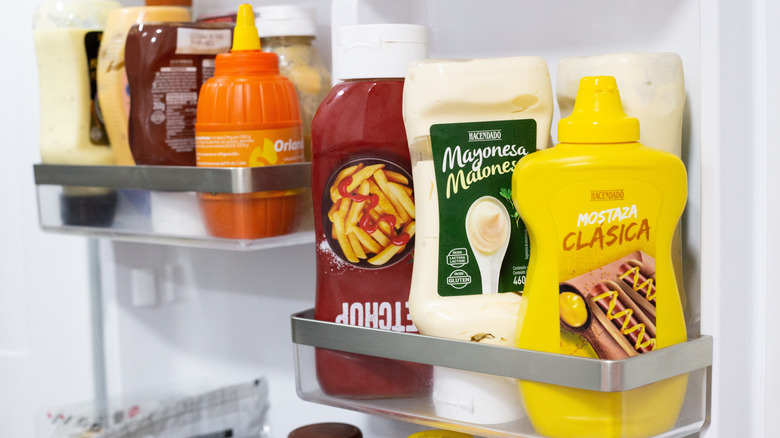
Generally, all ketchup is made with the same base ingredients: tomato concentrate or paste, vinegar, a sweetener, and salt. From there, each brand adds its own spin to make its flavor unique. Heinz ketchup, for example, is made of tomato concentrate from red ripe tomatoes, distilled white vinegar, salt, natural flavoring, stevia leaf extract, and onion powder. As you can see, there are no additional preservatives in this list. This last part is important, because while the acidity in ketchup makes it "shelf stable" that essentially just means that ketchup can be stored at room temperature and remain safe to ingest (for about 30 days). Because there are no preservatives, though, the ingredients will start to break down once the air-tight seal is opened. (Like most processed food, ketchup can remain untouched in a cupboard for quite a long time if it stays factory sealed, which is why it's not sold already refrigerated.)
Generally, a brand-new bottle of ketchup will have a brighter, richer taste. To save that as much as possible, refrigeration is best. When stored in the pantry, the ingredients will separate causing a layer of water to build up and the flavors to mute. Additionally, if you've purchased a fancy or artisanal brand of ketchup, the condiment might even be in danger of fermenting if left on the shelf. Finally, even though the various types of containers in which ketchup is sold all come with an air-tight seal, certain yeasts could still develop in your ketchup at room temperature. And while they are not dangerous to your health, they can impact the flavor.