

What It Means When Produce Gets Slimy (And If It's Still Safe To Eat)
We may receive a commission on purchases made from links.
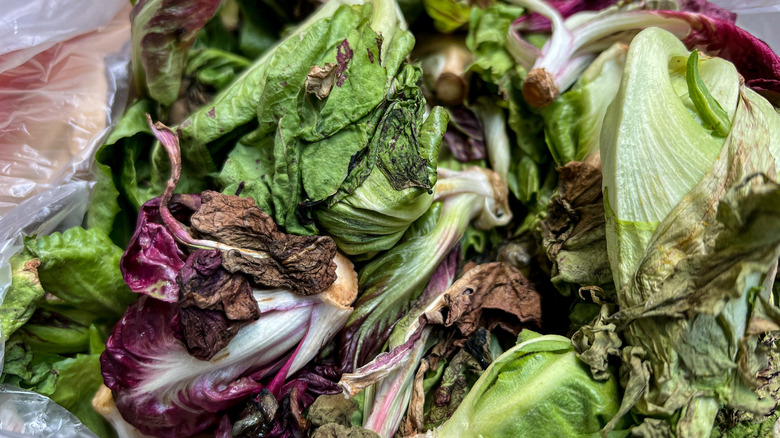
There is no greater gut punch as a home cook than when you make the conscious decision to prepare yourself a salad for lunch, only to be met with slime-coated leafy greens with a tangy, "off" smell to boot. But is it actually dangerous, or just unappetizing? Is that partially slimy spinach still safe to use?
Sliminess on produce is a classic sign of spoilage bacteria. These bacteria break down the plant's structure, often feeding on excess moisture that builds up inside packaging or after washing. According to the USDA, spoilage bacteria aren't generally harmful to ingest in small amounts, but they make food look, smell, and taste strange. In other words, the slimy texture isn't necessarily unsafe, but it means your produce is well past its prime.
This happens most often with high-moisture items like salad greens, cucumbers, mushrooms, and pre-cut veggies. Sliminess is usually caused by a combination of time, improper storage, and trapped humidity. If you notice a single leaf or piece starting to get slick, you might be able to salvage the rest by removing the offender and drying the remaining produce thoroughly. If the sliminess has spread or there's a foul smell as well, it's time to toss your veggies.And, of course, it's important to know which types of produce last the longest in the fridge as you plan your meals and grocery lists for the week.
When slimy produce is still safe — and when it's not
As unappealing as it is, slimy produce doesn't always equal danger. According to food safety experts, you're unlikely to get sick from eating lettuce or spinach that has a bit of slimy spoilage, especially if it hasn't developed mold, a rotten odor, or visible decay. That said, most people choose not to eat it simply because of the texture and change in flavor.
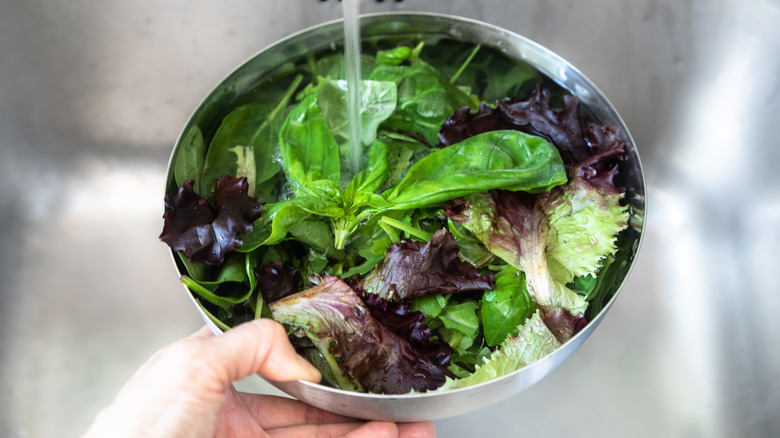
If the produce is just starting to get soft and you caught it early, give it a rinse and pat it completely dry with paper towels. In some cases, you can revive greens by placing them in a bowl of cold water for a few minutes, then drying them well with a salad spinner. But once they turn dark, mushy, or slimy throughout, there's no saving them. To extend shelf life in the future, store greens with a paper towel in the container to absorb moisture, avoid tightly sealed plastic if items are damp, and don't pre-wash produce until you're ready to eat it. For longer-lasting vegetables like carrots or celery, swap to breathable storage, mesh produce bags, like these reusable grocery cotton mesh bags from Amazon, or perforated containers.