

How To Keep Nonstick Pans From Getting Scratched Up Each Time You Store Them
We may receive a commission on purchases made from links.
Nothing makes a weekday dinner easier than the convenience of nonstick pans. They can save a lot of time by limiting how much food sticks to the surface and the amount of cooking oil that's needed. Cleanup is a breeze too, and even the messiest of meals simply wipe off the pan in the sink — no scrubbing needed.
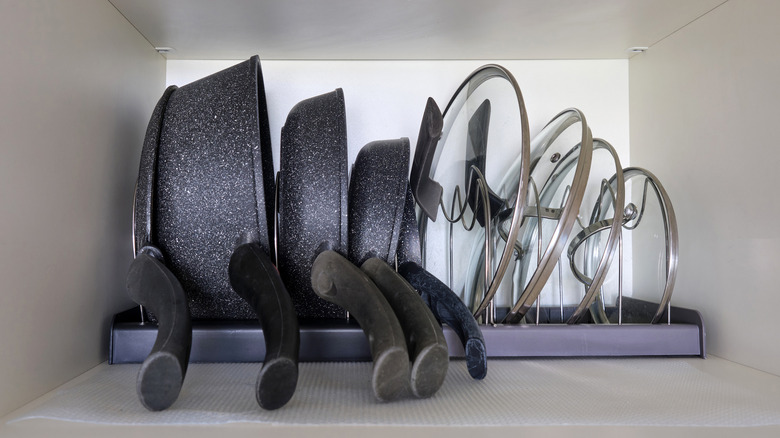
Nonstick cookware is a common kitchen tool every cook should have, but it isn't bulletproof, despite a low-maintenance design. In fact, these pans are vulnerable to scratches and chips, because nonstick coatings like polytetrafluoroethylene (PTFE), commercially known as Teflon, are inherently softer than metal. This means if they're tumble-stacked into a cabinet, fellow metallic pots and pans may scuff the coating. This is especially true if they have rough edges or exposed screws that can drag along your pan's surface.
The solution? Line your pans before placing them together. A bit of buffer makes a big difference by slightly separating two surfaces so there's no chance of pans scraping against each other. You can line your cookware by using paper plates, paper towels, or cloth towels that you already have on hand. But investing in a dedicated tool, like these pot and pan protectors by BOYAN, provides you with a reliable shield, and they tend to stack better due to their pan-accommodating design, too .
Why it's important to keep your pans scratch-free
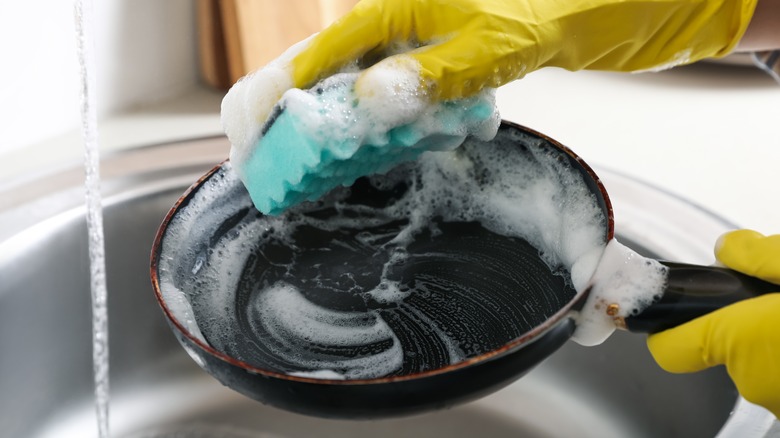
This is more than an aesthetic problem, although scratches do dull the shine of your pan's interior. The bigger issue with scratched pans is that the nonstick coating breaks down, which loosens its matrix and may release unwanted particles into your foods. Your pan may also lose its nonstick power, leaving you with charred food scraps instead of a slick surface. Scratched nonstick pans are tricker to clean as well, and usually require more scrubbing to get burnt bits out due to a rougher texture.
Generally speaking, deeper scratches, flaking issues, and warping can't be fixed. These are sadly signs that your nonstick pan is finished and you'll need to source a new one. But for minor wear or preventative purposes, there are a few things you can do to keep the scratched pan as clean as possible so its easier to use. Boiling water and vinegar in the basin can help remove buildup, which may improve your pan's nonstick abilities. You can also use a sponge to scrub it with baking soda, which helps to polish and smooth the surface without damaging it.
To make sure your pans last a long time, think beyond storage-related scratches and make sure you're not scuffing the surface at other times. Metal utensils are the biggest culprits, and can gouge your pan if you use them to scrape and stir food. Make sure to opt for silicone or cooking utensils made from wood instead. Finally, wash your nonstick pans by hand, as dishwashers get quite hot, which can potentially degrade the cookware's coating.