

Why You Should Be Cooking Fruit Cobbler On The Stovetop
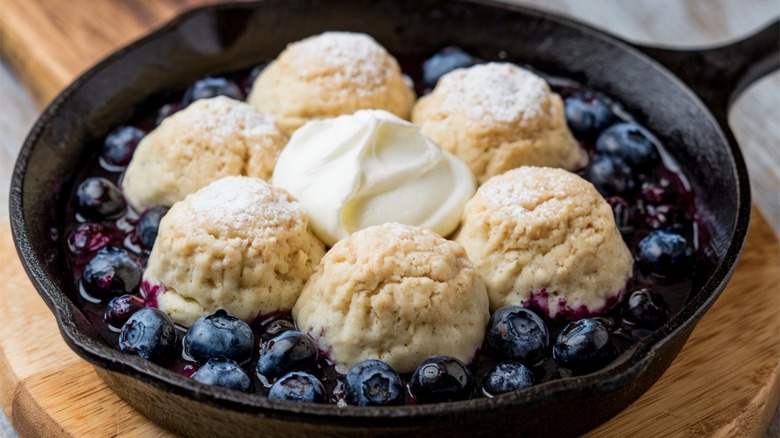
Whipping up a cobbler is a nifty way to use up leftover fruit that may have passed its prime. Simply combine it with some sugar, top with dollops of biscuit dough, and pop it in the oven. The only problem? The lengthy time it takes to bake. Thankfully, for anyone short on time (or patience), a brilliant solution is to cook your fruit cobbler on the stovetop, as this method is faster and uses less fuel. For example, a classic peach cobbler takes around 40 to 50 minutes to cook through and develop a crisp and buttery texture. However, making it on the stovetop can almost halve the overall cook time.
Stovetop cobbler is faster and saves energy for two key reasons. First, unlike in an oven, where the entire cavity slowly comes up to temperature and requires preheating, using a stovetop means that the fruit receives a surge of direct heat from the burner. As a result, berries, sliced apples, or peaches can soften quickly, becoming deliciously tender at a much faster rate.
Second, with stovetop cobbler, the heat is typically turned off once the fruit has softened — about 10 minutes later or so — but the lid is kept on so that it can continue to cook in the residual heat for an extra 15 minutes. This additional stage allows the topping to develop a comforting steamed texture, similar to a soft dumpling, without the use of any extra fuel. Plus, it lets the bubbling, sugary fruit at the bottom cool down so the cobbler is immediately ready to serve.
Is stovetop cobbler technically considered a grunt?
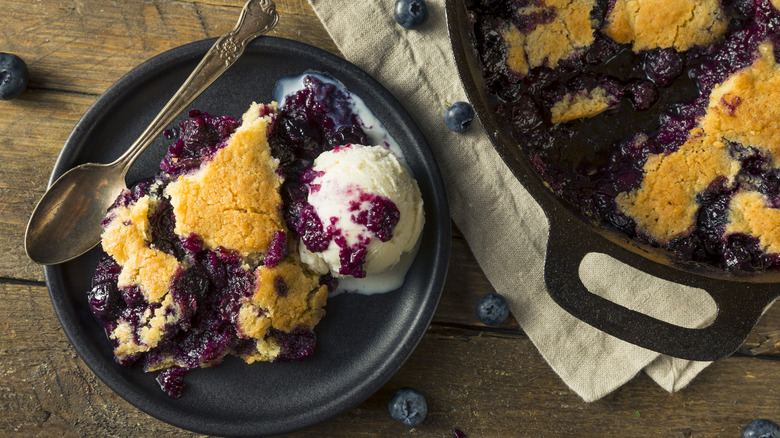
Now, some might say that cooking a cobbler on a stovetop turns it into a grunt or slump. What's the difference? Simply put, a grunt is the name certain New Englanders have for a fruit cobbler that's been prepared on the stovetop versus the oven. It still contains all the same ingredients and is assembled identically — it's just the cooking method that's different. Additionally, an uncovered oven-baked cobbler also tends to have a crisper crust and a golden color because the surface is exposed to the heat.
Having said that, and considering there's very little else to distinguish between the two, it's common for both of these desserts to be described as "cobblers" in regular parlance. You could, of course, oven-bake your cobbler in a Dutch oven with the lid on so it develops a similar consistency. That is, if you don't mind waiting a little longer for your appliance to preheat.
One of the biggest mistakes everyone makes with fruit cobbler is being a little too heavy-handed with the topping. The perfect cobbler should have a base of fruit, an almost gooey middle, and a set crust. If you dollop too much dough on top, it can upset the balance and affect the cook time. Along with that, you should also make sure all your fruit is chopped into a similar size. This will ensure that the entire cobbler cooks through at an even rate.