

The Major Hosting Mistake To Avoid At Your Dinner Party
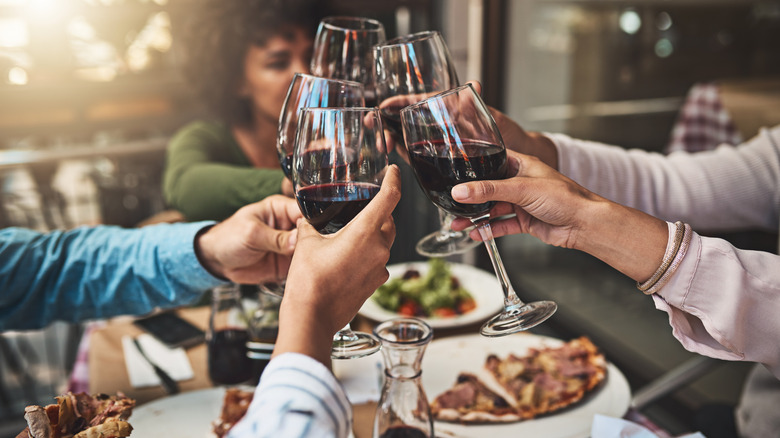
While hosting a dinner party can be fun, it can also be stressful. After all, there are a lot of things to coordinate: from choosing the right decor to making your food aesthetically appealing, deciding the guest list, and even accommodating the individual dietary needs and expectations of each person attending. Luckily, expert chefs have been there, done that — and they have some tips for wannabe dinner party hosts.
For instance, pastry chef Abigail Dahan suggests that hosts never have guests cut into dishes themselves. "When hosting, have things pre-sliced or partially sliced to start," Dahan said in a recent interview. "Often, no one ever feels comfortable being the first to cut into the piece of cheese. Cut some pieces to start so it doesn't feel so precious to dig into."
Considering no one wants to spend hours preparing food that their guests are too nervous to eat, you can get the ball rolling by having dishes pre-sliced and ready to enjoy at a moment's notice. This goes for things like casserole, cheese, cake, or anything that isn't easy to grab. Additionally, portioning items is also especially important when it comes to specific dishes people may not be familiar with serving themselves, such as seafood, or the notorious Jell-O salad.
Foods to avoid serving at a dinner party
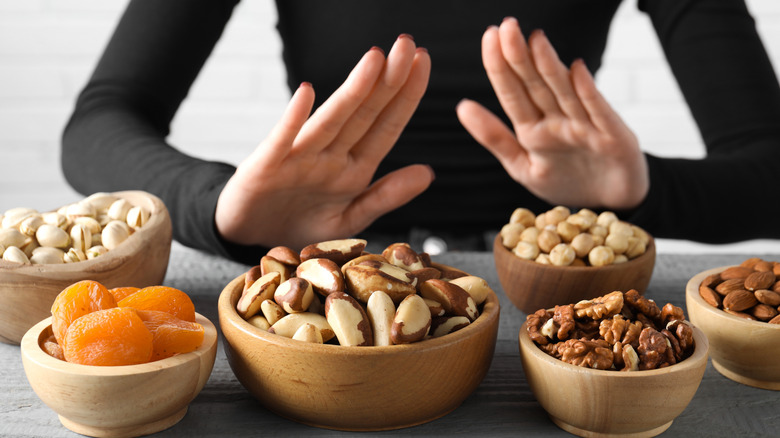
In addition to pre-slicing dishes, there are also certain foods that should be avoided at a dinner party. For instance, any food that smells too strong can ruin the vibes of the night, as the more delicate dishes will be overwhelmed with scents. This includes items like tuna or boiled eggs. Additionally, you should also avoid serving foods that are too messy or might stain clothes easily. Just like with unsliced dishes, guests might be too intimidated to eat these. After all, no one wants to be the person with barbecue sauce all over their nice shirt at a fancy dinner party!
When confirming each guest's attendance, make sure to ask them about any food allergies they may have. Another event that will certainly put a damper on the night is someone having an allergic reaction to something they ate. If someone mentions being allergic to peanuts, shellfish, or eggs, these are best left off the table entirely. If you do include a dish that has allergens, though, be sure to label it appropriately and prevent cross-contamination with other dishes.
Finally, labeling your dishes is a good practice for dinner parties overall. That way, guests can quickly understand what they're looking at and what they should expect without having to awkwardly ask the host. Ultimately, if you keep everything labeled and pre-sliced, your night should go much smoother.