

If You Love Good Bread, French Butter Belongs In Your Fridge
We may receive a commission on purchases made from links.
European dairy gets a lot of kudos, which goes double or triple in the highly finessed world of European butter. Reasons are nuanced from one producer to another, but it often comes down to high butterfat content, live cultures, slow churning, and animal feeding practices, which can differ considerably from most American-made butters. Then, in a category all its own, lies the highly coveted French butters. Hailed by professional chefs and home cooks alike, it's especially transformative if you love good bread — whether you make your own at home or slather that French buerre on bakery-made rolls, loaves, quick breads, challah, croissants, or basically any type of bread.
That butterfat content considerably informs the rich flavors and mouthfeel in French butters. Like most European versions, they require at least 82% butterfat, compared to the legal minimum of 80% in the United States. Some of the most coveted French butters go well above that percentage, landing at 84% or higher. If that sounds like a marginal difference, consider that water typically takes the place of butterfat in the lower percentages. More butterfat means more texture, richness, and baking precision — therefore, more tender loaves, flakier crusts, and creamier sweet breads. French butter also brings extra depth to your table when spreading on freshly baked breads. That's partially due to grass-fed cows, which commonly graze in pastures carefully cultivated for environment and soil quality or "terroir." This feeding practice, along with the common addition of live cultures, adds complexity and distinct flavors to the butter, including a light tanginess — plus a bonus boost of beta-carotene.
Regional butters and special status
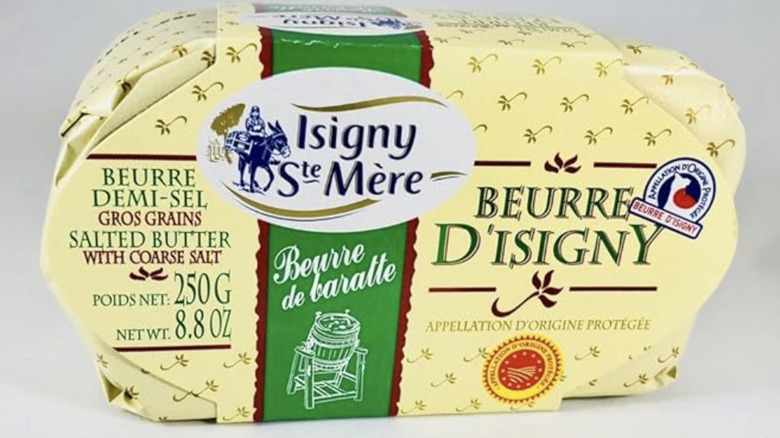
The process of slow-churning butter hearkens to days gone by — but not always, at least in France. Some artisan producers still make it the traditional way, especially those resting within prestigious PDO (Protected Designation of Origin) regions. That includes the butter brand culinary legend Nancy Silverton cannot go without, namely the French butter by acclaimed cheese artisan Rodolphe Le Meunier. He specializes in beurre de baratte from the Loire Valley, which is sourced from local French farmers, created in wooden butter churns, then hand-molded and stamped. The brand of beurre de baratte even took the top spot on our Tasting Table ranked list of 20 fancy butter brands. Le Meunier's butter is hardly alone in the category of PDO butters from France, also identified by the French term AOP (Appellation d'origine protégée.) Other notable makers carrying the designation include Beurre d'Isigny and Charentes‑Poitou, as well as Buerre D'Isigny Ste-Mère from France's Normandy coast, prized by baking chefs in particular.
It is worth noting that the higher butterfat content of French butters, and sometimes the natural processes or cultured varieties, are appearing in a few American-made butters. That includes one of the most prominent French-style brands, Plugrá, which is popular with chefs for its 82% butterfat. Others bringing this style to U.S. grocery stores are some offerings from Organic Valley, Vital Farms, and Vermont Creamery. They can be a relatively affordable way of those deep French-inspired flavors and textures to homemade or bakery-bought breads.