

The Telltale Sign That Your Oven Has A Gas Leak
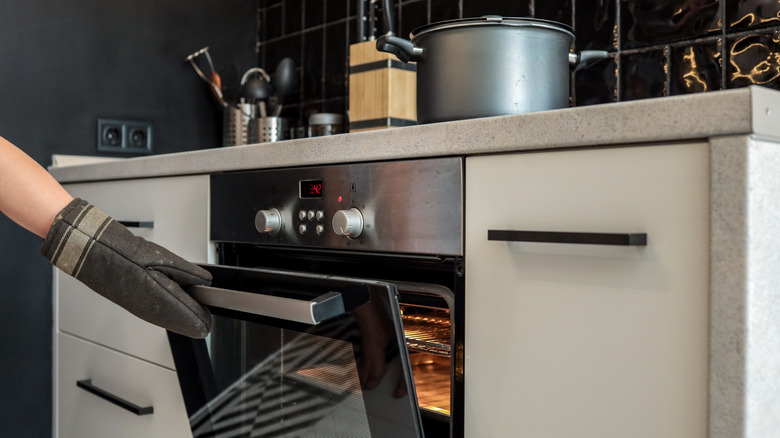
Aromatic greatness is born in the oven. From the warm and comforting fragrance of homemade chocolate chip cookies to the savory scent of a roasted turkey, our ovens delight our noses with the essence of mouthwatering feasts about to hit our table — well, most of the time, that is. On the other side of the coin, unpleasant smells emanating from the oven may indicate that something has gone dangerously wrong, such as a gas leak. While natural gas or propane serves as the source of an oven's ever-important heat, a leak can prove deadly if left unfixed. As such, early detection is vital, and far and away, a pungent odor similar to rotten eggs is the most discernible sign of a gas leak.
On their own, natural gas and propane are odorless and difficult to detect by the human nose. Since the 1930s, however, energy companies have infused these gases with mercaptan, a naturally occurring compound found in rotting food, such as wine that's gone bad, for safety reasons. The odorant contains sulfur, giving it that unique, marshy aroma that alerts home cooks and professional chefs alike that something is amiss in the kitchen. Odors aren't the only way to find gas leaks, either. For instance, a hissing sound coming from the oven could also denote escaping gas, as could the rapid death of nearby houseplants. In addition, unexplained dizziness or headaches may be the result of breathing in leaking fumes.
What to do if you suspect a gas leak
There are some times when the smell of mercaptan (or other off-putting scents) is completely normal and doesn't typically indicate a gas leak. For one, when starting up your gas oven, the appliance fills with, well, gas, as the igniter attempts to light the burners. When opening the oven during this ignition phase, the distinctive mercaptan smell may be present, but after a few minutes, the smell should dissipate after the burner lights. If your oven is brand new, it might give off a harsh odor from the appliance's protective coating. Once the oven has been used a handful of times, that smell should go away, too. Also, avoid using the oven's "self-clean" button, as this incinerates food residue, creating strong scents.
If all signs do point to a gas leak, though, don't wait around — and don't try to be a hero! If it's safe to do so, turn off the oven and immediately vacate the premises. Then, call 911 or your local emergency services. While it's possible to find the source of an oven's gas leak yourself, it is incredibly risky. You should always leave this to the professionals to minimize any risks to your health and home. Be sure to not ignite any household flames, whether that's with a match, a lighter, or some other kitchen appliance. Don't touch any light switches either, as even the smallest spark could set the expelled gases ablaze, potentially leading to burns, house fires, or explosions.