

In Case You Didn't Know, This Is Actually The Warmest Place In Your Fridge

Just because a refrigerator's job is to keep food cold doesn't mean it does so consistently throughout the entire appliance. Some areas of the fridge stay colder than others — if you've ever had a jar at the back of the fridge get frosty, you know what we're talking about. The door is actually the warmest spot — by a lot. Because it's opened more frequently than any other part, the temperature around the door swings up every time you reach for the milk or grab a snack. Plus, the rubber gaskets that seal it shut aren't airtight forever. Over time, they can loosen just enough to let cool air escape and warm air creep in, making the fridge door a less-than-ideal spot for temperature-sensitive foods.
Ignoring that rubber seal is a risky mistake when shutting your refrigerator door. You'll still find plenty of people storing eggs or dairy in the door, but that doesn't mean it's the best choice. It's fine for shelf-stable condiments, bottled drinks, or things that won't spoil quickly, but not so great for items that rely on a consistently cold environment. If you've ever wondered why your milk spoils faster than it should, this might be the reason.
Don't store these foods in your refrigerator door
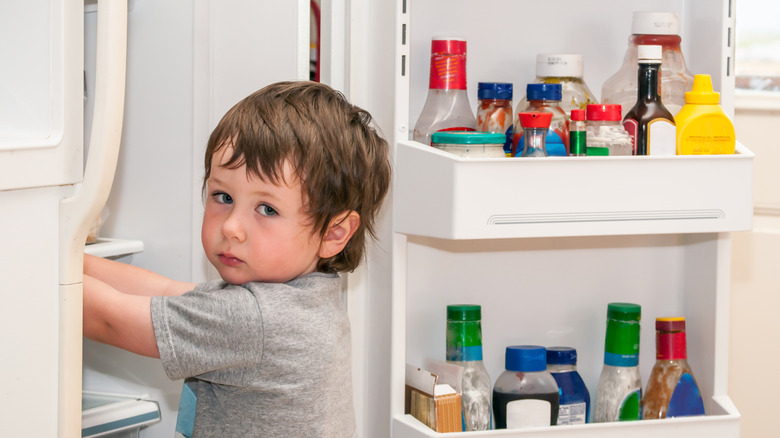
Once you know the fridge door is the warmest place, it makes sense to rethink what lives there. First things first: You shouldn't store meat in the refrigerator door. Anything that needs stable, chilled temperatures — like fish (this is the only place in the fridge you should store raw fish), dairy, or leftovers — belongs on the shelves or in the meat drawer, not swinging around on the door.
Instead, save that real estate for items that can handle mild temperature fluctuations. Think ketchup, mustard, hot sauce, jams, salad dressings, or sparkling water. The door's great for things that won't suffer if they warm up a few degrees during a grocery-haul unload or a late-night fridge raid. Some hard cheeses are fine there too, as long as you're eating them relatively quickly. If you're short on space and tempted to stash milk or eggs in the door, try rearranging a shelf instead. Keeping those items colder (and less shaken up) helps them stay fresh longer — and saves you from wasting groceries that should've lasted a few more days.