

Why Pierogis Are A Traditional Ohio Staple

Dumplings are a universal food. From gyoza to ravioli, kibbeh to tamales, there are hundreds of international dumpling variations to explore. Beginning as one of many quick and easy foods eaten by working-class immigrants in the melting pot of 19th-century America, the pierogi is a breakout star among dumplings. Only the Italians' ravioli has a comparable grip on the culinary imagination of America. But why are pierogi so popular in Ohio specifically?
Pierogi aren't just popular in Illinois, Indiana, Michigan, Ohio, West Virginia, New York, and New England — they're so popular that the area is sometimes referred to as the "Pierogi Pocket of America." This section of the country reportedly chows down on 68% of all the pierogi eaten in the U.S. according to the blog The Pierogi Experiment, and Ohio is smack-dab in the middle of it. Polish factory workers and laborers brought pierogi to cities like Cleveland as their economies boomed in the mid-1800s, and just as bagels and pizza started as immigrant dishes and then became central to the food profiles of New York and New Jersey, so did pierogis become a beloved dish of Ohio. Forget Skyline Chili and buckeyes — delicious potato-and-cheese-stuffed pierogi should probably be the official state food.
The history of pierogi, from Poland to Ohio
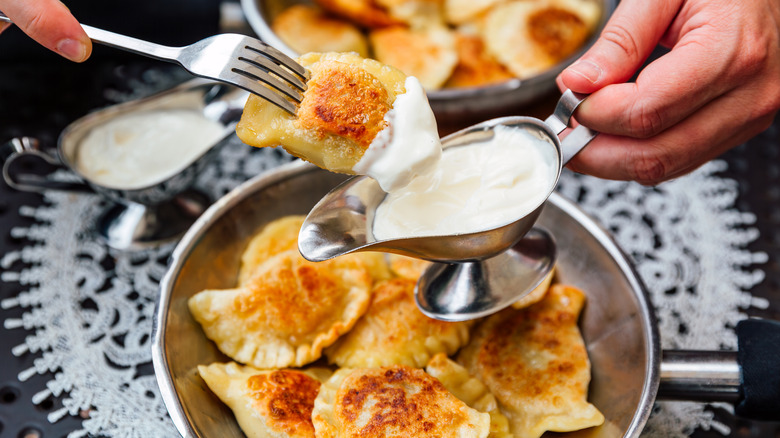
Although pierogi are originally Polish, similar dumplings with slightly different names are eaten across Eastern Europe. There are two origin myths for how they became a staple food across Ukraine, Slovakia, Poland, Hungary, Czechia, and other neighboring countries. One story claims Marco Polo brought dumpling technology from China to Italy and then up to the chilly Eastern reaches of Europe, while another claims that Saint Hyacinth, patron saint of the delicious dumplings, use the power of prayer to restore crops, which grateful villagers then crafted into the first pierogis.
The rest of the pierogi's history is more clear. The unleavened dumplings were eaten by peasants and the upper classes alike and even featured in Poland's first recipe book in the 17th century. High society enjoyed fancy fillings, while the lower classes stuck with traditional pierogi stuffing options like potatoes, onions, and farm cheese. Pierogi arrived in the U.S. in the 19th century during a huge wave of Polish immigration. By 1900, almost 9,000 Poles had settled in Cleveland.
Throughout the first half of the 20th century, the neatly packaged dumplings offered a taste of the old country to Polish laborers across the Rust Belt, where homemade pierogi were painstakingly assembled in Polish kitchens. The first recorded sale of pierogi in Ohio was in 1928. As Cleveland and Akron reportedly consumed 850,000 pierogis in 2009 alone according to Cleveland.com, it's safe to assume the pierogi market in Ohio has been healthy ever since.