

Keep Your Spanakopita Nice And Crispy By Adding One Of These Grains To The Mix

Spanakopita is beloved for its flaky layers of phyllo pastry and its rich, herb-flecked spinach and feta filling. The light crunch of that first bite can be, well, life-changing. This is the feat of spanakopita because common pitfalls are soggy bottoms and limp layers. There is a secret to avoiding both, and it's a tip every phyllo rolling yiayia (that's "nana" in my parts) knows: Add a cooked grain to the filling. Just a bit will do — a tablespoon of rice, bulgur, semolina, or Greece's creamy, comforting trahana. It absorbs excess moisture released by the spinach during baking, helping the phyllo dough stay crisp and golden from top to bottom.
Recipes vary widely, from those golden party hats that are spanakopita triangles to beautiful, rustic, pan-sized spirals, but most agree on one thing: Spanakopita must have structure. Squeezing the moisture from fresh or frozen spinach also means blanching it, and this helps to prevent the soggy effect, too. Sprinkling semolina over the bottom layer of phyllo is the traditional Greek way of going about it, but adding a spoonful of cooked short-grain rice or parboiled bulgur works well at keeping the mixture drier while binding the greens. Try massaging fresh spinach leaves with salt, then rinsing them off and squeezing. It's another simple trick to keep the freshness in while encouraging the moisture to go out.
Putting moisture in its place also makes spanakopita easier to slice and less likely to fall apart. Oh, and that dry backdrop allows flavorful, herbal notes to shine, which is another spanakopita must.
The herb factor: How to make an all-star mix
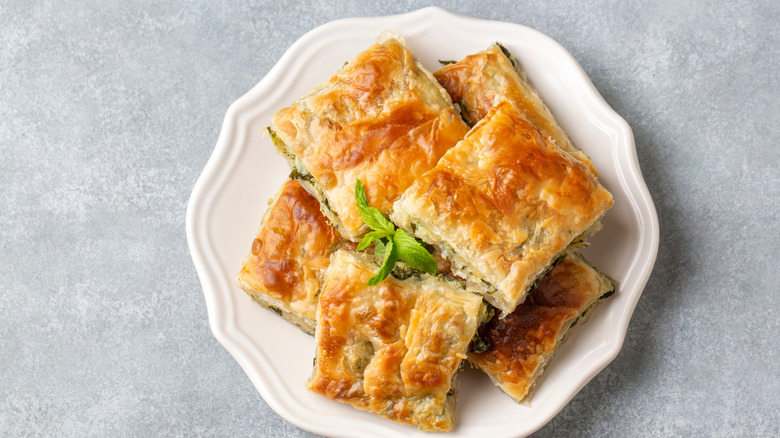
Beyond spinach, feta, and phyllo, what really gives spanakopita its signature flavor is the mix of fresh herbs, and like any delicious recipe that's been passed down from generation to generation, every spanakopita chef swears by a different blend. A fantastic way to go is with a fragrant combo of dill, mint, scallions, and flat-leaf parsley stirred into the filling. Dill and mint bring brightness, parsley adds a soft bitterness, and scallions lend mild onion flavor without overpowering the mix. Some cooks only add lemon and a pinch of nutmeg, which quietly enhances the richness of feta and eggs. Recipes passed down through families often reflect the herbs that were growing in the garden at the time, which is why you'll see spanakopita that leans more citrusy, grassy, or peppery. It's just the thing to pair with a Greek-style seven-layer salad for a complete meal.
Garlic is controversial here. Some believe that spanakopita should be mild and sweet, while other Greek cooks welcome it. Likewise, strong onions can throw off the filling, which is why scallions or leeks are preferred for their subtlety. No matter the combination, the goal is to create a delicate, fresh, and fragrant pastry that's nothing short of addictive. Whether you follow a family recipe or experiment a bit, the herbs make the savory soul of spanakopita shine. And if you're skipping the garlic, don't fret. Try serving spanakopita with classic tzatziki sauce for a dunking duo like no other.