

9 Dishes From The Victorian Era We'd Still Eat Today
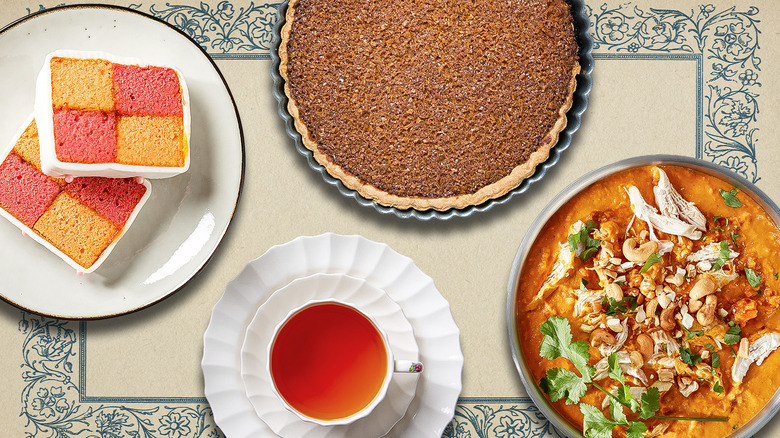
Many Victorian dishes do not sound that appetizing. People during this era consumed some incredibly strange food and drink, either through necessity or simple desire. One example? Egg wine. Another? Diseased animals. That one, of course, wasn't a choice for many people, but rather the cheapest type of meat available.
But Victorian food wasn't all bad. Some of the dishes that they created or enjoyed, like treacle tart and cucumber sandwiches, are still eaten today. Others aren't so popular anymore (looking at you, spinach ice cream), but still deserve a place on the table (combine that spinach ice cream with chocolate and you've got a winning, nutritious dessert).
Below, we've gone on a journey of all the different dishes and foods that were popular during the reign of Queen Victoria (that's 1837 to 1901, in case you needed reminding), and we'd still eat today, with a few tweaks, probably. Keep reading to find out whether you're with us or against us.
Treacle tart
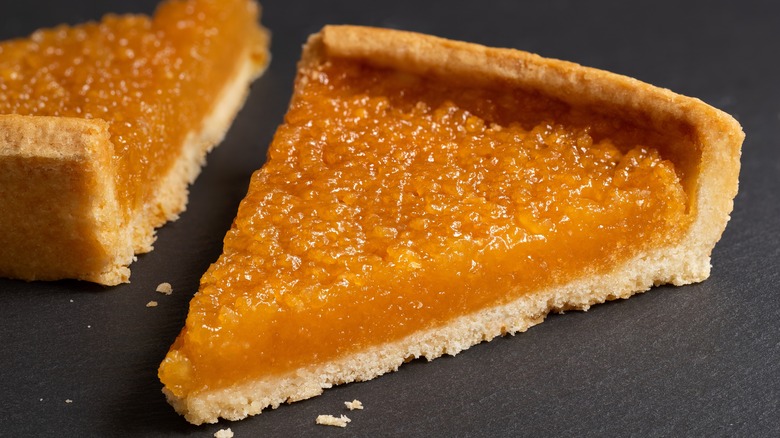
As the name implies, this Victorian dessert, filled with golden syrup, ginger, and lemon, is incredibly sweet, to the point where it is almost sickly. The keyword there is almost. Because while this dish is rich, it's still very easy to enjoy. It's comforting, satisfying, and perfect for indulging in on special occasions with a generous drizzle of cream.
Brits likely started eating treacle tart during the late nineteenth century. One of the first known recipes was published in 1879, but back then, it was made with black treacle instead of golden syrup. They couldn't have used golden syrup in the 1870s because the ingredient wasn't invented by London sugar industry pioneer Charles Eastick until 1883.
Golden syrup, with its treacle-like texture and butterscotch taste, was a game-changer for poorer Victorian families. Because it was affordable and accessible, it allowed them to whip up sweet treats for their families, including treacle tarts. Their version of the dish, however, was much simpler than the treacle tarts that are made today. In fact, they usually just consisted of two ingredients: Breadcrumbs and golden syrup.
Mulligatawny soup
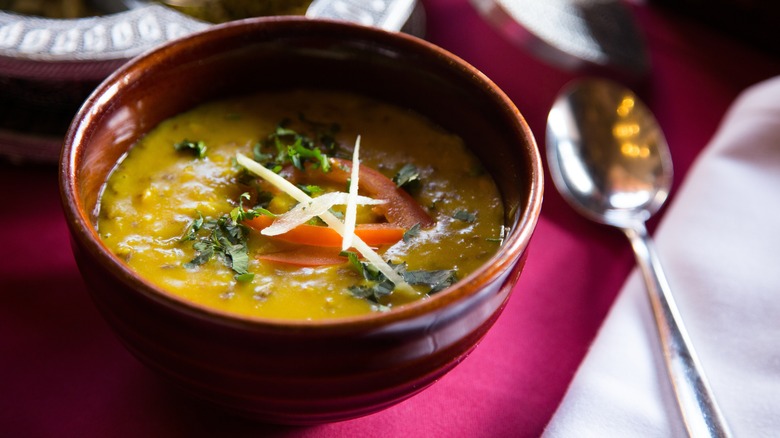
Mulligatawny soup wasn't invented in Victorian England, and nor was it invented by English people. So, you might be wondering, why is it on this list? And it's a fair question, so let's start with a quick history lesson.
In the mid-1700s, the British colonized India. And while they were in the country, they ate Indian food that had been made especially for them, including a simple soup with spices and herbs called pepper water. An anglicized version of the recipe, which became known as mulligatawny soup (mulligatawny is likely a botched translation of the dish's Indian name, milagu tannir), made its way back to England. Throughout the British Raj era (when Queen Victoria ruled over India and Pakistan), the dish became a hit with Victorian society.
Its origins are undeniably controversial, but in terms of flavor, the soup still holds up today. It's a hot and sour dish, made with ingredients like fresh curry leaves, cloves, red chillies, turmeric, garlic, and tomato purée. Mulligatawny is light and flavorful, yet still hearty enough to warm you up (an essential asset of any dish in both modern-day and Victorian England).
Battenberg cake

Battenberg, with its yellow and pink chequered cake inside and thick marzipan exterior, is an iconic British treat. It's still enjoyed across the country today, at afternoon teas and various celebrations, which makes sense, because that's the whole reason it was created: To celebrate.
Back in the 1880s, Queen Victoria's granddaughter, Princess Victoria, married Prince Louis of Battenberg. In honor of this royal union, a new cake was created. It was, you guessed it, the Battenberg cake (named in honor of Prince Louis). The design of the cake was created specifically as a nod to the Prince's German roots. It took inspiration from German Rococo architecture, contrasting the gold marzipan against the pastel sponge inside.
Today, there are many different ways to enjoy Battenberg cake. Of course, you can stick to the original, but many choose to experiment with different flavors and colors. Chocolate battenberg cakes, for example, are chequered with yellow and brown, while lemon and lime variations are green and yellow.
Cucumber sandwiches
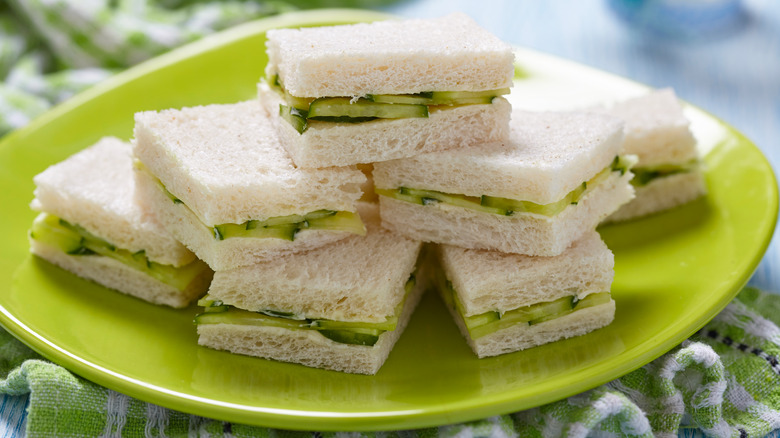
Another afternoon tea staple is the refreshing cucumber sandwich, which really is as simple as it sounds. In its simplest form, it's just peeled cucumber, bread (usually with the crusts cut off), butter, salt, and black pepper. It's not fancy, but it is refreshing and light. To jazz things up, some elect to make their cucumber sandwiches with cream cheese or herbs like dill or parsley.
We, of course, have the Victorians to thank for cucumber sandwiches. Once again, they were created during the British Raj era. Coming from mild and rainy England, British colonizers were not used to the intense heat of India, so they came up with recipes to help them cool down. The cucumber sandwich was one of those recipes. Cucumber was the perfect cooling ingredient, considering it is around 96 percent water.
The cucumber sandwich made its way back to England, and there, it became part of the afternoon tea spread. Ultimately, upper-class Victorians loved the sandwiches because they were refined, elegant, and a symbol of class. Arguably, that's still the case today. In fact, they're even served to guests at Buckingham Palace garden parties.
Saloop
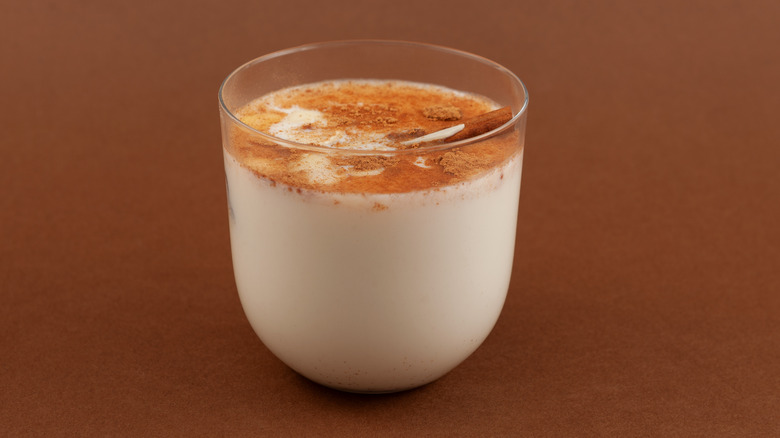
Cucumber sandwiches might be hydrating, but they still require something to wash them down. Most upper-class Victorians would reach for tea, of course, which was usually served out of elegant porcelain cups and charming teapots. Although it wasn't usually served in fine china, poorer members of Victorian society did drink tea. But when that wasn't available, or was still deemed too expensive due to tax, many of the poor would opt for saloop.
Saloop, which would be sold from vendors on the street for tuppence, is similar to tea. It's made from a plant, just like the English favorite, and it's usually drunk with milk and sugar. However, it tastes a little earthier due to the fact it's made with ground orchid root and sassafras.
This Victorian drink isn't sold on the streets of England anymore, but it is still enjoyed around the world. Saloop, also known as salep or salop, was actually invented during the Ottoman Empire, and it's still drunk in Greece and Turkey today.
Spinach ice cream
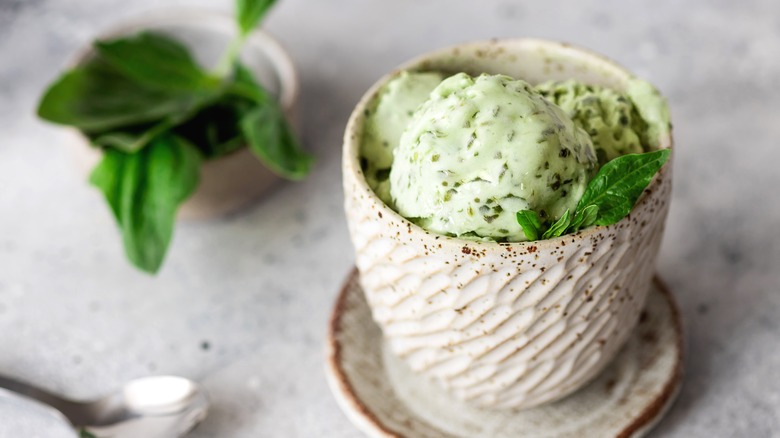
The Victorians didn't invent ice cream. The sweet treat was actually first created around the 17th century. At least, that's when the first written recipe was published. But the Victorians did love ice cream, and they weren't afraid of experimenting with different flavors. Cucumber, for example, wasn't just for sandwiches. It was also puréed and served in ice cream recipes.
Another strange ice cream flavor that at least some Victorians seemed to enjoy was spinach. The leafy green was boiled, before it was mixed with milk and eggs. The resulting ice cream likely didn't have a super strong flavor, as spinach isn't known for its overpowering taste.
It's unlikely that you'll see spinach ice cream on a restaurant menu any time soon, but making it from scratch might not be such a bad idea. After all, the vegetable is often added to smoothies to add some nutritional value without changing the flavor. Combine it with ingredients like cookies and cocoa powder and you won't be able to taste the difference.
Watercress in a cone
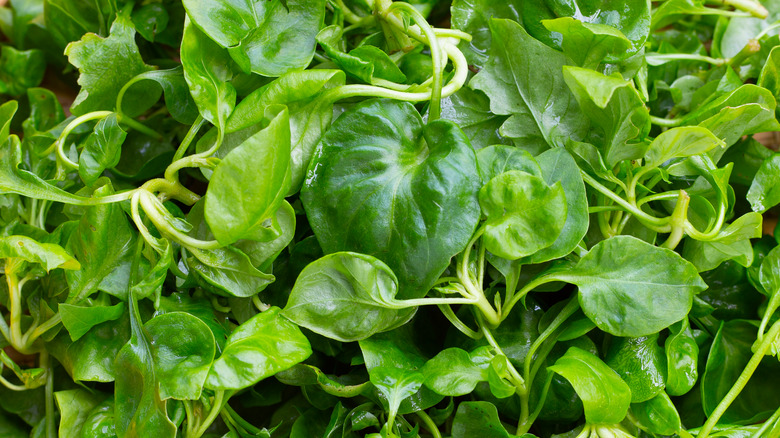
Watercress has been consumed by humans for thousands of years. In fact, it dates all the way back to the ancient Greeks, when it was given to the sick to help them heal. The plant naturally grows across Europe, including in England, where it has been cultivated for centuries.
Back in the 1800s, watercress was primarily grown in the town of Alresford (which remains a leader of the U.K. watercress industry today) and then transported to London via the railways. There, it was sold in markets to poor Londoners for cheap, usually in paper cones. Packed with nutrients like vitamin K, vitamin A, and vitamin C, those watercress cones were likely a key source of nutrition for many poor people in the city, who would otherwise live on bread, dripping, and even rotten vegetables.
While you may not find watercress cones sold in many places today, when you're on the go, eating a tasty salad packed with this leafy green isn't a bad idea. In fact, it is one of the healthiest vegetables in the world. In 2024, the Centers for Disease Control and Prevention awarded it a perfect nutrient density score of 100.
Roasted chestnuts
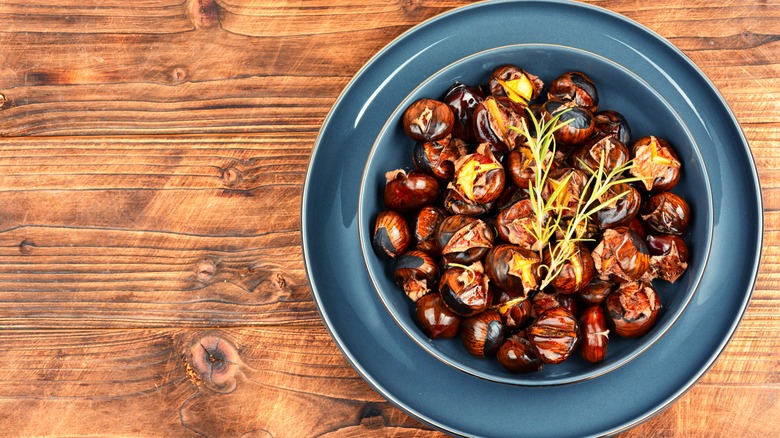
Chestnuts were a popular street food in Victorian England, especially around Christmas time. They were either bought roasted from sellers on the street or roasted at home. Roasting chestnuts was usually a family activity and a way to bring everyone together over the holiday season. The English weren't alone; the French and the Italians have long eaten roasted chestnuts, too. Americans were also fans of the nut; however, their enjoyment was ruined when a pathogen took out the American chestnut tree in the late 1800s.
Today, roasted chestnuts are still eaten around the world during the holidays. But why limit them to only a few months of the year? This tree nut is packed with nutrition. It's a source of minerals like magnesium and potassium, and it's particularly high in vitamin C. Chestnuts also contain potent antioxidants like gallic acid and ellagic acid, both of which are associated with anti-inflammatory effects.
Kedgeree
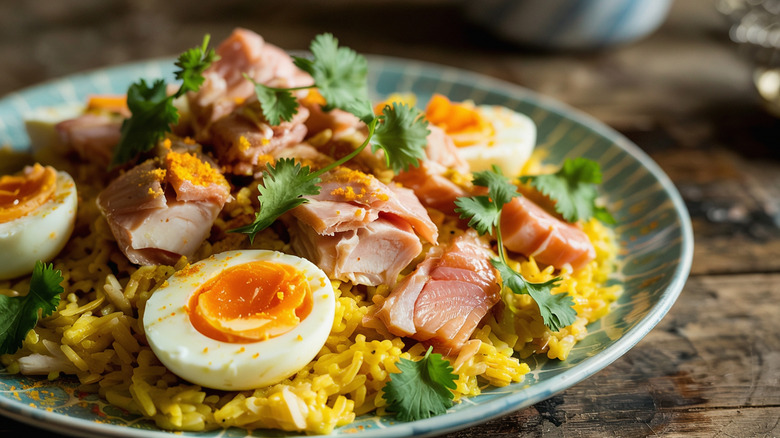
Like cucumber sandwiches and mulligatawny soup, classic British kedgeree is a byproduct of the British Raj. The dish, made with rice and spices, was likely inspired by khichdi, an Indian recipe also made with rice and spices, as well as lentils, vegetables, and sometimes fried fish. But the British had to make it their own, so they made the fish smoked and they added eggs, too.
Back then, kedgeree, which was particularly popular with Scottish colonists, wasn't for the poor members of society. Rather, it was enjoyed by those who could afford the expensive ingredients to make it, like smoked haddock and imported spices. Some even chose to make it with veal or salmon.
Kedgeree is a mash-up of two distinct cultures, and while it sounds like an odd mix of ingredients, it actually works pretty well. Modern fans of the meal, which is often eaten at breakfast or brunch time, say it is warming, comforting, and full of flavor. Many different variations of kedgeree exist today. In fact, you can even make the Victorian classic with plant-based ingredients, like smoked tofu and jackfruit.