

15 Unique Cookies From Around The World
We may receive a commission on purchases made from links.
Whether they're crisp or chewy, chocolatey or fruity, cookies have a place in the culinary landscape in just about every corner of the world. It's easy to see why these sweet baked treats are so universally loved. They are wonderfully easy to customize, fun to bake, and great for sharing with friends and family. In the U.S., the decadent chocolate chip cookie is a firm favorite, with other popular flavors including peanut butter and oatmeal raisin, as well as the buttery, vanilla-infused taste of sugar cookies. But, if we look beyond the classics, there are a whole host of other unique and delicious cookie varieties to explore.
From beautifully-crafted French delights, to indulgent buttercream-filled creations from the Philippines, and New Zealand's rustic, chocolate-laden bakes, the world of cookies is as vast as it is delicious. So, if you're looking to whip up something a little different during your next weekend baking session, have a browse through the list below for some inspiration. Mind you, picking just one might be a challenge!
Pizzelle

Hailing from Italy, pizzelle are thin and crispy waffle-style cookies. They're not oven-baked like most varieties, but instead made in a special pizzelle baker press that imprints an intricate snowflake-like pattern into the batter. Hence, pizzelle are a particularly popular treat to enjoy during the festive season. These are also allegedly one of the world's oldest form of cookies, possibly dating back as far as the 8th century. Pizzelle have a strong connection to the Festival of the Snakes, which celebrates the elimination of snakes from the once infested village of Colcullo in Italy.
To make these cookies, you'll need just a handful of pantry staples. First, eggs and sugar that are beaten together before the mix is blended with melted butter, vanilla extract, flour, and baking powder. There's also the option to flavor the batter with cocoa powder, spices, or citrus zest. Once everything has been combined into a thick, smooth batter, it can be spooned into the hot, greased pizzelle iron. And, being ultra thin, the cookies only take around 30 seconds to cook. To finish, pizzelle are often dusted with powdered sugar.
Jammie Dodgers
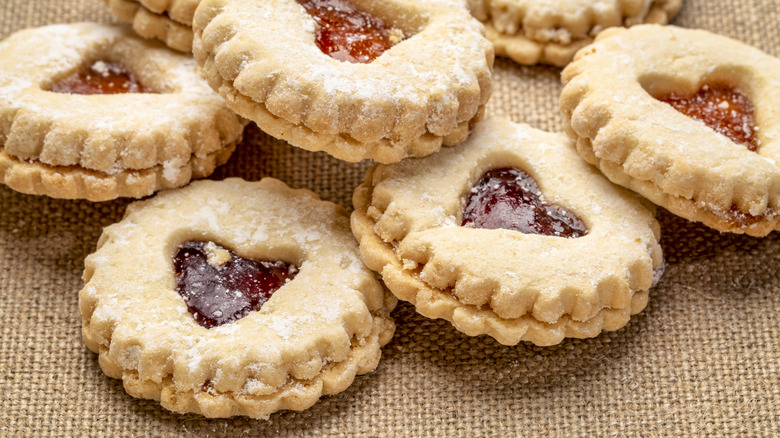
A beloved, buttery, jam-filled cookie from the U.K., Jammie Dodgers were first created in Wales in the 1960s, by the Burton Biscuit Company. They were named after a Beano comic book character called Roger the Dodger, and designed to appeal to children. The cookies feature two layers of soft shortbread biscuit (aka cookie), sandwiched with a layer of fruity raspberry jam, which can be seen through a pleasing heart-shaped cut out in the center. It's a simple yet totally delicious concept. The cookies remain a favorite and are available to purchase in supermarkets throughout the U.K. Alongside the classic raspberry version, you'll now also find other flavors, such as apple and blackcurrant, or strawberry-filled biscuits.
If you can't get hold of store-bought Jammie Dodgers where you live, you can totally make your own from scratch. For the shortbread dough, you'll combine butter, sugar, eggs, vanilla, flour, and salt. Once it's been rolled out, cut the dough into rounds with a fluted cookie cutter, then press a small heart-shaped cutter into the middle of half of these rounds. Bake and cool the cookies, then simply spread the non-heart layers with raspberry jam, and top them with the cut out pieces.
Silvanas
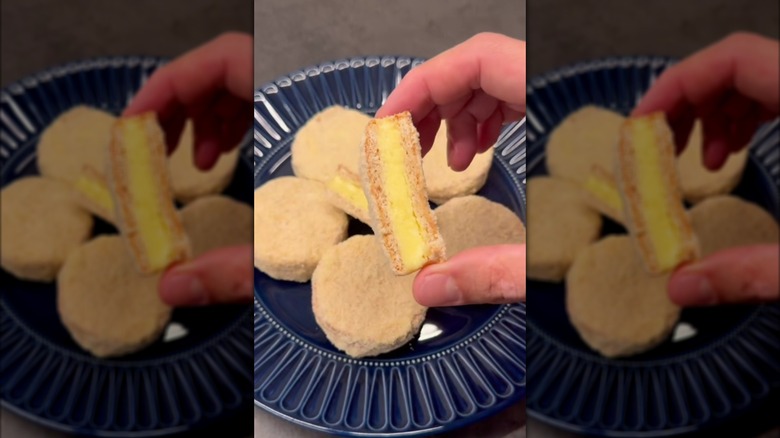
These Filipino cookies are undeniably mouth-watering, and while there are a few different elements to prep here, they're absolutely worth every minute of effort. Inspired by a French cake called dacquoise, Silvanas are Filipino cookies featuring layers of meringue and buttercream, and are typically served chilled or frozen. They boast a creamy, buttery texture and sweet, nutty flavor thanks to the inclusion of ground cashews.
Silvanas begin with two layers of meringue whipped up in a stand mixer with the simple combination of egg whites, cream of tartar, sugar, and ground cashews. The mixture is then piped into rounds and baked until light and crisp. Next up is the indulgent French buttercream, which sees egg yolks, sugar, vanilla extract, and salt gently heated in a bain-marie, before whisking in butter to achieve a thick, spreadable consistency. To assemble the silvanas, two meringue rounds are sandwiched and coated with the buttercream, before everything is rolled in a layer of ground cashews and/or cookie crumbs.
Lebkuchen

Lebkuchen is a traditional festive cookie from Germany, and a popular feature at Christmas markets across Europe and beyond. These cookies come in various forms, but most versions are sweetened with honey and flavored with a medley of warming spices, including cinnamon, cloves, ginger, and star anise.
Nuremberg Lebkuchen is a soft, gingerbread-like cookie, made with ground almonds and hazelnuts, and sometimes coated in melted chocolate or a powdered sugar glaze. You'll also often see these cookies topped with a trio of blanched almonds. Braune lebkuchen, on the other hand, is a firmer cookie, that doesn't necessarily include nuts and is commonly cut into star or heart shapes, and topped with frosting. If you're making these from scratch, a top tip is to age the dough, to achieve the very best flavor and texture. Gefüllter or filled lebkuchen is another favorite, where rounds of soft gingerbread dough are sandwiched with jam before baking, and dipped in an irresistible dark chocolate glaze. If you don't fancy making lebkuchen yourself, these cookies (in their many forms) are often available to purchase at grocery stores during the holiday season.
Alfajores
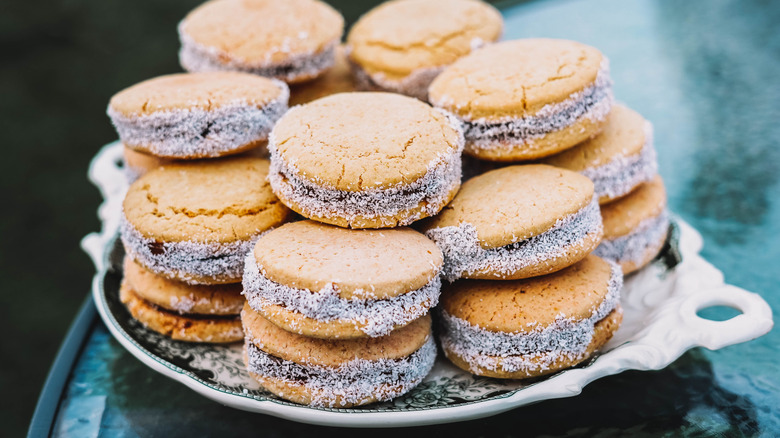
Head to South America and you'll realize that alfajores cookies are the generously stuffed stars of the cookie scene. Introduced to the continent by Spanish migrants in the sixteenth century, alfajores were traditionally filled with fruits and nuts. These days, fillings like dulce de leche, jam, and peanut butter are also common.
Alfajores consist of two, melt-in-the-mouth shortbread layers. Besides all-purpose flour, the dough also features corn starch, which gives the cookies and wonderfully delicate, crumbly texture. Some recipes also enrich the dough with egg yolks, or incorporate a splash of whiskey or cognac for a subtle boozy kick. The dough is chilled, rolled out, and cut into rounds, before it's baked until firm. It should remain relatively pale in color. After being sandwiched with the chosen filling, the alfajores can be rolled in finely shredded coconut, or dusted with powdered sugar for added texture and sweetness. Another gloriously indulgent approach is to coat the sandwiched cookies in melted chocolate, which pairs beautifully with an array of sweet fillings.
Mexican wedding cookies
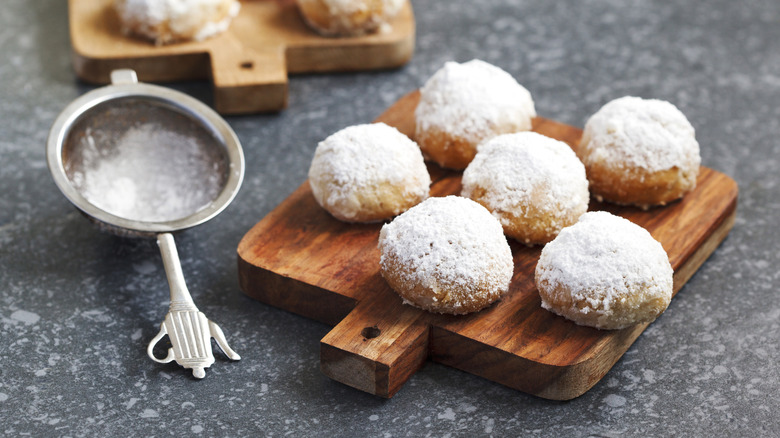
Simple yet packed with sweet, nutty flavor, Mexican wedding cookies are moreish bite-sized creations, known for their crisp yet rich texture and sweet powdered sugar coating. While these cookies often form the part of the dessert offering at Mexican weddings, they're also enjoyed during the holiday season and at other special occasions throughout the year. Sometimes referred to as polvorones, Mexican wedding cookies might have been introduced to Mexico by the Spanish. However, it's thought that varieties of these cookies actually originate in the Middle East, where they were first created by medieval Arab bakers.
Mexican wedding cookies are super easy to make, and you can have a batch ready in just 30 minutes. First, blitz walnuts or pecans in a food processor. You can go for a mixture of coarsely ground and finely ground nuts here, if desired. Next, cream butter and sugar in a stand mixer, before adding powdered or finely ground granulated sugar and vanilla extract, and beat again. Add the ground nuts, plus some all-purpose flour and salt, and mix everything into a smooth dough. Now, the mixture can be scooped out into tablespoon-sized balls, and baked until just starting to brown. And, the all-important final step is rolling the cooled cookies in plenty of powdered sugar.
Palmiers
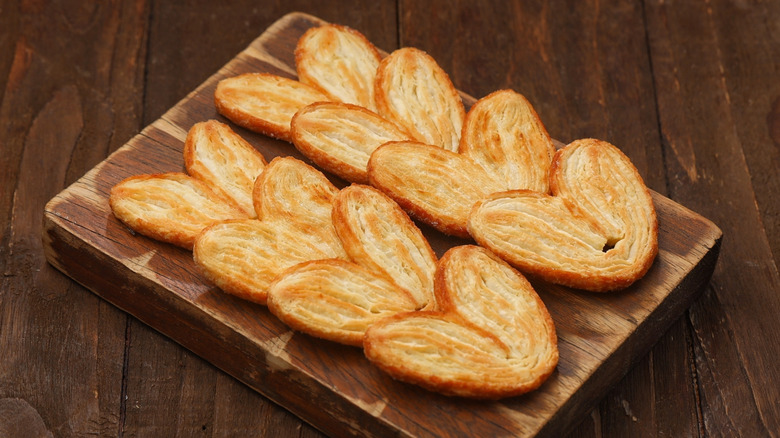
These delightful heart-shaped cookies look like something straight out of a French patisserie, and while you will indeed find palmier cookies in bakery windows across France, they're also remarkably easy to make at home. In the simplest form, the cookies combine just two ingredients – puff pastry and sugar. But, there is also the option to incorporate spices like cinnamon or cardamom, or even savory additions like cheese or pesto. The resulting treats are golden brown, light, and crispy, with the buttery richness of the pastry shining through.
Crafting these cookies into their distinctive shape might seem like a daunting task, but this is actually far easier than you'd think. Step one is sprinkling a layer of sugar onto your work surface, before rolling out a rectangle of puff pastry on top. Then, you'll sprinkle over some more sugar, and roll the dough inwards from both sides, to create a heart-shaped scroll. This can then be briefly frozen before slicing it into cross sections and baking the cookies until beautifully puffed up.
Shortbread
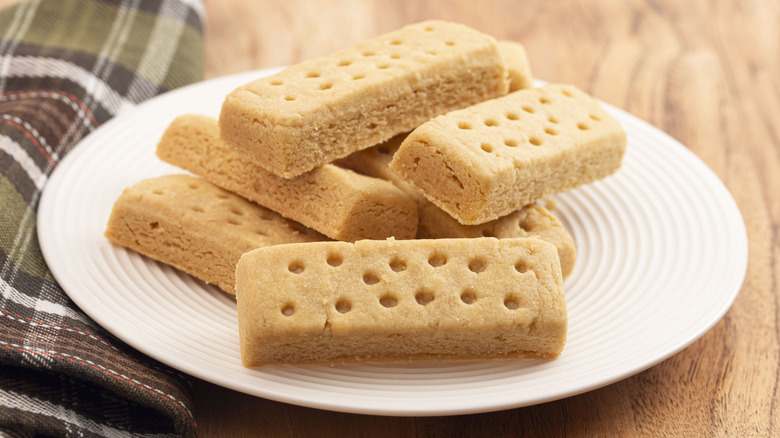
Shortbread is a cookie variety you're likely familiar with, and although this rich, buttery bake is a favorite in various corner of the world, it has its roots in 12th century Scotland. An early version of shortbread, said to have been enjoyed by Mary, Queen of Scots herself, was termed Petticoat Tails, due to its triangular shape resembling that of a woman's petticoat. Today, shortbread comes in various of shapes, from elegant rounds to rectangular fingers and rustic slabs. You'll often see the tops of the cookies dotted with holes, which are added to help moisture escape from the dough during baking, ensuring even cooking.
A traditional shortbread recipe requires just three ingredients – that's butter, sugar, and flour. This simple combination yields an irresistibly crumbly, melt-in-the-mouth texture. You can, however, bake or buy all kinds of uniquely-flavored shortbreads, including those studded with nuts and dried fruits, dipped in chocolate, packed with shredded coconut, or infused with coffee. Shortbread also forms the base of a classic lemon bar recipe, and can be layered with caramel and chocolate to create a batch of fantastically decadent millionaire's shortbread.
Moustokouloura
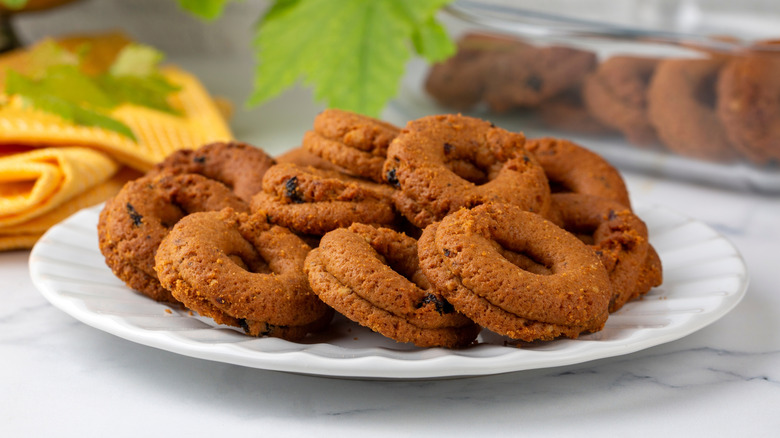
If you love sweet and spicy flavors, these Greek moustokouloura cookies are a must-try. A key ingredient here is a type of grape molasses called petimezi, made by reducing concentrated grape juice (must) into a thick, sticky syrup. Being dairy- and egg-free, these cookies are often enjoyed during Lent and a favorite among vegans, especially prized for their healthier make-up in comparison to other types of cookies.
As well as grape molasses, the other wet ingredients you'll need to make these cookies are honey, vegetable oil, and olive oil. Some recipes also feature orange juice, or a splash of cognac. Dry ingredients are typically all-purpose flour, baking powder, baking soda, as well as spices like cinnamon and cloves. You can also incorporate add-ins like dried fruits or nuts. With everything mixed into a smooth, slightly sticky dough, the mixture is rolled into sausage-shaped strips. Then, join the two ends of each strip together to create rings shapes. Pop these on a lined baking sheet and bake until crisp and golden brown.
Samsa
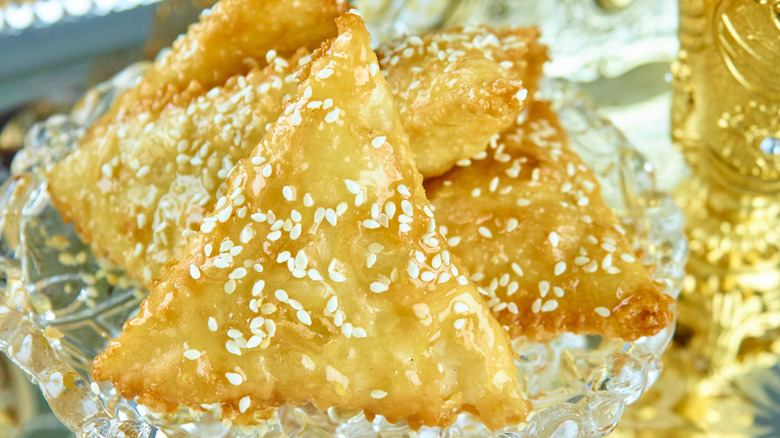
An iconic cookie from Algeria, samsa are crispy, triangular-shaped treats made with phyllo pastry and a fragrant, nutty filling. They're often served during Ramadan, the Islamic holy month of fasting, when families and friends gather each evening to break their fast with a meal called ifṭār.
For the filling, toasted almonds are finely ground up in a food processor, then mixed with powdered sugar, orange zest, egg white, and rosewater. This creates a rich, paste-like mixture, that contrasts the crunch of the pastry beautifully. With each phyllo strip filled and shaped, the flavorful parcels are shallow-fried in a neutral oil until perfectly golden brown and crisp. It gets even better because the next step is dipping these warm cookies into a syrup made from sugar, water, and lemon juice, for an irresistibly sweet, sticky finish. They come garnished with a sprinkling of toasted sesame seeds.
Chocolate rough
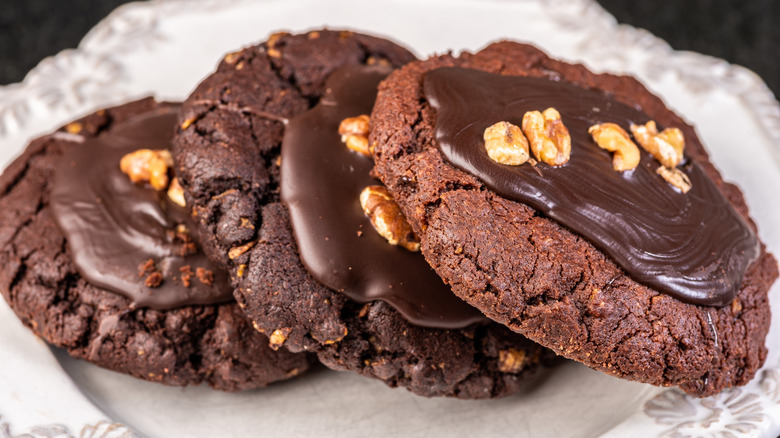
Next up, we have the crumbly, nut-topped chocolate rough cookies. These are a staple in New Zealand, where they're regarded as the Kiwi version of Australia's patriotic Anzac biscuits. They're enjoyed year-round, serving as a sweet snack that the whole family can enjoy. These cookies are also sometimes referred to as Afghan biscuits, but there have been initiatives to put the name aside due to possible racist connotations. The name chocolate rough is now more commonly used.
What makes these brilliantly chocolatey cookies unique is the addition of corn flakes into the dough, which adds a whole new textural element into the mix. The recipe starts much like many other cookie creations – by creaming butter and sugar. Then come cocoa powder and flour, before cornflakes are folded through. Shaped into slightly flattened balls, the cookies are baked, cooled, and topped with a sweet chocolate icing glaze and a scattering of flaked almonds or chopped walnuts.
Kolaczki

Loaded with sweet, fruity jam and boasting a buttery, flaky texture, kolaczki are a fuss-free five-ingredient cookie from Poland with a unique diamond shape. Kolaczki are traditionally enjoyed around Christmas and Easter time, and variations are found throughout Central and Eastern Europe.
At first glance, these cookies might look like they're made with a basic puff pastry. However, the key to the dough's rich yet tender texture, and slightly tangy taste, is a slightly unusual but completely transformative ingredient – cream cheese. First, this is beaten with butter until smooth and fluffy. Then, flour and salt are stirred in to create a dough. After chilling the mixture in the fridge, the dough can be rolled out on top of a layer of granulated sugar and cut into squares. To each square, you'll add a dollop of jam (apricot and raspberry are popular choices here), before folding two opposite corners inwards to create a diamond shape. Bake the kolaczki until lightly browned, and dust them with a layer of powdered sugar before serving.
Hertzoggies
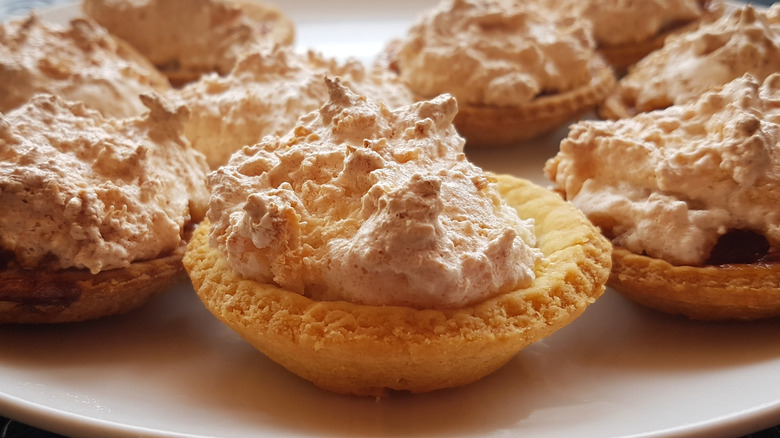
Jam and coconut are an undeniably tasty flavor combination, and here, these two ingredients are brought together to create a brilliantly satisfying, tartlet-style cookie. Hertzoggies consist of a delicate pastry crust, apricot jam filling, and crisp coconut meringue topping. They're a South African delicacy originally created by Cape Malay women, and named after the country's former Prime Minister J.B.M Hertzog, who was said to have a particular penchant for the cookies.
The pastry base of hertzoggies is typically made by rubbing cold, cubed butter into a mixture of flour, baking powder, nutmeg, and salt. Egg yolks and a splash of water are also added, transforming everything into a nice smooth dough. After briefly chilling the dough in the fridge, it's ready for rolling, cutting into circles, and arranging in a tartlet pan. For the meringue, you'll simply whip egg whites until light and fluffy, then fold through desiccated coconut and a splash of vanilla extract. Spoon some apricot jam into each pastry cup, dollop the meringue on top, and bake until the pastry is golden and the meringue has set.
Brigadeiros
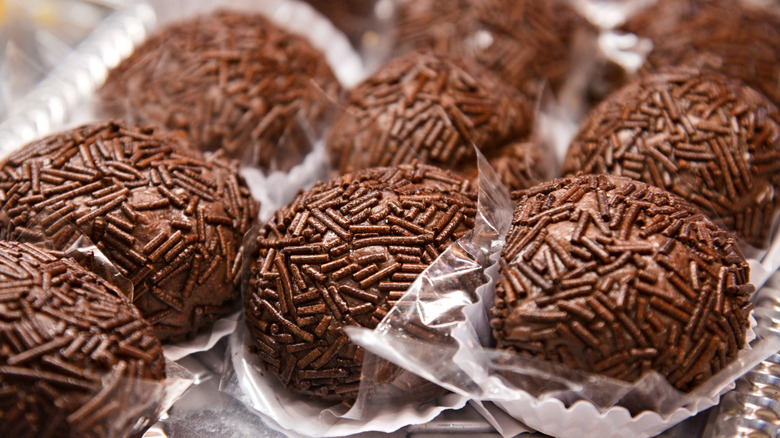
These pleasing balls of chocolatey goodness are Brazilian brigadeiros – a cookie with a decadent, truffle-like texture. Requiring no baking and just a handful of ingredients, they're a breeze to make. And, they're super easy to customize with add-ins of your choice. These cookies date back to 1945, when they were developed by supporters of the presidential candidate and military brigadier Eduardo Gomes, during Brazil's democratic election. In the wake of World War II, traditional cookie ingredient such as sugar, eggs, and chocolate were hard to come by, so the supporters reached for the more readily available canned condensed milk and cocoa powder to create the brigadeiros.
Besides condensed milk and cocoa, a basic brigadeiros recipe also calls for butter and chocolate sprinkles. The first three ingredients are simply heated together in a saucepan, sometimes alongside a pinch of cinnamon, then left to cool. The mixture can then be spooned out and rolled into balls, which are coated in chocolate sprinkles, and chilled in the fridge to firm up. Some versions see the brigadeiros coated in chopped nuts, shredded coconut, or crystal sugar.
Anzac biscuits
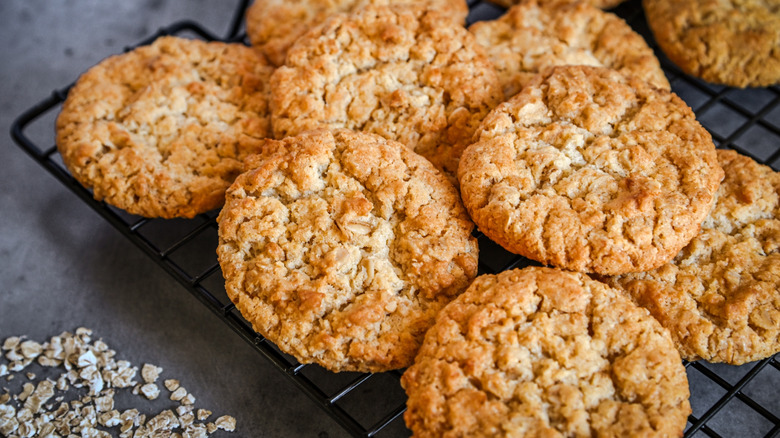
Made with the satisfying combination of oats and shredded coconut, Anzac biscuits are a golden, chewy treat with roots in Australia's military history. During World War I, these long-lasting, energy-boosting biscuits were made by the loved ones of troops serving on the front line, who would send the cookies out in care packages. These bakes still remain a popular treat in the country, and are often enjoyed on Anzac Day, which commemorates and honors all Australians and New Zealanders who have served in the armed forces.
Step one of making a batch of Anzac cookies is combining oats, shredded coconut, all-purpose flour, and sugar in a mixing bowl. To this, you'll add a mixture of melted butter, golden syrup, baking soda, and water, stirring everything together until you have a thick cookie dough. Scoop this onto a baking sheet, leaving plenty of space between each dollop to allow the cookies to spread, and bake until they are golden brown on top. Anzac make the perfect afternoon pick-me-up with a cup of tea or coffee!