

The Best Type Of Honey To Use For A Tenderizing Marinade
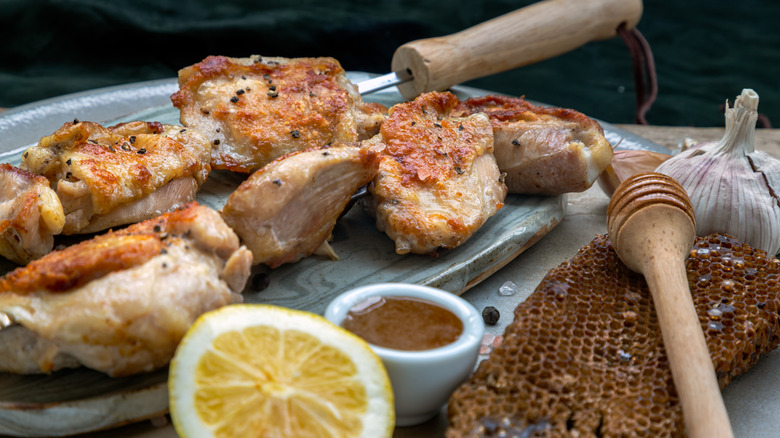
Adding a sweetener to a salty, spicy marinade is a power move when it comes to maximizing the flavor and punch of grilled, baked, and fried meats. Sweeteners (like brown sugar and palm sugar) are often dissolved into marinades that use soy and vinegar to create complex flavors that have a balanced and rounded profile. Honey is another natural sweetener that's often combined with soy to make honey-glazed chicken thighs or mixed with citrus to make orange chicken stir-fry. Along with lending these dishes a sweeter note, honey acts as a tenderizer because it contains an enzyme called protease. The best type of honey to use when making a tenderizing marinade is raw honey because it contains more of this powerful enzyme.
Protease works by breaking down the long and tough fibers in meats like lamb, chicken, and pork. This makes the meat softer and more tender, lending it a juicier quality when cooked. Raw honey has more protease than other types of honey because it doesn't undergo pasteurization, making it better at softening tougher cuts like chicken thighs and lamb shoulder. Raw honey is also packed with nutritious pollen and antioxidants, known as polyphenols, that can reduce inflammation and curb the risk of heart disease. Better yet, you can easily substitute raw honey for honey that's been heat treated and filtered. Simply squeeze the same amount into your bowl and splash in other flavorful ingredients like ginger, garlic, lemon juice, or chilis.
Why is honey pasteurized?
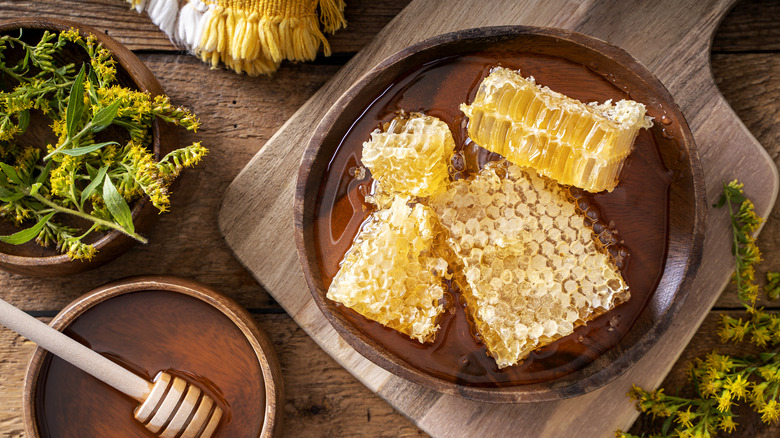
Many products, like milk and cheese, are pasteurized to get rid of bacteria, which might make you think that the same goes for honey. However, since honey is naturally highly acidic, it inhibits the growth of those harmful organisms so heat treatment isn't always necessary. Instead pasteurization is used to delay honey from crystallizing and becoming hard, which ensures it stays in a liquid state for a longer period. While this process lends honey a reliable consistency, the downside is that it removes some of that naturally occurring protease (known as peptidase) and other beneficial enzymes, such as diastase and invertase.
Pasteurization can also dampen the flavor and aroma of the honey, which can be a bummer if you want to spread it on your toast or drizzle it over a bowl of oatmeal. Some people prefer to purchase raw honey (even though it crystallizes faster) to benefit from sweetness and delicate fragrance and character. The only thing to bear in mind is that raw honey shouldn't be served to children under a year old due to the risk of botulism. If you can't get hold of raw honey, consider pounding your meats with a mallet to tenderize or adding an acidic ingredient, like buttermilk, or mashing in some papaya, which will also maximize the tenderizing capabilities of your marinade.