

This Classic Hong Kong Drink Was The Original Boba Tea Flavor
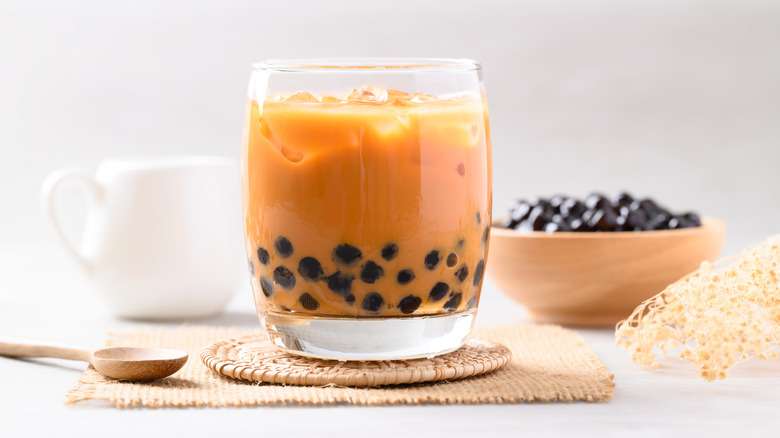
Boba tea originated in the 1980s in Taiwan, and today it is beloved across the world and comes in many different boba flavors. For instance, Kung Fu Tea, the largest bubble tea brand in America, offers over 50 flavors, ranging from almond to winter melon. However, every product begins somewhere, and boba tea was not always offered in such a wide variety of flavors. It started out with just one: black milk (which is also known around the world as Hong Kong milk tea).
Black milk bubble tea uses a base of simple black tea. This is perfect for boba lovers, as it lets the flavor of the tapioca balls really shine on their own. It's typically made with Red Jade black tea, which has a sweeter fragrance and taste than other black teas. It also often uses Taiwanese black sugar powder, which has a more natural molasses flavor than other types of sugar. The whole drink is sweet and creamy owing to the use of evaporated milk, but it's also not too rich, making it perfect for people who like milky boba tea but often find other varieties too cloying.
The history of boba tea
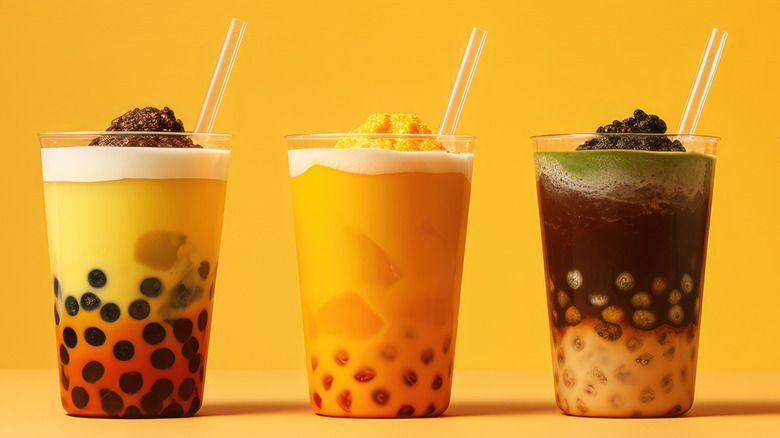
Both tapioca balls (known as fenyuan in Taiwan) and black milk tea existed for a long time before the invention of bubble tea, which allegedly occurred in 1986. Entrepreneur Tu Tsong got the idea to add tapioca balls to black milk tea when opening his tea shop Hanlin, and the drink quickly became popular. However, other people later came forward to claim they invented bubble tea, including Lin Hsiu Hui of bubble tea chain Chun Shui Tang.
Regardless of who invented the drink, its popularity was undoubtedly tied to Taiwanese public sentiment in the 1980s. Food historians have linked the rise of trendy bubble tea with the fast-growing economy of Taiwan in the 1980s, when people had more money in their pockets to spend on non-essential items — like bubble tea.
Bubble tea came to America in the early 2000s but really picked up in the 2010s and became particularly popular among young consumers as an alternative to coffee. According to the Michigan Journal of Economics, "a 2021 CLSA consumer survey astonishingly found 94% of individuals aged between 20 and 29 had bought boba tea in the preceding three months." The variety of flavors and fun nature of eating boba naturally attracts young audiences. IBISWorld claims that there were 6,635 bubble tea shops across tons of different boba brands in the U.S. as of 2024, and it seems unlikely that the beverage will go away anytime soon.