

11 Cheeses To Avoid When Making Pizza At Home
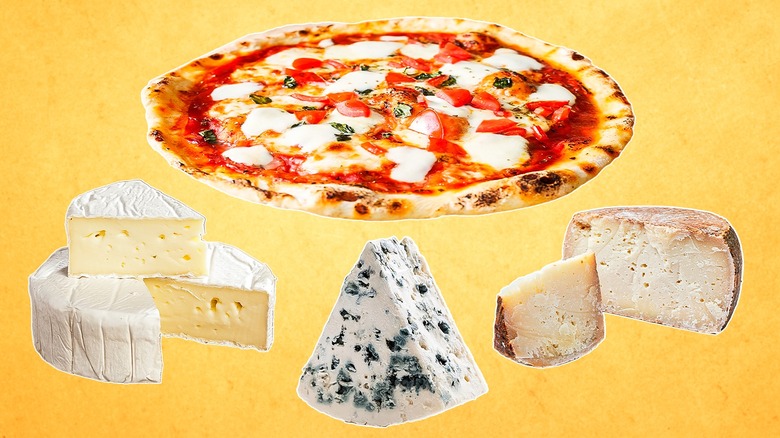
When making pizza at home, it can be easy to focus on mastering the dough or getting the toppings right, but the cheese you select is equally important. The wrong type of cheese can leave you with a greasy, soggy, tasteless, or grossly textured pizza. The worst cheeses turn into greasy puddles, barely stretch, come out rubbery, or have a flavor so strong that it overpowers whatever else you have on the pie. If your homemade pizza never quite turns out the way you imagined, your cheese choice might be the quiet saboteur.
We spoke to Toronto-based cheesemonger Luke Champion from Good Cheese, as well as pizza chef and owner of Toronto's Descendant Detroit-Style Pizza, Sotirios Tzakias, to uncover why certain cheeses are perfect and why some are totally wrong for pizza. The ideal pizza cheese will melt evenly, stretch nicely, and have a uniform flavor that complements the sauce, toppings, and crust. The secret is moisture content — too much and your pizza will be soggy and soup-like; too little and the cheese won't melt. Fat content and aging also play a role, as these factors also affect texture and flavor. They also suggested cheeses to avoid when preparing homemade pizza. Consider relegating a few of them to the cheese platter or for use after baking — just don't use them as the foundation of your pie. Your guests will undoubtedly appreciate it.
Brie
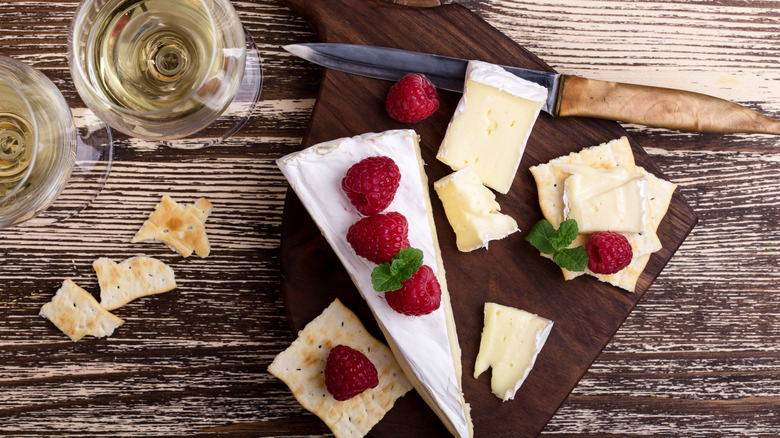
Brie might be a favorite for charcuterie platters, but it's one of the worst cheeses you can use on your pizza. It's difficult to think of a worse option. The indulgently rich, goopy nature it offers is decadent at room temperature, but melt the very same cheese in an oven, and you have a catastrophe. "Brie, for example, is great, but it's way too gooey to be your base cheese," says Luke Champion, cheesemonger at Toronto's Good Cheese boutique. It melts into a thin oily layer and drowns out your crust and toppings, turning your pizza into a soggy grease fest.
Chef Sotirios Tzakias of Descendant Detroit-Style Pizza agrees that moisture control is crucial when choosing a pizza cheese. "It all depends on the style of pizza. We tend to use cheese with a moisture content around 28%. It's a little high, but it works perfectly for us," he explains. Brie sits far above that already high moisture percentage at an average of 50%. It lacks the structure to melt evenly and tends to slide off the pizza or pool around toppings rather than stretching and blending.
That's not to say Brie can't coexist in the world of pizza. If you only want to use it, treat it as a garnish — apply small quantities post-bake to preserve its flavor and texture without compromising the integrity of your crust. Just don't rely on it as your go-to melt.
Triple-cream cheese
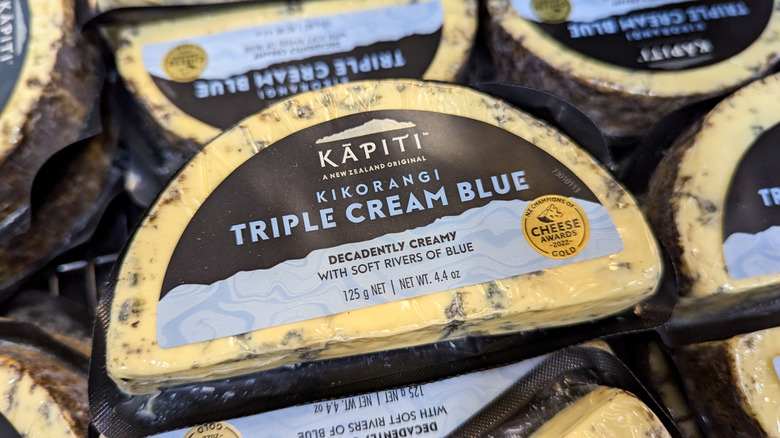
Triple-cream cheeses, such as Brillat-Savarin or Saint André, are rich, buttery, and great on crackers, but they're awful pizza cheeses. At 75% or greater fat content, these cheeses are not designed to withstand the withering heat of a pizza oven. "A triple-cream cheese is a good example of what not to use if you're baking a pizza in a hot oven — it'll just melt into oil. It's best saved for after the baking, like dolloping on top after it comes out of the oven as a sort of garnish or topper," says Luke Champion. A tablespoon or two spread over the pizza after it's come out of the oven can add that creamy richness without sacrificing the crust.
That oil separation from the solids is more than a textural problem. The excess oil can make your dough heavy, soggy, and greasy, while the remaining cheese may bubble inconsistently or even burn — essentially everything you don't want when attempting to melt your cheese.
"We do a square-pan pizza, so we usually stick to brick cheese and mozzarella. Brick cheese has a flavor similar to mild cheddar, but it's creamier and melts beautifully," Sotirios Tzakias says. Rich, triple-cream cheeses can't be handled the same way stronger, melt-based cheeses like mozzarella or brick can. If you desire a creamier consistency, perhaps try out a brick cheese instead.
Goat cheese

Soft, tangy, and creamy goat cheese can elevate a salad or a crostini to greatness. It's also not quite enough to carry a pizza. As rich as it is, it's a spreading cheese, not a melting one, and that's where the problems begin. Not unlike triple-cream cheeses, goat cheese has a relatively high fat percentage and low structural integrity due to its moisture content. This causes the cheese to melt into oily puddles or separate entirely instead of becoming smooth and stretchy.
Its flavor is also incredibly pungent. The strong tang of goat cheese can easily steal the show from a pizza's other elements, especially if it's paired with tomato sauce or delicately flavored vegetables. Rather than enhancing a dish, it can instead clash with some of the other ingredients or send the overall flavor off in an undesirable direction.
Texturally, goat cheese just doesn't deliver the same satisfying melt or pull that folks look for in a pizza cheese. It doesn't stretch, brown, or crisp nicely, nor does it bind well with other cheeses. As such, it has a tendency to sit on top in blobs, never truly becoming a part of the overall pizza. If you love goat cheese, it's better to add small dollops after baking or mix it with more mellow cheeses that can do the heavy lifting. Think roasted pear or fig on top of a bed of arugula with a few spoonfuls of this cheese rather than pairing it with your more traditional, tomato-based pies.
Aged Parmesan
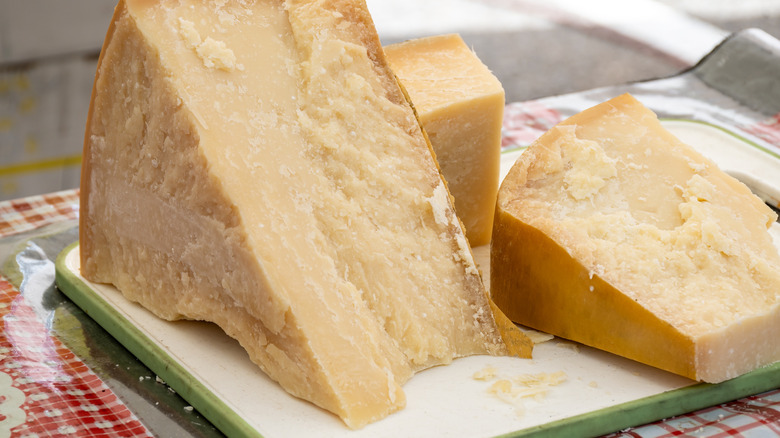
Aged Parmesan is a hard-hitting cheese with an earthy, nutty taste and crystalline texture. It's an Italian staple and is often shaved on pasta, grated into salads, or sprinkled on top of soups. But on pizza, Parmesan should really never be used as the only cheese. Even though it's a legend in the world of Italian cooking, Parmesan is not that great at melting due to its low moisture and months of aging.
"A big chunk of Parmesan thrown on early is not a great idea. Instead, grate it on top right after baking — or add just a little toward the end so it melts slightly but doesn't lose its character," says Luke Champion. Instead of stretching and bubbling, aged Parmesan will remain rigid on the pizza or char at high heat. It has no elasticity or moisture to help it adhere to sauce and crust, which can cause it to come out dry or crispy. Timing matters when it comes to Parmesan. As with many of these cheeses, it's best used post-bake, since the warmth of the fresh pizza can gently melt the cheese.
Parmesan plays a solid support role in pizza-making. You can use it as a garnish, like you would rosemary or dried chili flakes. Add a generous sprinkle to the top just before serving to provide a salty, umami kick, and make a melty cheese carry the load.
Asiago
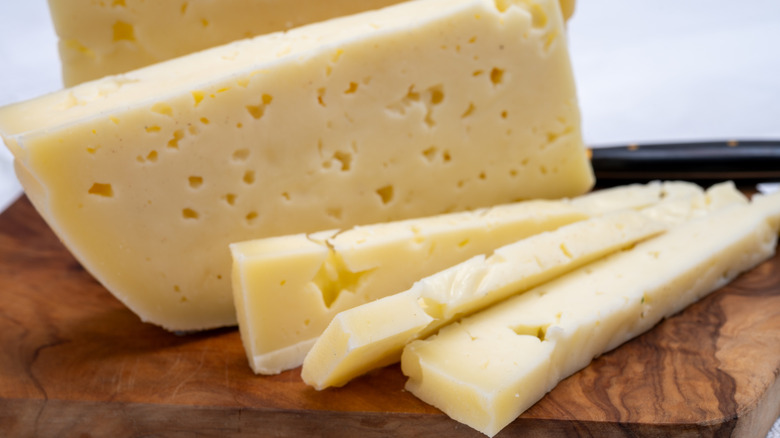
Asiago is a semi-hard Italian cheese that can have either a mild or sharp taste, depending on how long it's aged. While excellent shaved over pasta or salads, as with Parmesan, Sotirios Tzakias says it's a "little too strong in flavor" for pizza. Not only is aged Asiago salty and potent, but it's dry, which makes it difficult to melt onto a pizza with other ingredients.
Luke Champion notes that cheeses that are aged long don't always melt well. Asiago is usually in this category. Under the intense heat of the oven, it turns oily or gritty and fails to deliver the smooth, creamy texture most anticipate from pizza cheese.
That said, very young Asiago (Asiago Pressato) can sometimes be used in pizza cheese blends for a mild tang; it's combined with mozzarella for meltability. In short, Asiago's strong flavor and less-than-ideal melting qualities make it a poor choice for the base of your pizza. Use it sparingly, if at all — and always in supporting roles, not in the spotlight.
Blue cheese
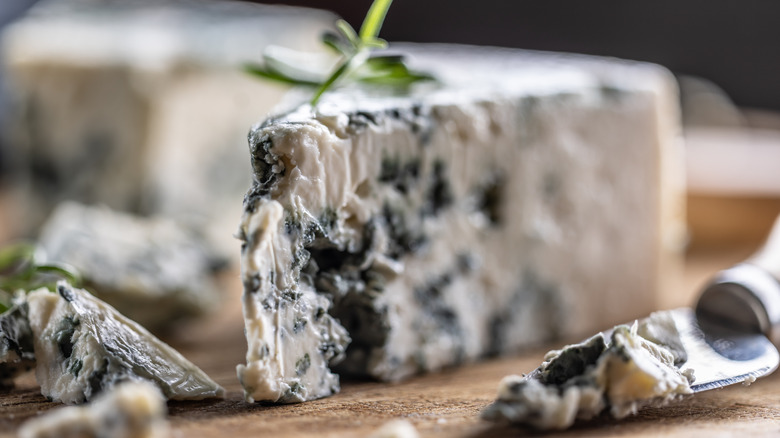
Blue cheese's intense flavor profile and high salt content are challenging to balance with other ingredients, especially more delicate ones like vegetables or light sauces. It's complex, rich, and tangy — but it's also one of the worst possible options you can use as a base cheese for pizza. "If you're doing a pizza with a subtle and delicate sauce, or ingredients like zucchini or mushrooms, you probably want to steer clear of super funky cheeses — they'll overpower everything," says Luke Champion.
Blue cheese's texture isn't well-suited to the blazing heat of pizza ovens. It softens easily but does not melt consistently. Instead, it breaks down into oily puddles that can ruin the consistency of the cheese layer. If you're desperate for some added depth of flavor, he has a suggestion: Scamorza. "It's underrated, an Italian cheese that's pretty similar to mozzarella in texture and meltability, but it has a deeper and more pronounced flavor."
This doesn't mean that blue cheese can't perform well in small quantities, though. It's wonderful as a finishing cheese, especially on white pizzas or pies with bold toppings like dried meats or figs. Never use it as your go-to melt, though. Champion recommends pairing big flavors, like a spicy tomato sauce, pepperoni, and smoked meats, with bold cheeses like blue. "The key is to match intensity with intensity," he says. "You don't want the cheese fighting the sauce or the toppings."
Aged cheddar
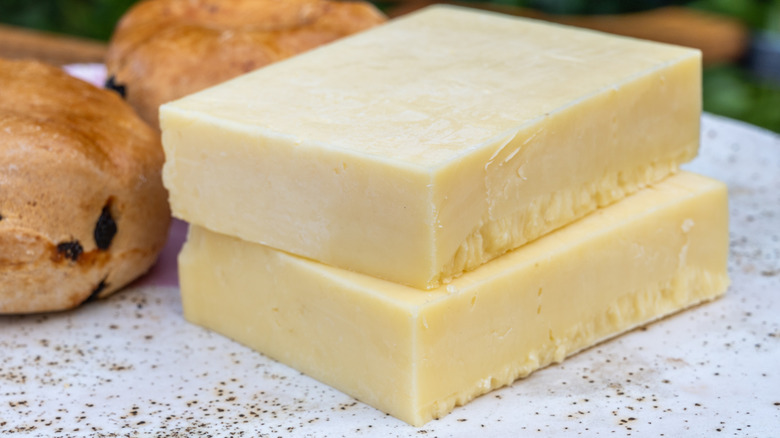
Aged cheddar is a household staple and family favorite thanks to its sharp flavor and crumbly texture. But as a base cheese for pizza, it causes more problems than it solves. Aged cheddar releases a ton of oil when it's baked, especially when it's used as the only cheese. It doesn't melt into the seamless, stretchy sheet you want on a pie. "Some people may use cheddar, but in my opinion, it's a little too oily to use on its own," says Sotirios Tzakias. "It depends on the fat content and the type of pizza you're making, and what you personally want." That oiliness leads to greasy puddles and a crust that becomes soggy beneath the weight of the melted fat.
If you're a cheddar fan, use it sparingly or blend it with mozzarella to even out the fat levels. Otherwise, aged cheddar is better left for other recipes. Even from a flavor perspective, aged cheddar can be overpowering when used excessively. It introduces a bite that's great in grilled cheese or atop a casserole, but it doesn't always blend with pizza sauce, herbs, or lighter toppings. "When it comes to pizza, I think it's best to stick with neutral cheeses like mozzarella," says Tzakias. An oldie but a goodie, it's hard to go wrong with this classic if you're searching for the picturesque cheese pull.
Feta
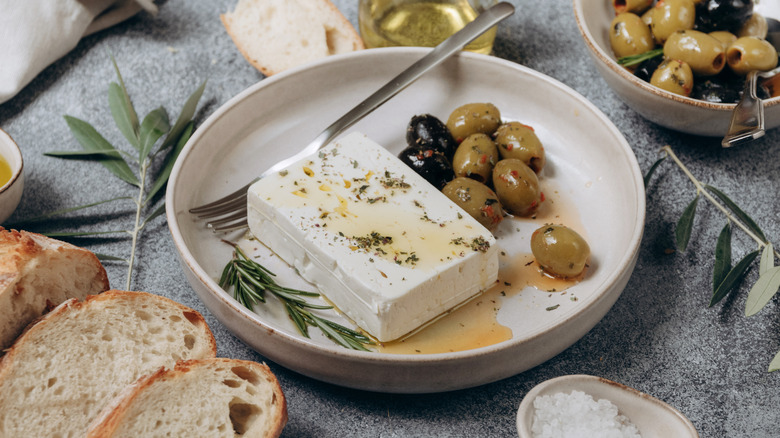
Feta's salty, tangy charm is great in salads and on olive platters, but on a pizza, its strengths can quite easily become its weaknesses. As a brined cheese, feta contains a ton of moisture and acid, so when exposed to high heat, it's prone to break rather than melt. That means instead of bubbling or stretching, it softens somewhat but mostly retains its crumbly, curd-like texture.
When it's used as a base pizza cheese, it doesn't blend with sauce or toppings. It prefers to be alone — sprinkled as a garnish in its crumbly form instead of integrated into the pie. Additionally, its bold saltiness and pungency can easily overpower other ingredients, especially pizzas that rely on quiet herbs, light vegetables, or mild sauces.
Texture is also a problem. Instead of adding to the gooey or creamy top that makes for a great cheese pull, feta can end up dry and chalky if it's baked too long, or slippery and wet if it releases too much brine. That said, feta is not completely worthless when it comes to pizza. It is best used as a finishing cheese added after baking, as part of a side salad, or on specialty pizzas where its strong flavor is used to add a hit of salt. If you use it as a base cheese, your final product may simply end up inedible.
Gruyère
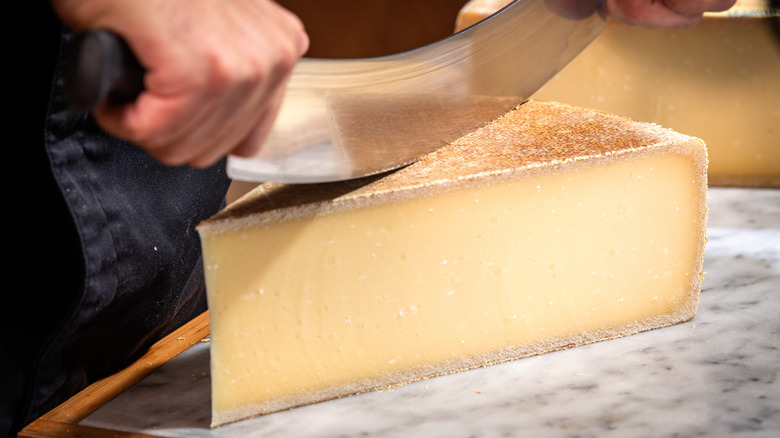
While it does melt, the fat content and strong flavor of Gruyère are bound to overwhelm your pie. This firm, nutty Swiss cheese is perfect for fondue, gratins, and French onion soup — but our expert warns against using it on a pizza. "Gruyère can be too cheesy or rich for some pizza styles," says Sotirios Tzakias. Its bold flavor can clash with the balanced flavors on a pizza. Gruyère is dense, strong, and doesn't always play nice with other ingredients, especially if you're working with tomato sauce, fresh herbs, or delicate vegetables.
Texturally, Gruyère does not yield the high stretch of mozzarella or brick cheese. When cooked hot, it breaks down, releases oil, and melts irregularly. If you're looking for a cheese with some more character than mozzarella and a little edge, Luke Champion suggests trying Formaggella, a semi-soft Italian cheese that he says has a "bit of funk to it." "It melts really nicely and adds some character to a pizza," he says.
That's not to say Gruyère can't play a role in pizza when used with restraint on specialty pies — like white pizzas with mushrooms or caramelized onions — where it can add depth. But as the main cheese on an old-fashioned pizza? Gruyère's too pungent, too greasy, and too stubborn to melt, even under high heat.
Pecorino Romano
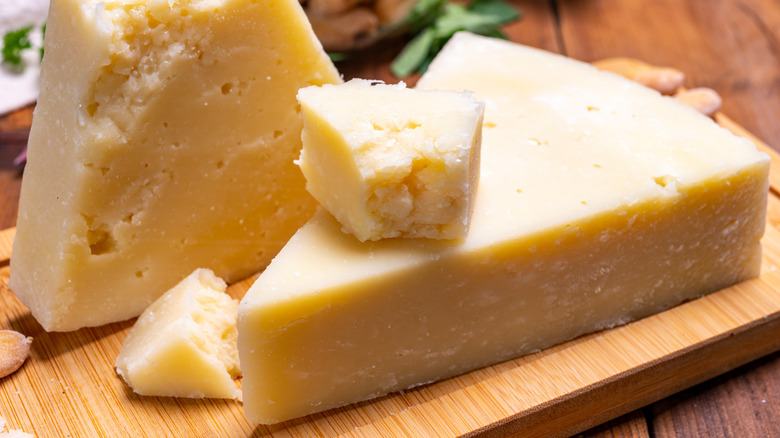
Pecorino Romano is a force-of-nature cheese. It's salty, funky, and irrepressibly bold. On pizza, the problem is that it doesn't play along — it entirely overpowers it.
This old sheep's milk cheese is very dry and has low moisture so it's hard to melt. On a hot pizza, it won't soften and stretch like mozzarella. Instead, it remains firm or gritty, and if the heat is too high, it will burn or even break into oil and curd. That results in an unpleasant bite and an off-putting texture on a slice.
And then there's the intensity of flavor. Pecorino Romano is stronger than Parmesan, and its saltiness is likely to throw off the balance of a pizza, especially one with delicate toppings or a light sauce. A small amount does almost everything — too much, and the entire pizza is going to start to taste like a serving of the cheese itself. If you're still convinced you need to use it, think small: A light topping after baking can add a nice savory edge, much like finishing a pasta dish. But as a main cheese, or even as part of a melt blend, Pecorino Romano is more likely to interfere than enhance. It's better as a flourish than a foundation.
Halloumi
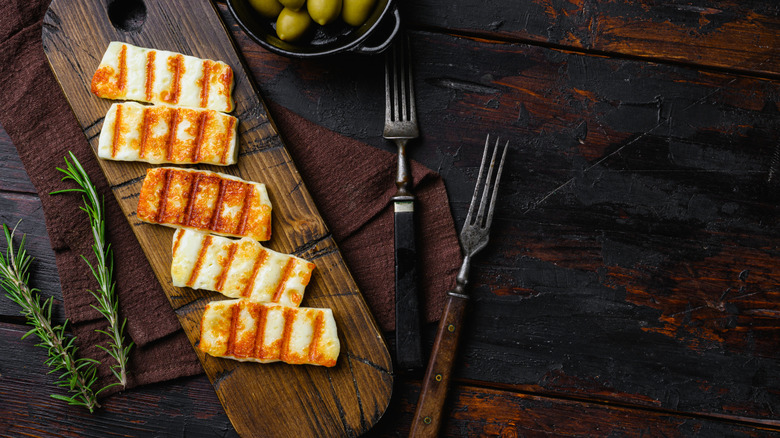
Halloumi is an old Cypriot cheese made from sheep's and goat's milk (and sometimes a bit of cow's milk), and it holds its shape well as it's cooked. Halloumi is one cheese you should try on the grill. It's firm, salty, and famously squeaky, but it is one of the worst cheeses for pizza. Its ability to hold its shape makes it a great cheese for other things — just not for pizza.
The fact that it softens but doesn't melt is why it's so perfectly adapted to frying or grilling. However, it's a drawback on pizza. It's firm and rubbery, which means it's not conducive to mixing into a sauce or using as a topping for pizza. When it's heated, it can become chewy or springy, which disrupts the bite of a good slice of pizza. Taste-wise, halloumi is salty and sour — but certainly not strong enough to stand on its own in contrast to other toppings, especially when cooked on your pie.
All the same, as with many specialty cheeses, halloumi can be used strategically. It can be cut up into cubes or thin slices and added after baking to provide a chewy contrast to a flatbread or mezze-type pie. But as a featured cheese or meltable topping, it doesn't follow basic pizza rules.