

This Country Produces The Most Basil Worldwide
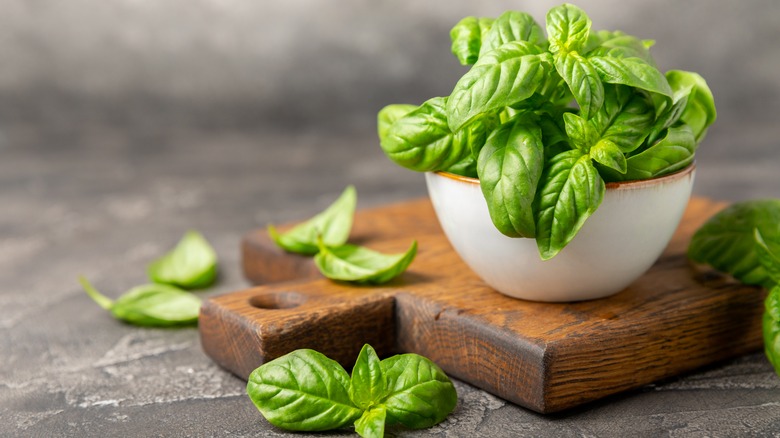
Basil is a commonly available grocery store item. You might even be growing it in your backyard, or see it in your neighbors' planters. Forget borrowing a cup of sugar, lend us the herbs! The adaptable, edible plant elevates the simplest of dishes, such as our bright and fresh pesto recipe. It also imparts health benefits galore. What's more, basil is a hearty plant that grows without intensive labor; it can even be grown indoors, and is easily propagated. Wondering if the United States is a lead contender in basil production?
Although many states within the U.S. have favorable environmental factors for basil growth, the majority of the produce is sourced from outside of the U.S. India, Egypt, China, Thailand, and Indonesia are the biggest players in the basil game, and, of these, India produces more basil than any other country in the world. Its tropical climate creates prime growing conditions for the herb. Similarly, Egypt and Indonesia host ideal growth environments and round out the top three basil-yielding countries. Basil thrives in warmth. Ground temperatures of 70 degrees Fahrenheit make for the most luscious and delectable outcome.
Its forgiving nature allows farmers to grow basil whether water is sparsely or readily available. Deeply imbedded in Indian culture, basil is widely produced because of its religious significance; the plant is used in worship and considered sacred. World Bank data shows that India's population is 64% rural compared to North America's 17%. Higher rural populations allow for prevalent agricultural industries. The Food and Agriculture Organization (FAO) reported (via Essfeed) that Indian basil production reached over 1.2 million metric tons in 2020. That is a hearty amount for a lightweight leaf.
Globalized distinctions

Basil takes on regional notes, meaning different agricultural landscapes lead to different aromas and flavors of the herb. Two of the most widely available varieties are Italy's Genovese basil (Ocimum basilicum 'Genovese') and tulsi holy basil (Ocimum tenuiflorum). Tulsi holy basil is indigenous to the subcontinent of India, and although it can be grown in the United States, its country of origin remains the largest producer. Outshining other varieties with its revered esteem and widespread presence, Indian-sourced holy basil is the cream of the basil crop.
With its medicinal properties, holy basil may also be used in teas or tinctures, but lends itself especially well to stir fry dishes — as displayed in our recipe for stir-fried minced beef with chiles and holy basil. The herb, in general, has a large market. With over 150 known types of basil in cultivation, there is a flavor to suit an abundance of meals, cocktails, and garnishes, as well as many other uses outside of the food and beverage world. For example, an Egyptian-grown variety of sweet basil (Ocimum basilicum) called basil linalool gives off a flowery and spicy scent that is often used in essential oils.
'Spicy Globe' basil (Ocimum basilicum var. minima), meanwhile, originates from Greece and is grown as a dainty ornamental plant. And lemon basil (Ocimum citriodorum) possesses a lemon essence that can be used to flavor poultry or fish and is common in Indonesian cuisine. Due to its diverse nature and adaptability, it can be utilized raw in salads or cooked in curries, soups, and stews. Whether an international farmer produces your favorite basil, or your backyard garden is your supplier, basil's health benefits and flavor profile make it a worldwide hit, with India leading production.