

The Old-School Breakfast Spread Boomers Love But Younger Generations Overlook
We may receive a commission on purchases made from links.
It doesn't take imaginative gymnastics to understand why some classic foods that Boomers grew up eating are way less popular now, like Jell-O salads, powdered milk, and liverwurst — the worst. In other cases, however, it's low-key tragic that younger generations haven't caught on to Boomer bites. Most of the foodies with the words "orange marmalade" written on their weekly grocery lists belong to the Boomer generation – but, here at Tasting Table, we use orange marmalade for everything from glazing salmon filets to making whiskey sour cocktails and three-ingredient orange chicken. Not to be confused with jam, marmalade is a toothsome citrus preserve made from bitter Seville oranges. Sliced up pieces of orange rind, pulp, and juice all get boiled into the mix for a dense, chunky texture and ultra-tangy, sweet-sour zip on the palate.
Historically, a recipe for marmelet of oranges appears in a 1677 British cookbook by Eliza Cholmondeley, and by the late 1700s, orange marmalade was being commercially distributed. Piggybacking off iron-ore mining tradeships travelling from Huelva (where Spanish Seville oranges are grown), the MacAndrews Shipping Company of Scotland began exporting bitter Seville oranges to Northern England. Before long, orange marmalade had emerged as a staple of working and lower class breakfast tables. It became popular in the U.S. during the early 20th century first from imports then from home production. So, why has the spread fallen out of favor among younger generations? After all, bittersweet orange marmalade remains a popular fixture of British breakfasts across the pond, although even young people over there are turning away from the zingy taste, too.
Orange marmalade belongs on your breakfast table
According to a 2025 YouGov report, Gen Z's breakfast habits favor eggs (57%), toast (40%), fruit (39%), cold cereal (34%), and yogurt (31%) — which seems to allow space for tangy orange marmalade to enter the chat. Although, another report by consumer data firm InsightTrends World adds that Gen Z breakfasts are characterized by an increased focus on health and wellness, "scrutinizing ingredient labels, avoiding excess sugar, and prioritizing natural, whole foods [...] with a strong preference for protein and fiber," which may leave sugary jarred fruit spreads by the wayside.
What might also have caused the lack of interest from younger people is that the Boomer generation traditionally has a greater familiarity with home-canning. However, even though you can make delicious batches at home, orange marmalade is commonly stocked in many grocery stores in the jelly aisle. A 12-ounce jar of sweet rather than bitter Smucker's brand orange marmalade currently runs for $2.50 on Amazon and a more traditionally made jar of Wilkin & Sons marmalade from England made only with Seville oranges and sugar will set you back over $9.
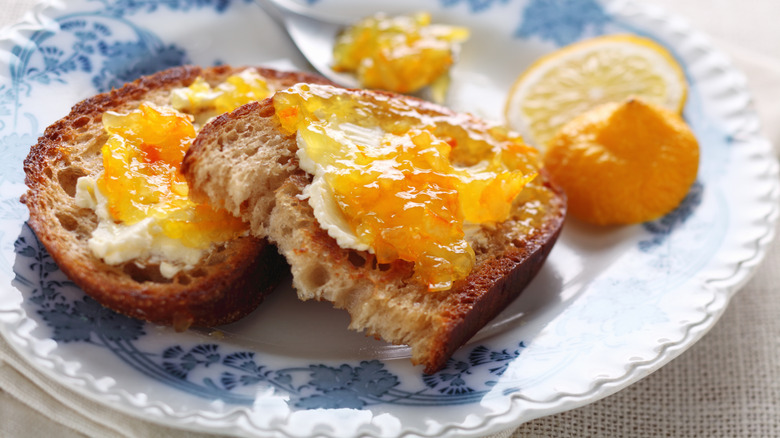
Why not take a cue from Boomers on this one. Orange marmalade is best enjoyed spread on thick-sliced toasted rye bread or traditional scones with a cup of hot coffee. It even makes a knockout PB&J sando alongside quasi-modern nut butters (call it new meets old if you want to start a trend). Beyond breakfast, though, try using it in our orange marmalade salmon with roasted fennel recipe for a truly flavorful dinner.