

4 Big Grocery Trends To Know For 2026, From Baldor Specialty Foods

Each new year brings along new grocery trends, as our shopping habits continue to evolve alongside the ever-changing economy. For example, old-school grocery staples are becoming popular again thanks to inflation, and the meals we repeatedly make at home inevitably dictate what stores put on their shelves. To gain a better understanding of grocery trends set to define 2026, we spoke to several team members of food distributor Baldor Specialty Foods, who highlighted four specific things that are shifting this year in the grocery space.
According to Mark Pastore, Baldor's Vice President of Business Development, predicted trends for 2026 "reflect how the industry is adapting to real constraints like labor, cost, and efficiency, while still delivering craveable, flavor-forward experiences." He suggests that we're trying to create more with less, as grocery bills continue to increase, but we don't want to sacrifice flavor and comfort food. He explains, "Operators and consumers alike are prioritizing ingredients that work harder on the plate."
Among the trends revealed below, you'll notice a recurring theme of the search for quality while simultaneously appreciating convenience. 2026 is about making shopping trips more efficient and putting in our carts more ingredients that are easy to work with, as well as searching for more interest in our meals.
Portioned, labor-saving ingredients
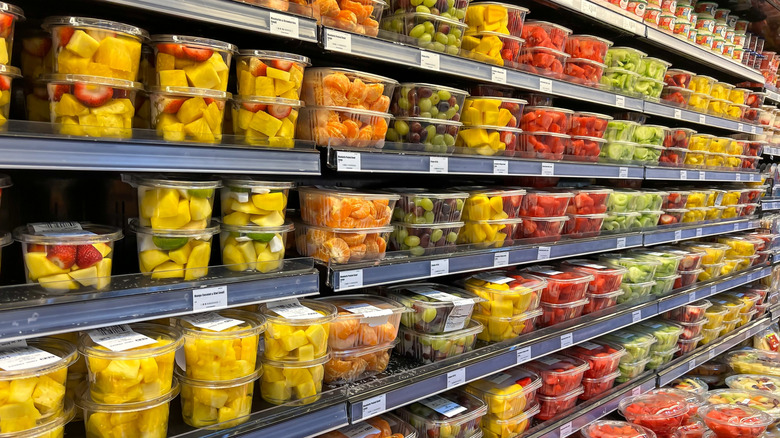
The first trend highlighted by Pastore is ingredients that capitalize on convenience. "Pre-cut produce, pre-portioned proteins, and ready-to-use ingredients are becoming essential," he said. Pre-cut produce normally costs more than whole fruits and vegetables, but for many people, the increase in price pays off in the long run because they save another valuable resource: time.
By reaching for pre-prepared ingredients, "kitchens look to save time while preserving quality and consistency," emphasized Pastore. Many of us turn to takeout at the end of an exhausting day or during a speedy lunch break at work. This habit can hit the wallet pretty hard, not to mention it's not always the most health-conscious choice. Cooking everything from scratch asks for time and energy, though, which is why ready-to-use yet fresh ingredients are the perfect middle ground.
These grocery items are cheaper than takeout, fresher than something that's heavily processed, and handy enough for a quick meal. Most grocery stores also have a well-stocked deli section with ready-to-eat items and meals that are made directly in the store, and it's fair to expect that more people are going to be taking advantage of that in 2026.
Bold, globally rooted flavors
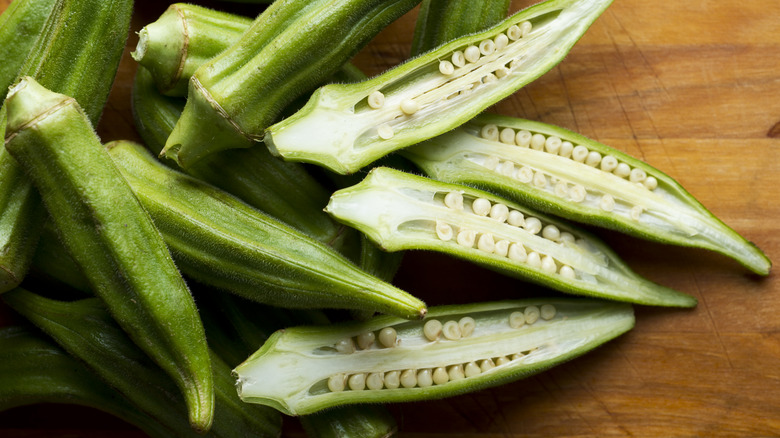
Matthew Rendine, Director of Merchandising and Produce, identified global flavors as a trend to look out for this year. "Flavor continues to justify premium positioning, with strong momentum around Afro-Caribbean influences," he said. Hopefully we will see more ingredients coming to stores that are known staples in foreign cuisines but are still gaining recognition in the U.S. Rendine named a few: "Think Scotch bonnet, tamarind, okra, and oxtail, alongside refined sour and citrus notes like yuzu and sudachi."
These ingredients and others like them pack a whole lot of flavor, bringing novelty to the taste buds, but they are also easy additions to the cooking techniques or staple meals people are already familiar with. Oxtail can be slowly braised into a delicious stew, Scotch bonnets belong in soups, sauces, and stews, okra tastes great roasted to crunchy perfection, and tamarind gives even boring salads a punch of flavor. The Japanese citrus varieties yuzu and sudachi fit perfectly into this picture as well, finally bringing more diverse flavor notes to the fruits we'll be reaching for to flavor recipes this year.
Refined botanicals and florals
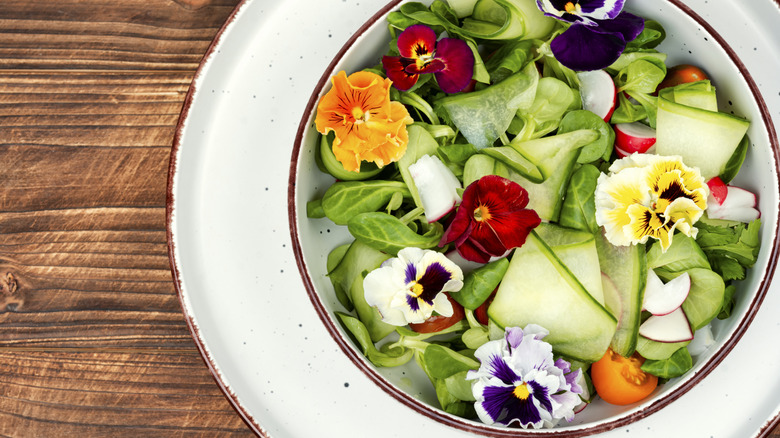
Edible flowers definitely had a moment in 2025, and we're happy to hear the trend is going a step further in 2026. According to Ellie Rothstein, Baldor's Category Manager for Local Farms & Specialty Produce, "Floral and botanical ingredients are moving beyond garnish into starring roles, especially in beverages, desserts, and baked goods." Once again you can spot that flavor really is king in 2026. If flowers were mere decoration in previous years, now it's their flavor that's being considered and celebrated. Rothstein specifically highlighted lavender, elderflower, and roses, saying they "add aroma and depth."
Flowers force you to think outside the box and experiment with flavors — an art that is often forgotten as we hold onto the select tried-and-tested recipes we're overly secure in. Meanwhile, elderflowers are waiting to be turned into a delicious homemade cordial, roses could elevate your spicy sauces, and lavender is the unlikely herb that shines in lamb dishes. Perhaps 2026 will finally see flowers sold among produce aisles, not just as bouquets.
Protein evolution and smarter cuts
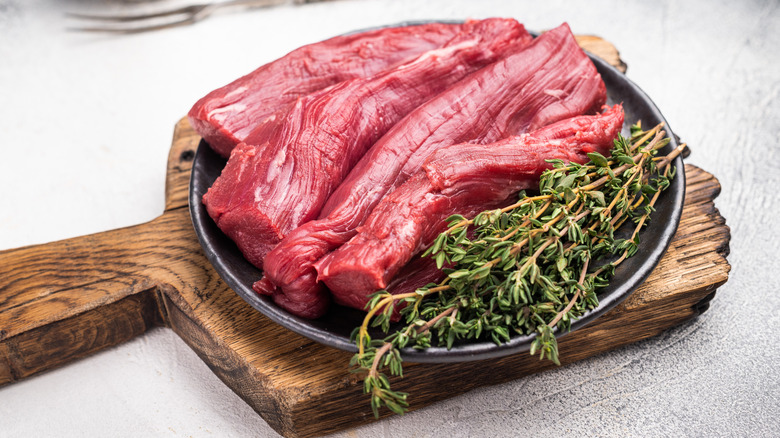
High-quality meats are one of the main food trends you can expect to see in 2026, as sales of plant-based meat have been dropping in the U.S. for the last two years. "Red meat is back at the center of the plate, but with a shift toward whole-muscle cuts, slower grinds, lamb, and heritage pork," said Kevin Lindgren, Director of Baldor Specialty Foods' Golden Meat Co. Yet again, this highlights consumers' need for less fuss in the kitchen, instead zoning in on ingredients that taste good with minimal processing. Slower grinding, for example, produces meat with more moisture and tenderness, significantly improving the final texture of the cooked meat.
Lindgren also emphasized people's "growing openness to menu diversification driven by technique rather than novelty." People are interested in different preparation techniques for the cuts they know well, expanding their culinary skills without having to spend money on meats they're completely unfamiliar with. Luckily, red meat is incredibly versatile when it comes to prep options, although we do have some opinions on the best ways to cook 16 popular cuts of beef.