

Why Your Homemade Cheesesteak Sandwiches Are Falling Flat — And How To Fix Them
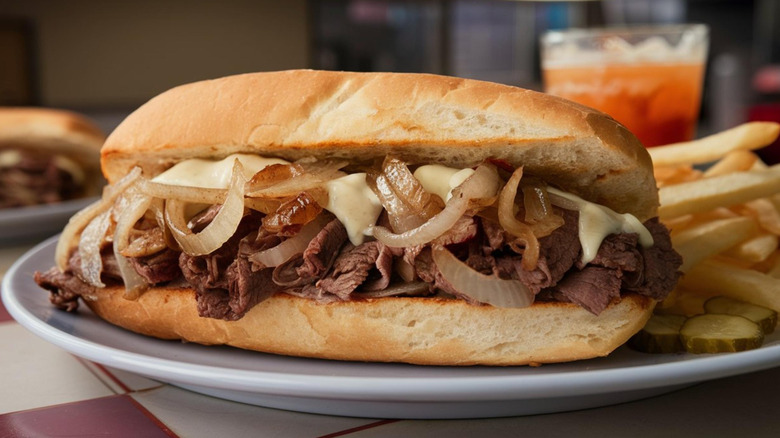
The best cheesesteak may be in Philadelphia, but you can whip up a version anytime at home. However, what should you do if your homemade cheesesteak turns out chewy and disappointing? Scott Thomas, owner of GrillinFools, has the answer to help you fix them. The chef told us, "Generally, cheese steak is done with cheaper cuts of beef. Cutting it very thin across the grain ensures the steak is super tender."
Chef Thomas explains why cutting against the grain is so important, no matter what cut of steak you use. "The grain of beef is the connective tissue that helps the muscle retain its shape," he says. "But cutting thin across the grain, that connective tissue is cut into the tiniest pieces, thereby hyper-accelerating the chewing process." The muscle fibers in meat are long and rope-like, so keeping them intact means an extra tough chew. By cutting across that grain, "the muscle is not made up of long rope-like pieces anymore," says Thomas. "It's made up of tiny muscle particles that just break away from each other once you mash them with your teeth."
The grain of muscle fibers are visible lines or strands across the surface of the meat. Once you spot the lines, you then cut perpendicular to them. This doesn't just apply to cuts of steak, so if you're planning on making a chicken cheesesteak, cut the chicken breast against the grain, too. As for how thin to cut your meat, Thomas recommends, "a quarter of an inch thick at the max. Thinner if you can."
Cheesesteak cooking tips
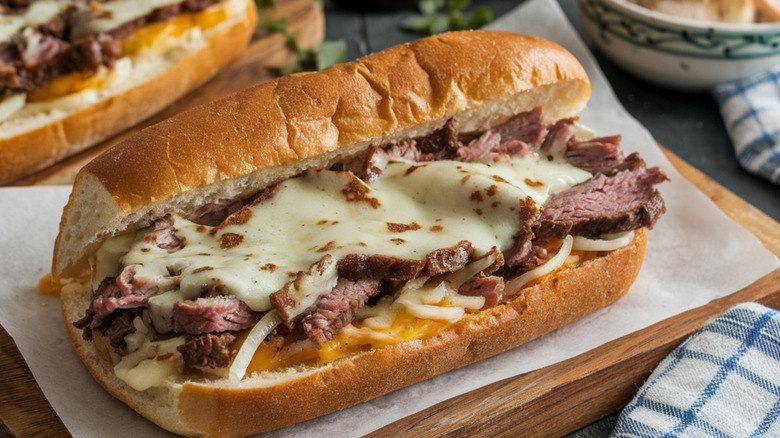
No matter how good a Philly cheesesteak recipe you have, there are plenty of mistakes that can get in the way of successful execution. Even before you slice it, the type of steak you pick up from the grocery store is the first important step in your cheesesteak journey. You'll want a thin cut of ribeye steak to make a true Philly cheesesteak. Luckily, you'll cut the ribeye into thin slices while it's raw, which means it'll be easier to see the grain lines.
If you've managed to finely slice the steak against the grain, that'll ensure tenderness. But you don't want to sabotage the tender bite by drying out the meat on the flat top or skillet. So, the key to maintaining all that flavorful meat juice is to cook the beef low and slow without salting it as salt draws out moisture. Salt the beef right before adding it to your sandwich with melty cheese. Of course, meat isn't the only ingredient that needs thin slicing. You also want the onions to be sliced as thin as can be so they'll caramelize quickly and almost melt into the meat. The traditional types of cheese for a cheesesteak are provolone, cheese whiz, or American cheese, and a generous helping at that. If you feel like a change from a classic cheesesteak sandwich, there are other creative recipes to try like a cheesesteak stromboli or cheesesteak lettuce wraps.