

10 Clues That A Steakhouse Is Overpriced
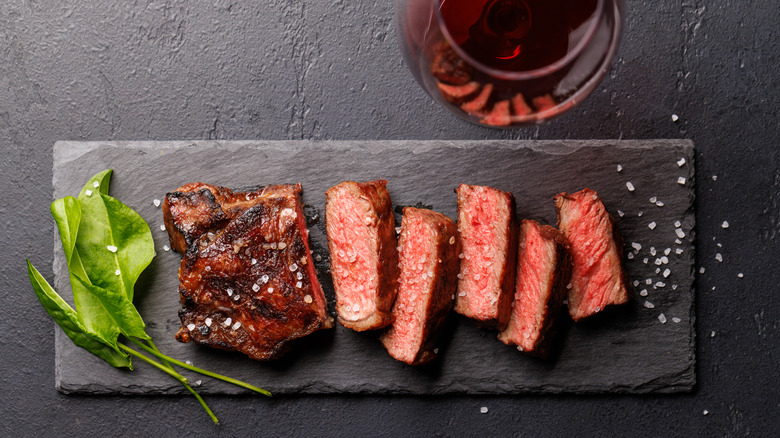
Going out to a steakhouse feels like a fun way to celebrate a milestone or just to treat yourself. But sometimes, steakhouses can cost more than they're really worth. If you're not getting a perfectly cooked steak, delicious sides, and incredible service, a several-hundred-dollar bill can make you wish you had just made your own steak at home. If you've never been to a specific steakhouse before, though, how can you tell if it's actually worth the money you're going to spend there or completely overpriced?
We've talked to steakhouse experts, including Chip Carter, CEO, producer, and host of Where the Food Comes From; Sarah Beth Stranges, general manager at STK Steakhouse Fallsview; Jim Carroll, owner of Meat and Greet BBQ Catering LLC; James Trees, owner of High Steaks Vegas; and Mark McShane, chef and food safety expert at Food Hygiene Certificate, to understand some of the clues that indicate an overpriced steakhouse. By knowing what these clues are, you can avoid spending too much the next time you're craving a steak. Then, make sure you're not making any of these common steakhouse mistakes.
Flashy or ritzy decor
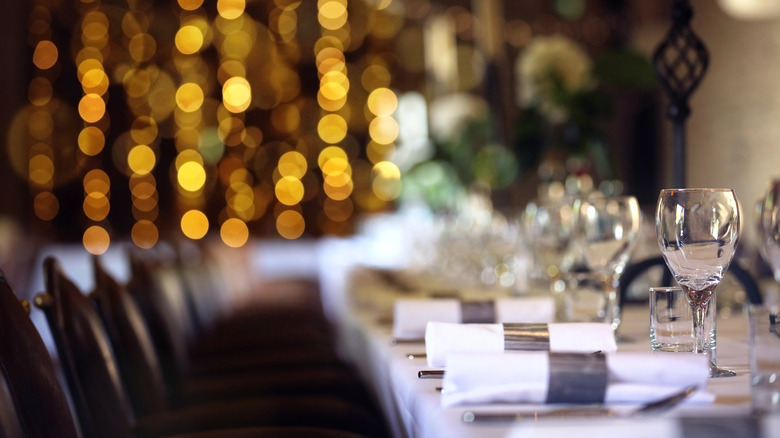
When you're prepared to go out for steak, you might be looking for a higher-end atmosphere, especially if you're celebrating a momentous occasion. But a steakhouse with overly ritzy decor could be a red flag — gold touches and huge chandeliers may be covering up for the fact that the food at said restaurant isn't very good. Referring to a steakhouse's decor, Chip Carter of Where the Food Comes From says, "If it's flashy or ritzy or popping or distracting, that could be a sign that they're putting more focus on style than substance."
A good steakhouse doesn't need over-the-top decorations to garner plenty of reservations — its food will speak for itself. That doesn't necessarily mean that any steakhouse with a swanky look to it is going to have bad steak, but it's a clue that you might be able to get a better steak elsewhere that offers a more toned-down approach to its decor.
Dry-aged Kobe beef on the menu
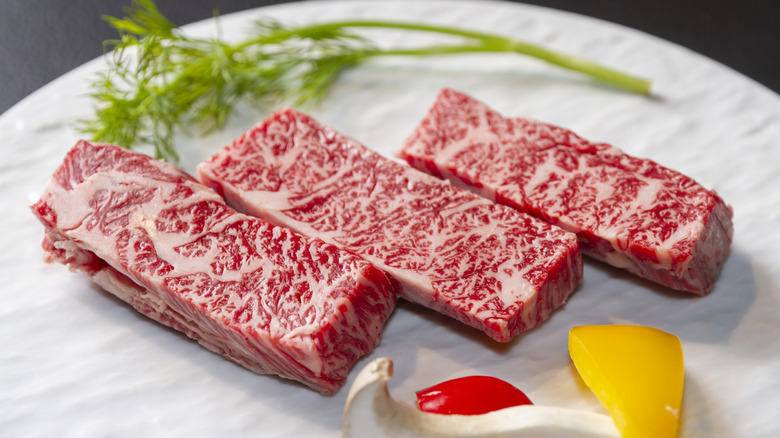
If you love meat, Kobe beef can taste like the pinnacle of a good steak experience. But, unfortunately, you're probably not going to get the chance to try it unless you actually go to Japan. Therefore, if you see it on a menu at a steakhouse, it can be a clue that the steakhouse you're at is overpriced. "When you see the words 'dry-aged Kobe beef,' it's almost always a marketing ploy and a sign that it's overpriced and not authentic," explains James Trees of High Steaks Vegas. "The reality is that most beef labeled as 'Kobe' outside of Japan is not authentic, as it's very rare and very expensive to get real Kobe."
People may be more inclined to order a "Kobe" steak at a restaurant, but outside of Japan, there's a good chance that you're not actually getting an especially amazing cut of meat. "Restaurants are allowed to use labels like 'American Kobe' or 'Kobe-style' on domestic Wagyu beef that does not meet the strict Japanese standards," says Trees. Of course, the same isn't true if you're actually dining at a steakhouse in Japan.
Generic side dishes
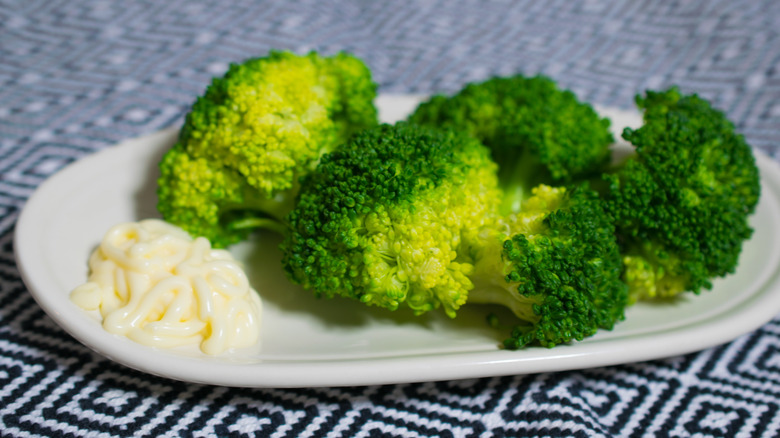
Sure, the most important part of your meal at a steakhouse is, of course, the steak itself. But if you're paying good money to eat out, you likely want the rest of your food to taste just as delicious as the main course. After all, you could easily grill a steak at home and eat the same frozen vegetables you always keep in the freezer, but a nice steakhouse should offer a better, tastier experience. Therefore, generic side dishes are one clue that the steakhouse you're at may be somewhat overpriced.
"Paying $70+ for a steak alongside frozen vegetables or boxed mashed potatoes signals misalignment," says Jim Carroll of Meat and Greet BBQ Catering LLC. "Upscale pricing should include house-made sides with deliberate flavor development." There are some steakhouse side dishes that you should avoid ordering in general, but when you see too many of them — like steamed broccoli, basic corn on the cob, or a boring loaded sweet potato — you may end up paying more than you really should for your meal.
No transparency about where the beef comes from
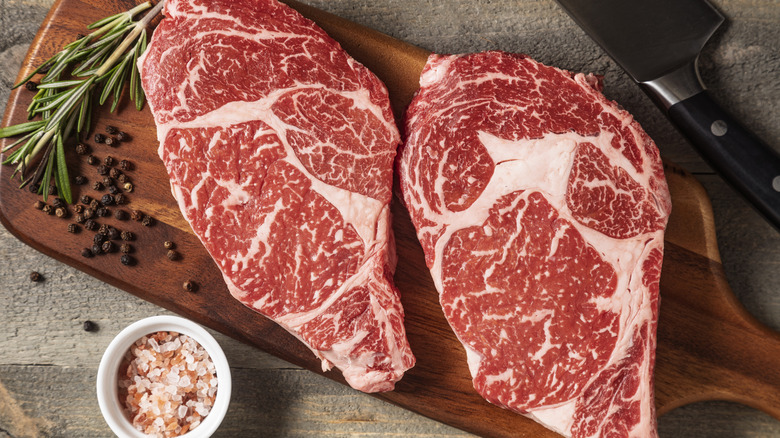
At a lot of higher-end steakhouses, you're going to be dropping a significant amount of money on a single piece of meat. And since you're just getting a steak instead of a well-thought-out, prepared dish that requires multiple different ingredients and techniques to pull off, the quality of the meat is of the utmost importance. After all, the meat itself is where basically all of the flavor in the dish is coming from. Therefore, it should raise a red flag when the steakhouse you're at can't tell you where and how it sources its beef.
"A steakhouse should be able to explain where its beef comes from, how it's aged, and why there are price variations across different cuts," Sarah Beth Stranges of STK Steakhouse Fallsview explains. Don't be afraid to ask questions about the kind of cut of meat you're getting, how big the portion is, or what wines or sides would pair well with it, in addition to basics about where the beef is sourced. "Premium pricing needs to be backed by expertise," says Stranges.
Unlimited bread
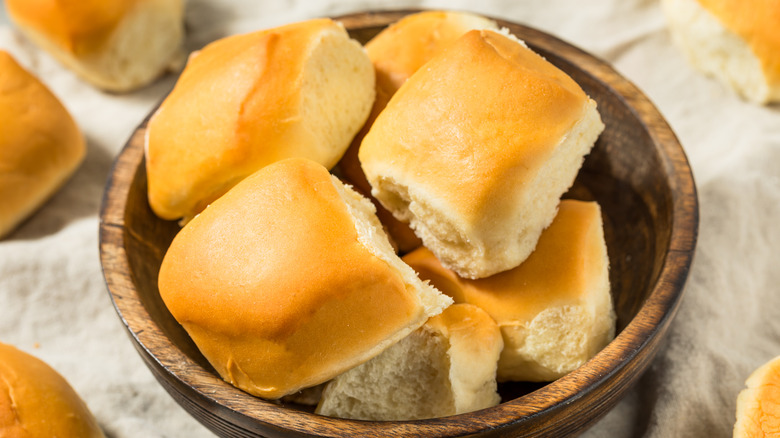
It seems like a good thing when a restaurant advertises unlimited bread. Who doesn't like unlimited food of any variety? But according to Chip Carter, unlimited bread "is a great indicator" that a steakhouse is overpriced. "A great steakhouse is going to have great bread, not just adequate. But how much of that bread are they putting in front of you?" They may be prompting you to eat more bread, so you get fuller on that, all while offering you smaller portion sizes of the more expensive dishes on the table. "Sure, the steak was smaller than you'd hoped, but again, you're so full!" says Carter.
Ideally, the restaurant will bring out a small quantity of excellent bread. You'll have a bit of it, enjoy it, and then move on to the main course and the side dishes of your choice. But if you find that your servings were generally small, but you ate a ton of bread, you might have spent more on your steakhouse visit than you really should have.
The steak comes pre-sliced
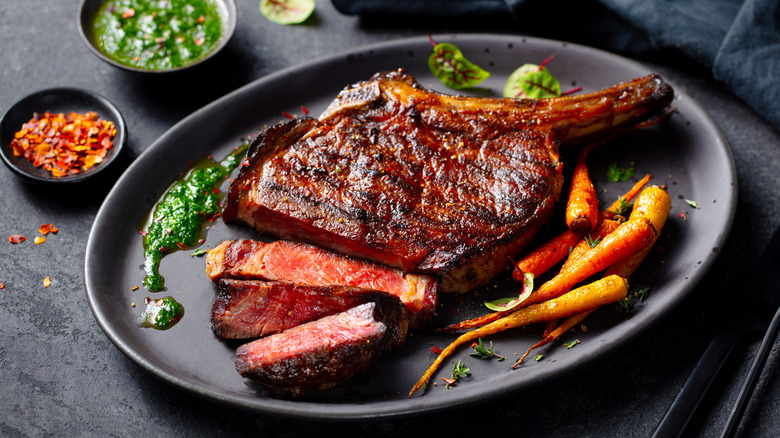
At nicer restaurants, you probably aren't going to get a plate that's piled high with food. Rather, the chef will work to make your meal more visually appealing by creating more space on the plate and arranging the different elements in an artful way. If you're at a restaurant with a multi-course menu, that may not be a problem. But when you're really only ordering a single entree — as is the case with many steakhouses — too much space on your plate could be a sign that you're getting ripped off.
"The visual trick that has been used in some places to mask smaller cuts is the [arrival] of steaks pre-sliced to look larger, or ... oversized plates with a lot of empty space," explains Mark McShane of Food Hygiene Certificate. If you order a single steak and it comes out with a ton of extra space on the plate, you might feel like your meal is overpriced. Be sure to ask about how many ounces the steak you're interested in ordering is before you decide which cut to get.
Staff trying to upsell you without justification
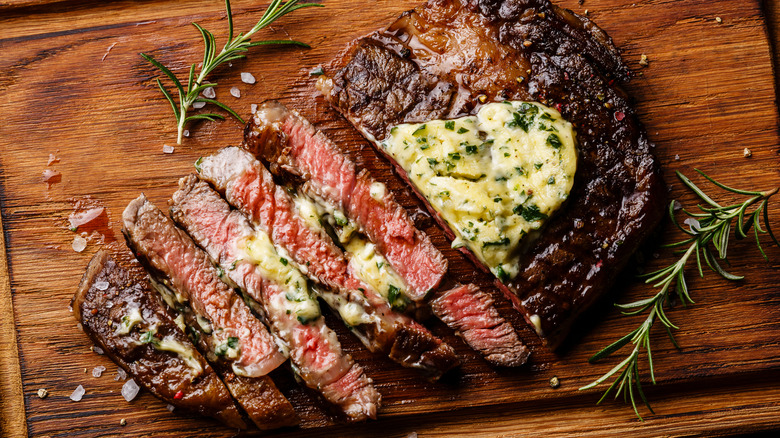
Go to just about any restaurant, and you can expect the server to try to upsell you to a certain degree. After all, they're trying to make more money for the restaurant (and generally hope to receive a larger tip), which gives them an incentive to try to sell you as much as possible. But according to Jim Carroll, if the staff is trying to upsell you without any justification for why different add-ons cost more money, it's not a good sign that you're about to eat a meal that offers good value.
"When servers aggressively promote expensive add-ons — sauces, compound butters, wine pairings — without explaining their value, it typically indicates margin optimization rather than quality enhancement," says Carroll. If your server tries to sell you on any of these add-ons, you should ask them how they improve your meal. And if you don't get a straight answer, it could be a sign that you're paying more than you really should for your steak.
Bad service
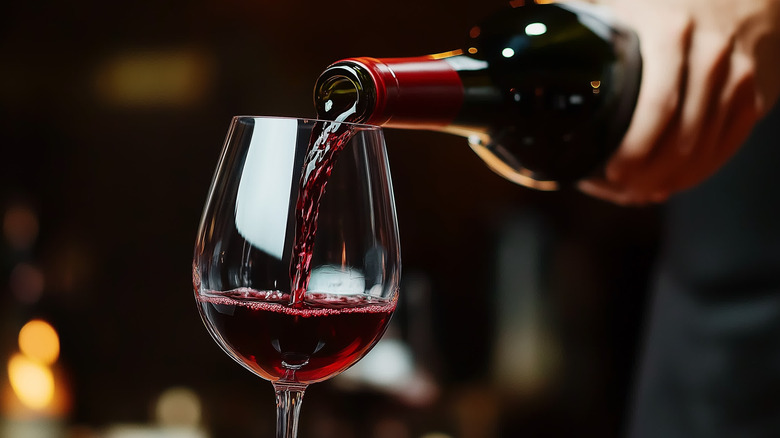
Ultimately, you expect good food when you go to an expensive restaurant. This is probably the factor people consider most when deciding whether a meal was worth the price. But it's not the only factor worth considering. Service, especially at a higher-end restaurant, is also an important aspect of a good dining experience. Even if you get an incredible meal, you may feel like you're not getting a great deal if you had to wait forever for your food, if your server kept forgetting to bring you the drink you ordered, or if you had to deal with any rudeness from the staff.
"Guest experience and service add significant value to high-priced menus by shaping how guests perceive, justify, and remember the price they pay," advises Sarah Beth Stranges. "At premium levels, people aren't just buying food, they're buying meaning, emotion, and status. If a guest has a memorable experience, they are less likely to fret [over] the price." Of course, to get the best service at a restaurant, it's important to be polite and act appropriately — otherwise, your server will probably be anxious to get you out as soon as possible. It's also important to tip appropriately, especially when you receive standout service. But overtly bad service may make you feel like you didn't get a great deal on your steakhouse meal.
No explanation of the steak aging process
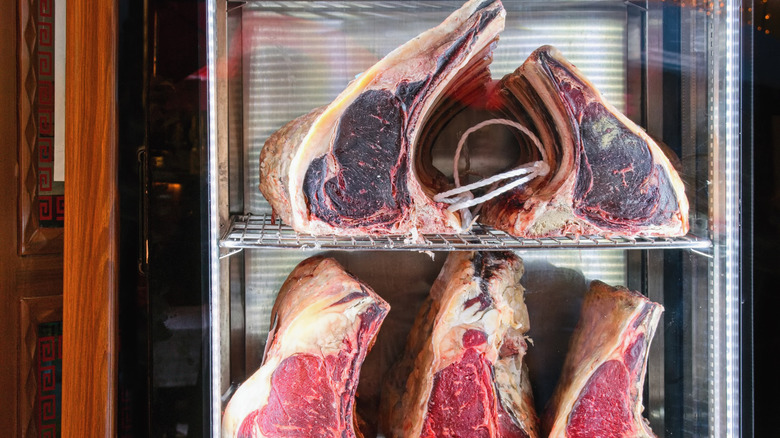
Ever wonder why the steak you get from a steakhouse is so much better than the kind you cook at home? Well, it might have something to do with the aging process. Many premium steakhouses dry-age their steaks, which results in a more complex, umami flavor profile than you can get with a wet-aged steak (which is generally what you're buying when you snag yourself a steak at the grocery store). So, it's a good sign if a steakhouse tells you that it dry-ages its steak — but if the staff can't tell you much about the aging process, that's a big red flag.
"Dry-aged beef commands higher prices legitimately," says Jim Carroll. "If a steakhouse advertises dry-aged beef but cannot explain their process or display the aging room, maintain skepticism." In the best-case scenario, you'll actually see those steaks on display, which lets you know that the restaurant is proud of its aging process. But at steakhouses that don't offer very good value, that process may not be quite as clear.
Oversalted steaks
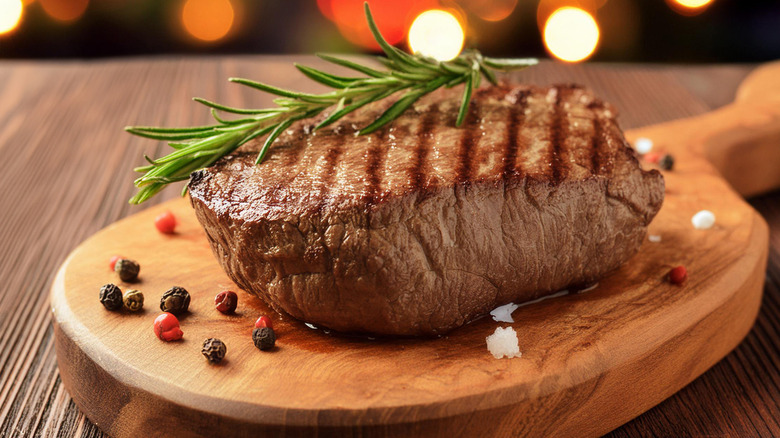
A good steak will be well-salted. After all, salt is a flavor enhancer, so it can better bring out all of the delicious flavors that are already in the steak you choose. However, salt can also mask a steak that isn't very good, which is why you should be suspicious if you get one that's clearly oversalted.
Per Chip Carter, "The [number one] sign to me that a steakhouse is overpriced is simply salt. How salty is the meat? Even some very high-end restaurants are guilty of catering to lesser tastes by oversalting everything on the menu." People who aren't used to eating a lot of steak or who aren't used to dining at higher-quality restaurants may not pick up on this trick that makes a subpar steak taste decent. And just because you're at a steakhouse that seems nice doesn't mean that the chef isn't pulling this trick.
Luckily, the best way to develop a more sophisticated palate that can tell when a steak is clearly oversalted is by simply trying more steaks from different restaurants. This will help give you a better sense of the correct steak-to-seasoning ratio.