

Don't Toss Your Pan Drippings After Cooking — Use Them For Salad Dressing Instead
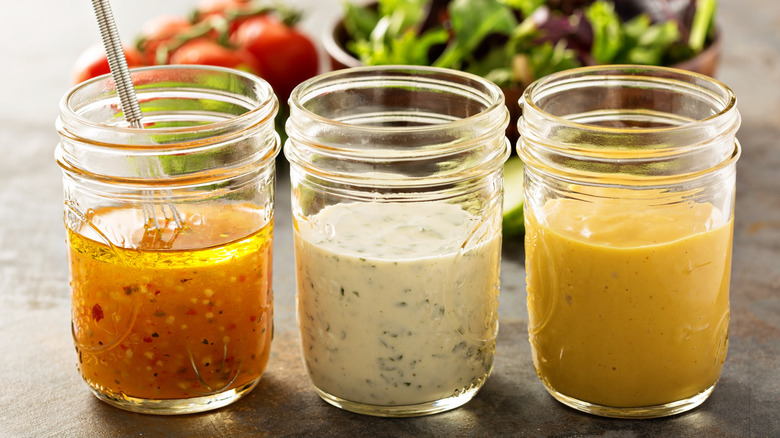
You have endless options when it comes to salad dressing. If you're not a fan of store-bought dressings, it's easy enough to make your own. With just oil and an acid as a base, the sky's the limit for what else can be done. But you can also go back a step if you want to really expand your salad dressing repertoire. Too often, we get stuck thinking you need to use just olive oil, when pan drippings can add real depth and an umami punch to a salad dressing.
The idea may seem easy to dismiss at first, but it's not really that weird. How often do you top a salad with bacon bits, grilled chicken, or steak? Meat and salad go together beautifully and have done so for years. It doesn't make the salad any less nutritious; it simply adds protein and flavor. The fat in the drippings is a necessary component in salad dressing anyway, and it brings far more flavor than a typical neutral oil, which is never a bad thing.
Depending on how lean your pan drippings are, you may still need some olive oil. Fattier pan drippings will require less added oil. A classic vinaigrette ratio is 3:1 oil to vinegar, but some people find that doesn't bring enough flavor, which is where pan drippings can really step up to the plate. Swap all the oil for fattier drippings, or replace just a third of the oil when working with leaner drippings. It will bring that rich, full flavor and a new savory depth to any vinaigrette.
Don't go skipping pan drippings
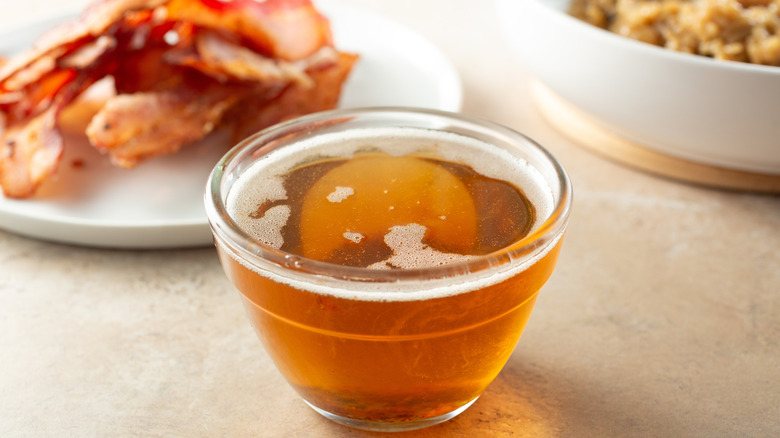
Your basic vinaigrette is 6 tablespoons of oil and 2 tablespoons of vinegar with some salt and pepper to season. For this version, split those 6 tablespoons between the pan drippings and the oil as you see fit based on how rich the drippings are. Bacon pan drippings are nearly pure fat, so you can substitute them completely for the oil and give your salad a new umami dimension. For chicken or steak, you may want to use equal parts pan drippings and oil.
Balsamic vinegar, cider vinegar, or lemon juice can serve as a flavorful acid component. Then you're free to play with other flavors. Mix in one part Dijon mustard or some mayonnaise for a creamier dressing. Minced onion, garlic, herbs, dried chili peppers, or fresh jalapeños can add brightness, depth, or a punch of heat.
You can match the pan drippings to the flavor profile of the whole meal. Use chicken fat, or schmaltz, in a salad served alongside roasted chicken or with the meat incorporated directly into the greens. It can hold its own with bitter-flavored greens and pairs well with spicy additions.
If you choose bacon drippings, it's easy enough to add crispy bacon to the salad or serve it alongside something like a bacon cheeseburger. The pan drippings help tie a meal together with flavors, while the acid provides contrast to the richness of the fat. We have plenty of great salad dressing recipes you can try, just substitute your pan drippings as you like and enjoy.