
Creamy, Citrusy Salmon Pasta Recipe
Prep Time:
20 minutes
Cook Time:
45 minutes
Servings:
4 Servings
Ingredients
- 4 salmon fillets, 6 ounces each, skin removed
- 4 garlic cloves, smashed
- Peels of 2 lemons, white pith removed
- 1 lemon, thinly sliced into rounds
- 2 cups light olive oil
- 1 teaspoon kosher salt
- 1 tablespoon kosher salt
- 12 ounces linguine or tagliatelle
- Peels of 1 lemon, white pith removed
- 2 tablespoons unsalted butter
- 3 garlic cloves, thinly sliced
- 1 cup heavy cream
- 6 sprigs fresh lemon verbena
- 1 tablespoon orange marmalade
- Zest of 1 lemon
- 2 tablespoons fresh lemon juice
- ½ teaspoon kosher salt
- ¼ teaspoon white pepper
- ½ cup whole milk ricotta
- Zest of 1 lemon
- 2 sprigs fresh lemon verbena
Directions
- Place the salmon in a heavy saucepan or Dutch oven. Add the garlic, lemon peels, lemon slices, and enough olive oil to submerge. Season with salt.
- Set the pan over the lowest possible heat and bring the oil to 170 F, monitoring it with a thermometer. Poach until the salmon is just opaque throughout but still slightly yielding in the center, about 10 minutes.
- Lift the salmon carefully onto a rack-lined baking sheet.
- Remove the lemon peels from the oil, finely slice them, and set them aside. Reserve 2 tablespoons of the poaching oil.
- Position the oven rack at the highest position and set the broiler to high.
- Broil the salmon 2 minutes until the surface is lightly golden in spots. The salmon should measure no more than 145 F in the thickest part.
- Bring a large pot of heavily salted water to a boil. Add the pasta and lemon peels and cook till the pasta is just shy of al dente.
- Remove the pasta and lemon peels and reserve 1 cup of pasta water.
- Melt the butter in a wide skillet over medium heat.
- Add the garlic and cook until soft, about 2 minutes.
- Add the cream and lemon verbena, bring to a gentle simmer, stir in the marmalade, and reduce until slightly thickened, about 5 minutes.
- Remove and discard the lemon verbena. Stir in 2 tablespoons of reserved poaching oil, lemon zest, lemon juice, and sliced poached lemon peels. Season with salt and white pepper.
- Add the drained pasta. Add pasta water a splash at a time, until the sauce coats each strand. The lemon peels add more flavor and a confit texture, but they can be removed if you prefer a smoother texture.
- Remove the pan from heat and fold in the ricotta gently, until partially combined but still slightly textured.
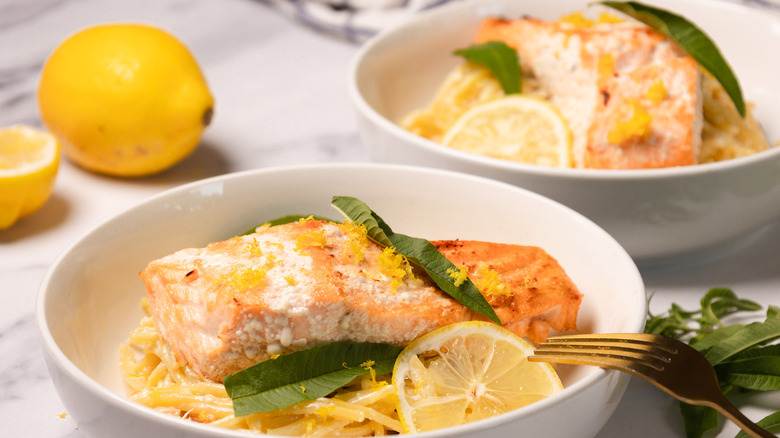
- Divide the pasta among bowls. Set a salmon fillet on top. Finish with lemon zest and fresh lemon verbena leaves.